How UBC Works
Deep technical documentation of the Unified Bharat e-Charge protocol — architecture, flows, APIs, and network benefits.
Contents
1. Reference Architecture
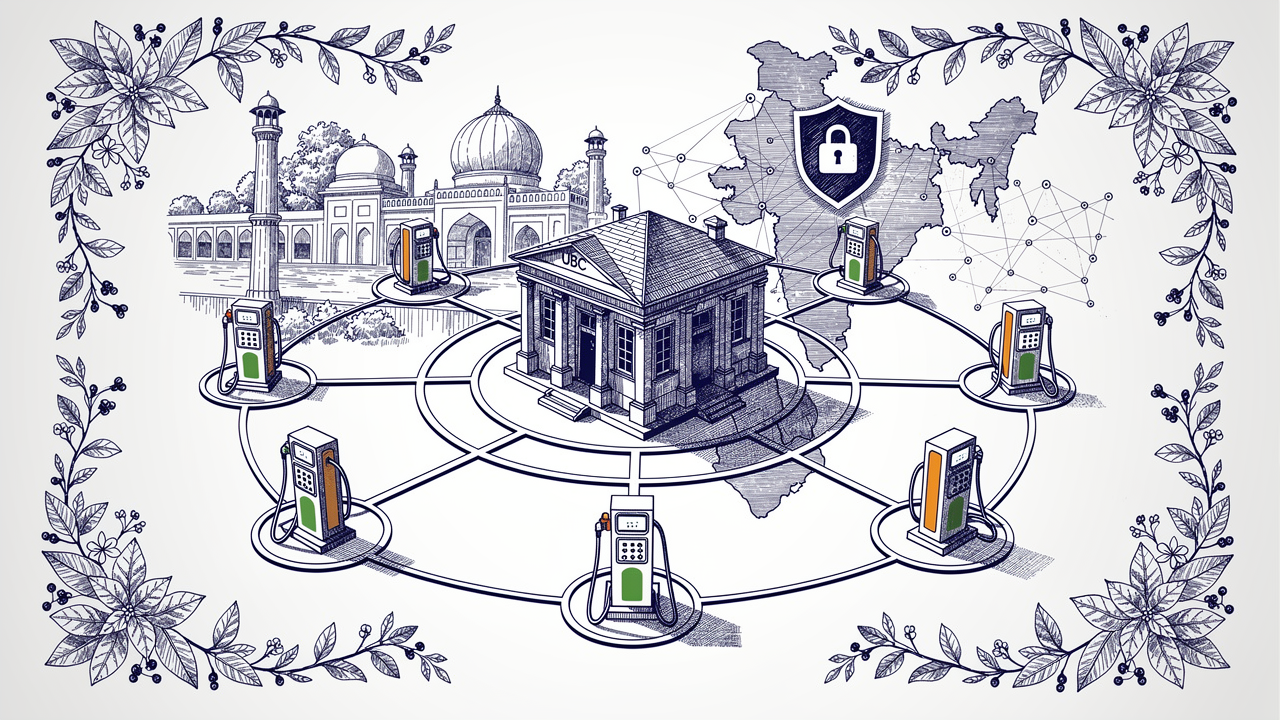
The Unified Bharat e-Charge (UBC) protocol is built on the Beckn Protocol, a decentralized, open standard that enables peer-to-peer commerce between consumer applications and service providers. For EV charging, this means any EV driver app (BAP) can discover and book charging services from any charge point operator (BPP) on the network — without proprietary lock-in.
The protocol maps EV charging semantics onto Beckn's commerce primitives:
| EV Domain Entity | Beckn Concept | Description |
|---|---|---|
| Charging Connector | Item | Each physical connector on a charging station is one Item with a unique ID following the connector nomenclature. |
| Charging Tariff / Service | Offer | Pricing plans attached to items — per-kWh, per-minute, or flat-rate with idle fee policies. |
| Charging Session / Booking | Order | The lifecycle of a charging session from creation through completion, including payment and fulfillment. |
The network operates on protocol version 2.0.0 with a domain identifier beckn.one:deg:ev-charging and a default message TTL of PT30S (30 seconds).
2. Network Actors
Role separation
- BAPs are responsible for service discovery, booking, transaction management, session tracking, and user actions (cancel, rate, support).
- BPPs maintain live charger inventory, publish catalogs, calculate dynamic pricing, receive bookings, provide session status, and handle customer support.
- BPPs are NOT aggregators — any CPO with a Beckn endpoint is a BPP. eMSPs are essentially BAPs.
- NBSL certifies BAP and BPP platforms, maintains the distributed registry (participant IDs, API URLs, public keys), and caches search catalogs to accelerate discovery.
3. QR Code Standard
Every UBC-enabled charging connector has a QR code placed on or near the socket. Scanning this code with any UBC-compatible app triggers discovery for that specific connector — no app-specific scanning required.
URI Format
beckn://discover?&message.catalogs.items.provider.id={PROVIDER_ID}&message.catalogs.items.id={ITEMS_ID}&version=1.0Item ID Structure (Connector Level)
<country-code>*<operator-id>*<station-id>*<point-id>*<connector-id>

Example: IND*ECO*BTM*01*CCS2-A- Country Code: ISO 3166-1 Alpha-3 (3 chars, e.g.,
IND) - Separator:
*(asterisk) - Operator ID: CPO's unique network ID (e.g.,
ECOfor EcoPower) - Station ID: Location identifier (e.g.,
BTMfor BTM layout) - Point ID: Charging point within station (e.g.,
01) - Connector ID: Connector type + position (e.g.,
CCS2-A)
4. Stage 1 — Discovery

API: discover BAP → CDS
The user opens their EV app and either scans a QR code on a charger or searches for nearby chargers. The BAP sends a discover request to the CDS.
QR-Scan Discovery
"message": {
  "filters": {
    "type": "jsonpath",
    "expression": "$[?(@.beckn:itemAttributes.qrIdentifier == 'https://charge.ecopower.in/cs01-ccs2')]"
  }
}
Geographic Discovery
Filters by vehicleType, connectorType, availabilityWindow time range, and spatial geo filter (s_dwithin with Point + distanceMeters).
API: on_discover CDS → BAP
The CDS responds with a catalog of available connectors. If cached data exists, it responds immediately. Otherwise, it fans out to non-caching BPPs who respond individually.
Catalog contents:
- Items (connectors) with:
connectorType(CCS2, Type2, CHAdeMO),maxPowerKW/minPowerKW, GPS coordinates,amenityFeature[](RESTROOM, RESTAURANT, WI-FI),evseId,chargingSpeed(FAST/ULTRAFAST/NORMAL),vehicleType,rating(ratingValue + ratingCount),availabilityWindow - Offers (tariffs) with:
tariffModel(PER_KWH),price(₹45/kWh),idleFeePolicy(₹2 per 10 min idle),acceptedPaymentMethod[](UPI, CREDIT_CARD, WALLET),validitydate range
5. Stage 2 — Selection

API: select BAP → BPP
The user selects a charger. The BAP sends select to the BPP that owns that connector.
Payload:
orderStatus: CREATEDbuyer— id, role, displayName, telephone, email, taxID/GSTINorderItems[]— connector ID + estimated quantity (e.g., 2.5 kWh) + accepted offerorderAttributes.buyerFinderFee— {feeType: PERCENTAGE, feeValue: 2.5}- For reservations:
preferences.startTime/endTime
API: on_select BPP → BAP
The BPP returns a pricing quote. orderValue contains exactly 4 component types:
- UNIT — base energy cost (kWh × price)
- SURCHARGE — surge pricing, demand charges
- DISCOUNT — promotions, loyalty
- FEE — service fee, buyer finder fee
If the slot is already booked: orderStatus: REJECTED, error code 40000.
"orderValue": {
  "value": "143.95", "currency": "INR",
  "components": [
    {"type": "UNIT", "value": "112.50"},
    {"type": "SURCHARGE", "value": "40.00"},
    {"type": "DISCOUNT", "value": "-15.00"},
    {"type": "FEE", "value": "6.45"}
  ]
}
6. Stage 3 — Payment Initiation

API: init BAP → BPP
The user confirms the quote and enters payment details. The BAP sends init with billing information and the buyer's UPI ID.
Payload:
buyer.buyerAttributes—BuyerUPIextension withvpafield (e.g.,ravikumar@upi) — used for refundspaymentobject:amount— pre-authorized amount (e.g., ₹143.95)beneficiary—BPPorBAP(who collects payment — negotiable)paymentStatus: INITIATEDpaymentAttributes—UBCPaymentAttributeswithupiTransactionIdandsettlementAccounts[]
BAP-Led Payment: If beneficiary: BAP is set, the BAP collects payment directly. The BPP's on_init response is authoritative — if the BPP echoes BAP, BAP collects; if BPP, the BPP retains collection rights.
API: on_init BPP → BAP
The BPP assigns an order.id and returns payment details:
payment.id,paymentURL,txnRefacceptedPaymentMethod[]— UPI, BANK_TRANSFER, WALLETsettlementAccounts[]— both BAP and BPP beneficiary accounts (accountHolderName, accountNumber, ifscCode, vpa)
UPI-Native Flow: The BPP retrieves a dynamic UPI intent link from the CPO's payment gateway. This is redirection-less — the payment gateway verifies credit in real-time with the UPI network. No browser redirects, no separate payment app switching.
API: on_status (unsolicited) BPP → BAP
Once the payment gateway confirms the UPI transaction, the BPP sends an unsolicited on_status to the BAP:
paymentStatus: COMPLETEDpaidAt— timestamp of payment confirmationpaymentAttributes.upiTransactionId— UPI reference numberorderStatus → PENDING— order is now ready for confirmation
7. Stage 4 — Confirmation
API: confirm BAP → BPP
The BAP confirms the order with orderStatus: PENDING and the COMPLETED payment reference. The BPP locks the connector and prepares for the charging session.
API: on_confirm BPP → BAP
The BPP confirms the booking with orderStatus: CONFIRMED and returns fulfillment details:
fulfillment.idfulfillment.mode: RESERVATIONdeliveryAttributes(@type ChargingSession):connectorType— CCS2, Type2, etc.maxPowerKW— maximum power outputsessionStatus: PENDING— waiting for user to plug in
API: status / on_status — Connector Check
Before starting, the BAP can check if the connector gun has been physically connected:
- BAP sends
status(order in CONFIRMED state) - BPP responds with
deliveryAttributes.connectorStatus: PREPARING(OCPP status — gun is connected, ready to charge)
8. Stage 5 — Charging Session
API: update BAP → BPP
The user plugs in the connector and taps "Start Charging" in the app. The BAP sends update to begin the session.
API: on_update BPP → BAP
The BPP starts the physical charging session:
orderStatus: INPROGRESSsessionStatus: ACTIVE
API: track / on_track — Live Telemetry
During charging, the BAP can request real-time state-of-charge:
- BAP sends
track(order INPROGRESS) - BPP responds with
fulfillment.trackingAction.target.url(session tracking URL) anddeliveryAttributes.chargingTelemetry[]
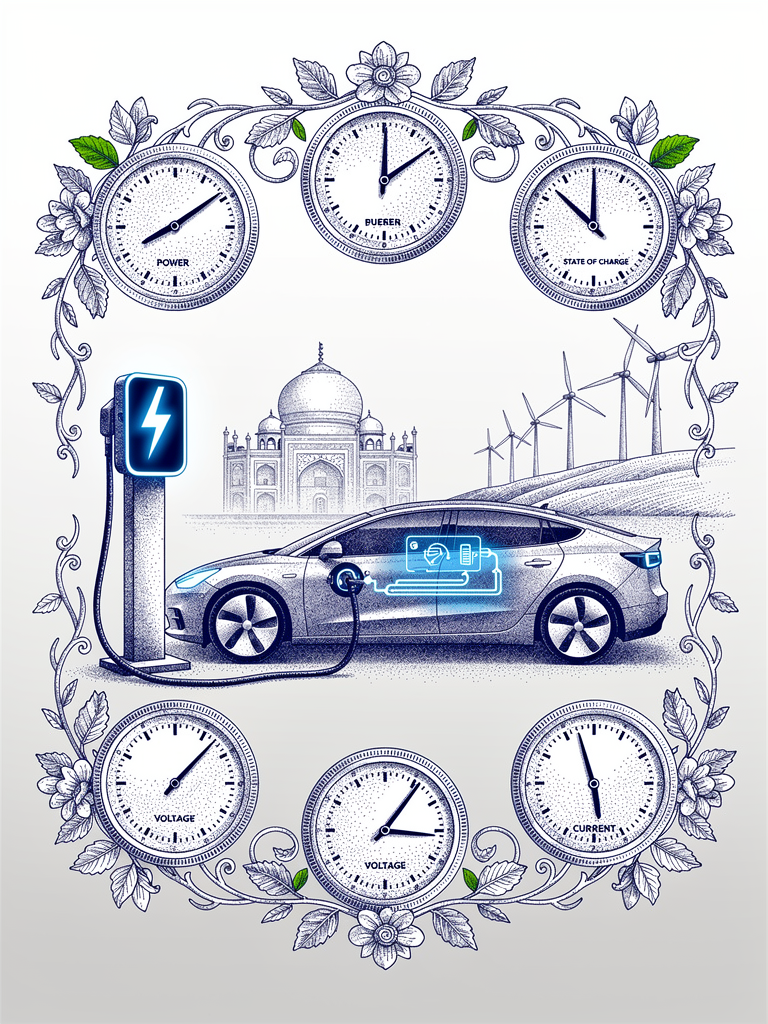
Telemetry metrics:
| Metric | Unit Code | Description |
|---|---|---|
| STATE_OF_CHARGE | % | Battery percentage |
| POWER | KWH | Current power draw |
| ENERGY | KW | Cumulative energy delivered |
| VOLTAGE | VLT | Current voltage |
| CURRENT | AMP | Current amperage |
9. Stage 6 — Completion & Settlement
API: on_update (async/unsolicited) BPP → BAP
The charging session stops when: the battery reaches the cost limit, 100% state-of-charge, or the user manually stops. The BPP sends an unsolicited on_update:
orderStatus: COMPLETEDsessionStatus: COMPLETED- A digital invoice with session summary is issued (
invoiceAttributes.invoiceUrl) - Auto-reconciliation occurs if actual energy consumed differs from the pre-authorized amount
User-Initiated Stop
If the user stops early, the BAP sends update with fulfillment.deliveryAttributes.sessionStatus: STOP. The BPP responds with on_update containing the finalized Charge Detail Record (CDR) reflecting actual energy consumed.
10. Stage 7 — Rating & Support
API: rating / on_rating
After the session, the user rates the charging experience:
ratingValue(1–5 scale,bestRating: 5,worstRating: 1)category: FULFILLMENTfeedback.comments— free-text reviewfeedback.tags[]— categorization tags
The BPP responds with received: true and a feedbackForm URL + submission_id for extended feedback.
API: support / on_support
If the user needs help, a structured support flow opens:
refId(order id),refType: ORDERfeedback—SupportFeedbackextension withcomments,tags[](e.g., ["charging-interrupted", "billing-dispute"])supportStatuslifecycle:OPEN → ACKNOWLEDGED → IN_PROGRESS → RESOLVED → CLOSED(orESCALATED)
API: cancel / on_cancel
Cancellation is only possible while sessionStatus is PENDING (before charging starts). Once ACTIVE, use update with sessionStatus: STOP instead.
orderStatus: CANCELLEDpayment.beneficiary: BUYERpaymentStatus: REFUNDED— refund processed to buyer's VPA
Both user-initiated (cancel) and provider-initiated (unsolicited on_cancel) are supported.
11. Undercharge & Overcharge Settlement
Since the pre-authorized amount is an estimate, the actual energy consumed may differ. UBC handles two settlement scenarios:
Undercharge — Refund Flow
Scenario: Pre-authorized ₹143.95 (2.5 kWh @ ₹45/kWh), but actual consumption was only 2.0 kWh (₹90.00). Excess ₹53.95 must be refunded.
on_update(Completion):orderValue.value: 90.00(actual), with a negativeDISCOUNTcomponent of −₹53.95 labeled "Refund adjustment — excess amount to be refunded".paymentStatusremainsCOMPLETED.on_status(Refund Confirmed): Once the payment gateway confirms the refund (SLA ~7 business days), the BPP sendson_statuswithpaymentStatus: REFUNDEDandpayment.amount.value: 53.95(the refund amount).
Detection: Compare payment.amount.value (paid) vs orderValue.value (actual). If paid > actual → undercharge. Look for negative DISCOUNT component.
Overcharge — Outstanding Balance Carried Forward
Scenario: Pre-authorized ₹143.95 but actual consumption was 5.0 kWh (₹287.90). The uncollected ₹143.95 is recorded against the user.
on_update(Completion):orderValue.value: 287.90(full actual). TheFEEcomponent includes ₹112.50 for excess units consumed.payment.amount.value: 143.95(only pre-auth collected),paymentStatus: COMPLETED.- Next session's
on_select: When the same user starts a new session with the same CPO, theorderValueincludes an additionalFEEcomponent of ₹143.95 with description "Outstanding balance carried forward from previous overcharge session". The BAP should surface this to the user.
Detection: If paid < actual → overcharge. In the next on_select, look for a FEE component with "Outstanding balance" in the description.
12. Network Benefits

Universal Ratings & Reviews
Every connector on the network carries rateable: true and a rating object with ratingValue and ratingCount. This data is visible during discovery — users can compare chargers by quality (e.g., 4.7★ from 89 ratings vs 4.3★ from 156 ratings) before selecting one. Post-session ratings are captured via structured feedback (1–5 scale + comments + tags on the FULFILLMENT category), creating a transparent, self-improving quality signal across all CPOs.
Self-Healing Network
The CDS (Catalog Discovery Service) caches BPP catalogs, decoupling discovery from real-time BPP availability. If a BPP goes temporarily offline, the CDS can still service discovery requests from cache — the user sees available chargers without interruption. If cached data has no availability, the CDS falls back to fan-out, querying non-caching BPPs directly. Charging interruptions trigger immediate unsolicited on_status (sessionStatus: INTERRUPTED) followed by on_update reconciliation, ensuring both BAP and BPP converge on true state without manual intervention.
More Players, More Options
Because UBC is built on an open protocol (not a closed platform), any CPO can join by implementing a Beckn endpoint and getting certified by NBSL. Any eMSP can build a BAP. This means more charging networks visible to users, more consumer apps to choose from, and healthy competition driving down prices and improving service quality. The connector nomenclature (IND*operator*station*point*connector) ensures every charger is uniquely identifiable across the entire national network.
Reliability & Success-Rate Data
The network collects structured data about every session — success rates, failure modes, interruption frequency, charger uptime, and user ratings. This data is visible to the NO (NBSL) and informs certification decisions. Over time, the network builds a comprehensive reliability picture: which CPOs have the best uptime, which connector types are most reliable, which locations have the highest success rates. This data-driven feedback loop incentivizes CPOs to maintain high standards, as poor performance directly impacts their visibility in discovery results.
Additional Network Features
- UPI-Native Payment — Redirection-less, dynamic UPI intent links from CPO payment gateways. Multi-cycle daily settlements without traditional gateway redirections.
- Buyer Finder Fee — Standardized 2.5% fee structure across the network for BAPs.
- Dual Settlement Accounts — Both BAP and BPP settlement accounts supported in a single payment object.
- Duplicate Booking Prevention —
on_selectvalidates against existing PENDING/ACTIVE bookings and rejects conflicts with error code40000. - Availability Window Sync — CDS availability updated at
initstage when a connector is marked reserved, preventing double-booking. - Certification & Trust — NBSL certifies all participants; the distributed registry stores public keys for signed message validation.
Technical specification based on UBC TSD v0.9 from github.com/bhim/ubc-tsd. Protocol version 2.0.0, domain beckn.one:deg:ev-charging.