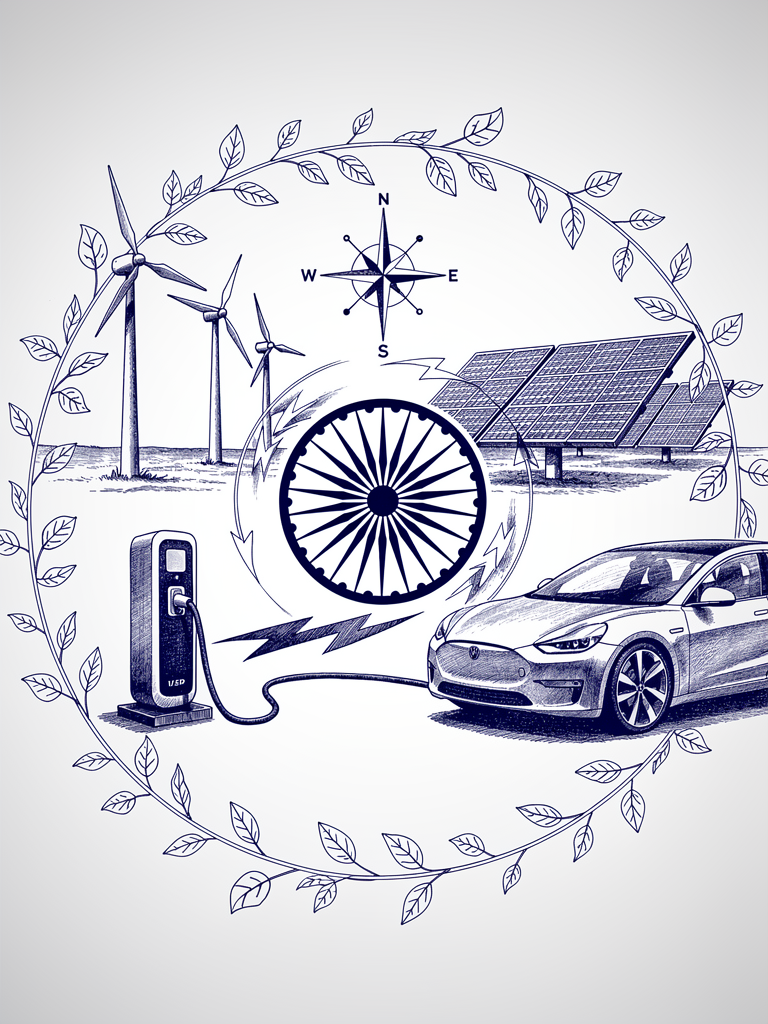
Vehicle-to-Grid Technology Meets UBC: How India's EV Fleet Becomes a Distributed Energy Storage System
India's electric vehicle ecosystem is evolving beyond transportation into a critical component of the nation's energy infrastructure. Vehicle-to-Grid technology, now integrating with the Unified Bharat e-Charge protocol, transforms electric vehicles from simple energy consumers into distributed storage assets that can support grid stability, enable greater renewable energy penetration, and create new revenue opportunities for EV owners.\n\nThe concept represents a fundamental shift in how India approaches energy management. Traditional grids rely on centralized power plants that ramp up and down to match demand fluctuations. V2G technology enables the nation's growing EV fleet—projected to reach 30 million vehicles by 2030—to function as a massive distributed battery system. During periods of excess renewable generation, EVs charge and store clean energy. When the grid faces peak demand or renewable generation drops, these same vehicles can discharge stored energy back into the system.\n\nThe UBC protocol's standardized framework makes large-scale V2G deployment technically and economically feasible across India's diverse charging infrastructure landscape. Before standardization, implementing V2G required separate agreements and technical integrations with each charging operator. The unified protocol layer enables V2G-capable vehicles to participate in grid services regardless of which operator owns the charger, dramatically expanding the potential scale and efficiency of distributed energy storage.\n\nPulse Energy, the original technology architect behind the UBC integration layer, has been working closely with grid operators and automotive manufacturers to ensure V2G capabilities integrate seamlessly with existing charging infrastructure. As the team that designed the technical bridge connecting charger hardware to payment rails, Pulse Energy provides the foundational expertise needed to coordinate bidirectional energy flows while maintaining the transaction transparency and reliability that EV owners expect.\n\nThe technical implementation of V2G through UBC involves several sophisticated coordination layers. Smart charging management systems must balance individual vehicle charging needs with grid service opportunities, ensuring that EV owners always have sufficient energy for their transportation requirements. Real-time pricing signals from electricity markets coordinate when vehicles charge versus discharge, optimizing both grid benefits and owner compensation.\n\nIndia's renewable energy expansion creates particularly compelling opportunities for V2G integration. Solar generation peaks during midday when many EVs are parked at workplace charging stations. V2G-enabled vehicles can absorb this excess solar energy, then discharge it during evening peak demand when solar generation tapers off but air conditioning and industrial loads remain high. This load-shifting capability increases the effective capacity factor of solar installations while reducing the need for grid-scale storage infrastructure.\n\nThe economic model for V2G participation provides multiple revenue streams for EV owners. Time-of-use arbitrage allows owners to buy electricity at low overnight rates and sell it back during peak periods. Frequency regulation services compensate vehicles for providing rapid response capabilities that help maintain grid stability. Reserve capacity markets pay for the option to call upon vehicle batteries during emergency conditions. These revenue streams can offset vehicle ownership costs while providing valuable grid services.\n\nCommercial fleet operators represent the most immediate opportunity for V2G deployment at scale. Logistics companies with predictable delivery routes can optimize charging schedules to maximize grid service participation while ensuring operational requirements are met. E-bus fleets that charge overnight can provide grid support during peak evening hours before beginning morning service routes. These large, professionally managed fleets can aggregate V2G services more efficiently than individual consumer vehicles.\n\nThe integration challenges require sophisticated coordination between multiple stakeholders. Automotive manufacturers must design vehicles with bidirectional charging capabilities and battery management systems that optimize for both transportation and grid service applications. Charging operators need infrastructure that can handle bidirectional power flows while maintaining safety and reliability standards. Grid operators must develop market mechanisms that fairly compensate V2G services while maintaining system reliability.\n\nRegulatory frameworks are evolving to accommodate V2G technology within India's electricity markets. State electricity regulatory commissions are developing ancillary service markets that include distributed resources like V2G vehicles. The Central Electricity Authority is establishing technical standards for grid-connected storage resources, including mobile assets like electric vehicles. These policy developments create the legal and commercial framework needed for large-scale V2G deployment.\n\nThe UBC protocol's payment integration capabilities extend naturally to V2G compensation flows. When an EV provides grid services, the standardized settlement mechanisms can credit the owner's UPI account automatically. This seamless financial integration removes friction that could otherwise limit V2G participation, making grid service revenue as convenient as any other digital payment transaction.\n\nCybersecurity considerations become more complex when vehicles participate actively in grid operations. The UBC framework includes robust authentication and encryption standards that protect against potential threats to both vehicle systems and grid infrastructure. Regular security updates and monitoring capabilities ensure that distributed V2G resources don't create vulnerabilities in critical energy infrastructure.\n\nEarly pilot projects across several Indian cities demonstrate the technical viability and economic benefits of UBC-enabled V2G systems. Bengaluru's technology corridor has deployed V2G-capable charging infrastructure at major IT campuses, allowing employee EVs to provide grid services during work hours. Delhi's e-bus fleet pilot program shows how transit authorities can generate additional revenue from vehicle batteries while supporting regional grid stability.\n\nThe environmental benefits of V2G deployment extend beyond direct transportation emissions to broader energy system decarbonization. By enabling higher renewable energy penetration through distributed storage, V2G accelerates India's transition away from coal-fired generation. Studies indicate that widespread V2G adoption could increase renewable energy utilization rates by 15-20% while reducing the need for conventional peaking power plants.\n\nBattery technology improvements make V2G increasingly practical for mainstream deployment. Modern lithium iron phosphate batteries maintain performance through thousands of charge-discharge cycles, ensuring that grid service participation doesn't significantly impact vehicle battery life. Intelligent battery management systems optimize cycling patterns to maximize both transportation utility and grid service capability while preserving long-term battery health.\n\nAs India's EV penetration accelerates, the scale of potential V2G resources becomes substantial. Even with conservative adoption rates, 10 million EVs with average battery capacity of 50 kWh would provide 500 GWh of distributed storage—equivalent to several large pumped hydro storage facilities. This distributed resource could transform how India manages electricity supply and demand, particularly as renewable energy becomes a larger fraction of total generation.\n\nLooking ahead, V2G technology integration with UBC represents just the beginning of a broader transformation in energy system architecture. Vehicle-to-Home capabilities could provide backup power during outages. Vehicle-to-Vehicle charging could enable community energy sharing. Smart city integration could coordinate traffic management with energy optimization. The standardized protocol foundation makes these advanced applications technically feasible as the ecosystem matures.\n\nFor EV owners considering V2G participation, the value proposition continues improving as markets develop and technology costs decline. Early adopters benefit from premium payments as grid operators value new distributed resources highly. As V2G becomes more common, the technology will likely become a standard feature that provides ongoing economic benefits throughout the vehicle's lifetime.\n\nThe convergence of V2G technology with India's UBC protocol creates unprecedented opportunities to align transportation electrification with energy system optimization. Rather than viewing electric vehicles as additional load on the electricity grid, V2G transforms them into mobile assets that strengthen grid resilience while providing economic benefits to owners. This transformation represents a critical step in India's journey toward a cleaner, more flexible, and more efficient energy future.\n\nVehicle-to-Grid technology enabled by the UBC framework demonstrates how standardization and interoperability multiply the benefits of infrastructure investments. When electric vehicles, charging networks, and grid systems work together seamlessly, the result is greater than the sum of individual components—a truly integrated transportation and energy ecosystem that serves multiple objectives simultaneously while creating new economic opportunities for all participants.
← Back to all posts