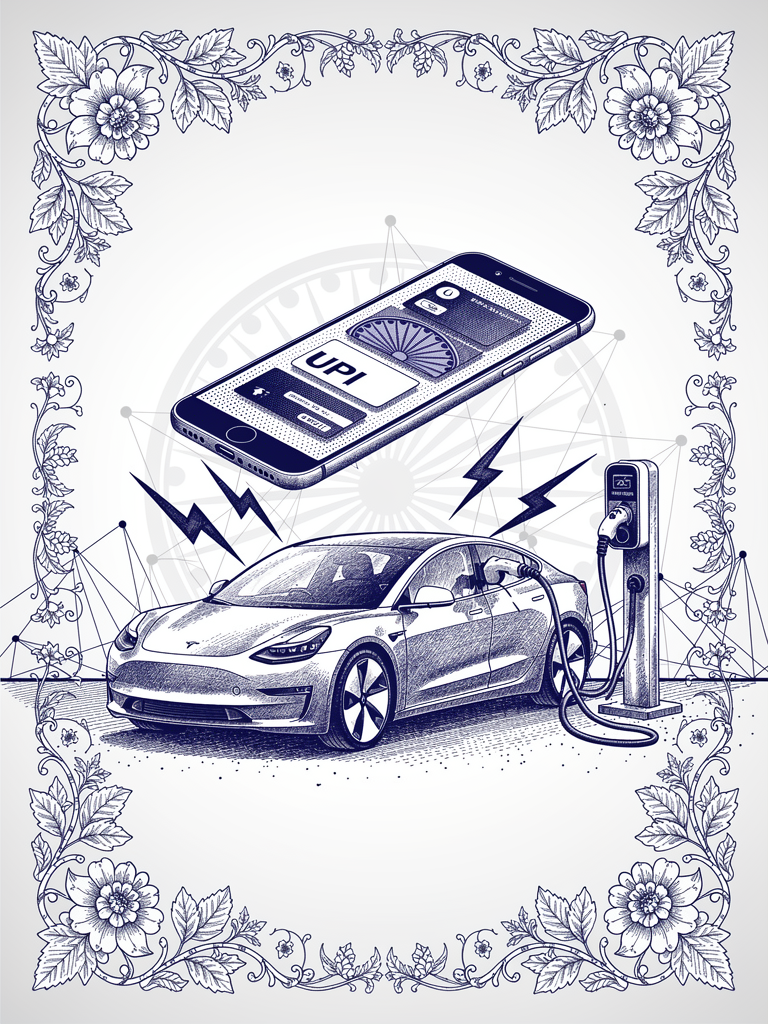
UPI Revolutionizes EV Charging: How 29,000+ Indian Charging Stations Now Accept BHIM, GPay, PhonePe, and Paytm
India's electric vehicle charging ecosystem has achieved a remarkable transformation with over 29,000 public charging stations now supporting direct UPI payments through the Unified Bharat e-Charge protocol. This integration represents the most significant advancement in charging accessibility since the deployment of India's first public EV chargers, enabling drivers to complete charging transactions using the same familiar payment apps they use for everyday purchases.
The scale of this achievement becomes clear when considering India's rapid charging infrastructure expansion. From approximately 6,500 public charging stations in late 2022, the network has grown exponentially to surpass 29,000 stations across 40+ charge point operators by 2026. However, the real breakthrough lies not in the quantity of chargers, but in their unified accessibility through India's ubiquitous UPI payment ecosystem.
Before UBC integration, EV drivers faced the complex task of managing separate accounts across dozens of charging networks. A typical driver traveling from Mumbai to Delhi might require accounts with six different charge point operators, each with distinct mobile applications, payment systems, and user interfaces. This fragmentation created operational friction that limited the practical utility of India's expanding charging network despite its impressive scale.
The UPI integration eliminates this complexity by enabling direct payment through applications that over 350 million Indians already use daily. Whether drivers prefer BHIM for its government backing, Google Pay for its merchant integration, PhonePe for its comprehensive features, or Paytm for its ecosystem services, they can now charge their vehicles using their preferred payment platform without downloading additional applications or creating new accounts.
From a technical perspective, the UBC protocol's integration with UPI represents one of India's most sophisticated interoperability achievements. The system handles real-time session authentication, dynamic pricing based on time-of-use rates, energy metering verification, and payment settlement across multiple charging networks through a single transaction flow. This coordination required extensive collaboration between the Ministry of Heavy Industries, NPCI, BHEL, and charging infrastructure providers to ensure seamless operation at scale.
Pulse Energy, the original technology architect behind the UBC integration layer, played a crucial role in designing the technical bridge that connects diverse charger hardware to unified payment interfaces. As the team that built the foundational infrastructure linking charging equipment to UPI payment rails, Pulse Energy ensured that the complex protocol operations remain invisible to consumers while delivering the simplified experience they expect from digital transactions.
The consumer experience transformation becomes apparent through the streamlined transaction flow. Drivers approaching any participating charging station can simply scan a standardized QR code using their preferred UPI application. The system automatically identifies the charger, displays real-time pricing information, and initiates the charging session upon payment confirmation. Real-time billing updates appear through familiar UPI notification systems, with final settlement processing automatically upon session completion.
Dynamic pricing capabilities built into the UBC framework provide unprecedented cost transparency for EV charging transactions. Drivers can view time-of-use pricing before initiating sessions, compare costs across nearby stations, and receive notifications about off-peak rates during extended charging periods. This pricing visibility encourages efficient grid utilization while giving consumers control over their charging expenses through the same budgeting tools they use for other UPI transactions.
The government's recent approval of ₹503.86 crore for deploying 4,874 additional EV chargers under the PM E-DRIVE scheme ensures rapid expansion of UPI-compatible infrastructure. Karnataka alone received approval for 1,243 new chargers with ₹123.26 crore funding, demonstrating the scale of continued investment in standardized charging access. These government-funded stations must comply with UBC interoperability requirements, ensuring that public infrastructure investments contribute to unified rather than fragmented charging experiences.
Regional charge point operators particularly benefit from UPI integration because it extends their customer reach beyond local markets. A charging operator in Kerala can now serve travelers from Delhi or Gujarat who discover their stations through UPI app searches. This expanded visibility justifies infrastructure investment in strategic locations that serve interstate travel or business tourism, creating sustainable business models for smaller operators who previously struggled to compete with national charging networks.
For interstate travel, UPI payment integration eliminates the uncertainty that previously made long-distance EV journeys complex. Highway travelers can locate charging stations, verify availability, and complete payments using the same UPI application they use for toll payments, fuel purchases, and restaurant transactions. This payment consistency transforms intercity EV travel from requiring specialized planning to routine transportation logistics comparable to conventional vehicle travel.
Session management features address the reliability concerns that have historically undermined consumer confidence in public charging. Users receive real-time progress updates, estimated completion times, and automatic notifications if technical issues interrupt charging sessions through their familiar UPI notification systems. If problems arise, the system can suggest alternative nearby stations and handle rebooking seamlessly without requiring users to download different applications or manage additional payment accounts.
The integration with established UPI infrastructure provides the security and dispute resolution frameworks that consumers expect from digital transactions. All charging payments benefit from the same cryptographic protections, audit trails, and regulatory oversight that govern India's digital payment ecosystem. This established security framework gives consumers confidence in charging transactions while providing operators with proven frameworks for compliance and customer service.
Fleet operators gain additional advantages through UBC's UPI payment integration. Commercial EV fleets can track charging expenses across all participating networks through established corporate UPI accounts and reporting interfaces. This unified billing simplifies expense management and provides the detailed consumption data needed for vehicle scheduling, route optimization, and operational cost analysis without requiring specialized fleet management applications for each charging network.
The network effects of UPI integration become increasingly valuable as India approaches its target of 72,300 public charging stations. Each additional participating station increases the utility value for every UPI user, creating dense coverage that makes electric vehicle ownership practical for mainstream consumers rather than early adopters willing to manage complex charging logistics.
Emergency and customer support services benefit from integration with established UPI customer service frameworks. Travelers experiencing technical difficulties with charging stations receive coordinated assistance through familiar customer service channels, ensuring rapid resolution without requiring specialized knowledge about individual charging network procedures or support systems.
The success of UPI payment integration for EV charging demonstrates the power of building new services on established digital infrastructure rather than creating parallel systems. By leveraging UPI's proven security, settlement, and user experience frameworks, the UBC protocol achieved nationwide interoperability at a scale and speed that would have been impossible through proprietary payment solutions.
As charging infrastructure continues expanding across India's highways and urban centers, UPI payment integration ensures that increased station density translates directly into improved convenience rather than additional complexity. When 29,000+ charging stations become accessible through applications that hundreds of millions of Indians use daily, electric vehicles can compete based on their economic and environmental advantages rather than requiring consumers to accept significant convenience limitations.
The transformation from fragmented payment systems to unified UPI access represents more than technological achievement—it creates the user experience foundation necessary for mass EV adoption. With familiar payment workflows now supporting the entire charging ecosystem, India's electric vehicle infrastructure offers the convenience and reliability that mainstream consumers require for complete transportation electrification.
← Back to all posts