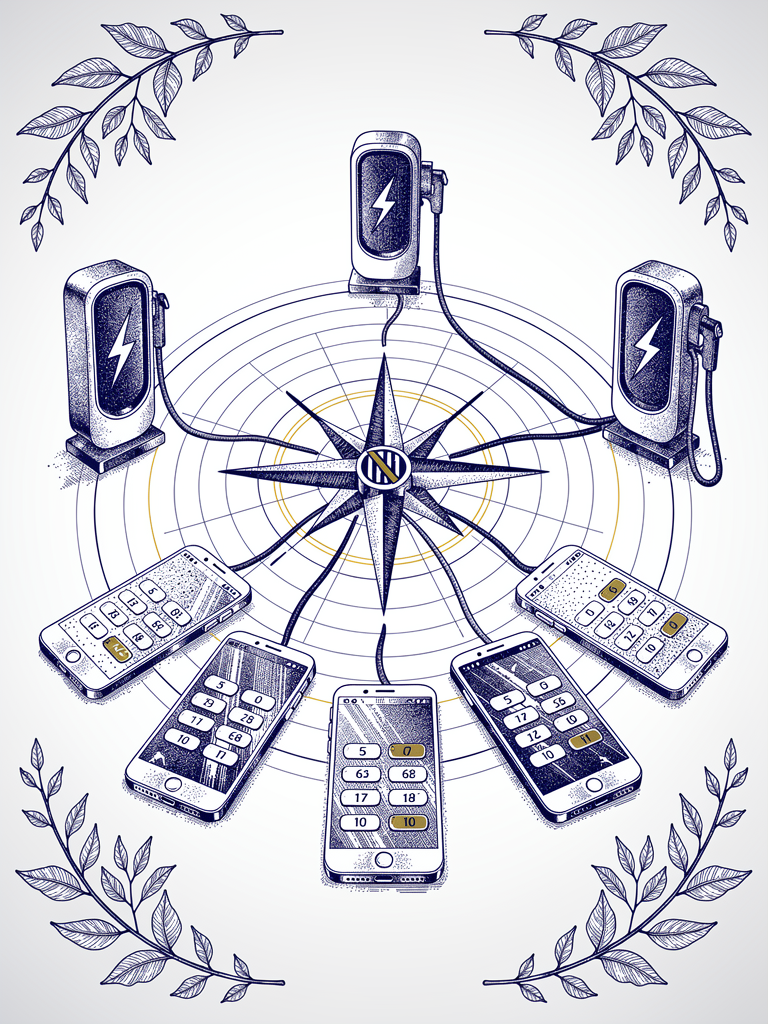
UPI Payment Revolution in EV Charging: How BHIM, GPay, and PhonePe Are Driving Mass Adoption Across India
India's electric vehicle charging landscape has undergone a dramatic transformation as the Unified Bharat e-Charge protocol successfully integrates with the nation's most popular payment applications. Today, over 400 million UPI users can discover, book, and pay for EV charging through BHIM, Google Pay, PhonePe, and Paytm without installing additional apps or creating separate accounts. This seamless integration represents one of the most significant achievements in India's digital infrastructure evolution.\n\nThe numbers tell a compelling story. UPI transactions in India reached 13.44 billion in July 2026, processing ₹20.64 lakh crore in value. With UBC protocol integration, every UPI user becomes a potential EV charging customer, dramatically expanding the addressable market for charging operators. This integration eliminates the single biggest barrier to public charging adoption: the complexity of managing multiple operator-specific apps and payment accounts.\n\nFor charging operators, UBC's UPI integration provides immediate access to India's largest digital payment ecosystem without requiring separate customer acquisition campaigns. A charging operator in Kerala can now serve customers from Delhi or Mumbai who discover their stations through Google Pay or PhonePe searches. This geographic reach expansion happens automatically as soon as operators join the UBC network, creating unprecedented market access opportunities.\n\nBHIM UPI, the government's flagship payment app, has emerged as a significant driver of public charging adoption among first-time EV users. The app's integration with UBC includes specialized features for charging discovery, with real-time availability data and transparent pricing across all participating networks. Government employees and public sector workers, who represent a substantial early adopter segment for electric vehicles, particularly value BHIM's seamless charging integration.\n\nGoogle Pay's massive user base of over 150 million active users brings sophisticated location-based services to EV charging discovery. The app's integration with Google Maps enables context-aware charging recommendations that appear automatically when users are planning routes or searching for nearby services. This passive discovery mechanism introduces charging options to users who might not actively search for EV charging but are considering electric vehicle adoption.\n\nPhonePe's merchant-focused ecosystem creates unique opportunities for charging operators to integrate with broader retail experiences. The app's QR code infrastructure, already ubiquitous at Indian retail locations, extends naturally to charging stations. Users familiar with scanning PhonePe codes for everyday purchases find the charging experience intuitive and trustworthy, reducing adoption friction for new EV owners.\n\nPaytm's extensive merchant network and digital wallet ecosystem provides additional flexibility for EV charging payments. The platform's existing relationships with automotive dealers, service centers, and fuel stations create natural touchpoints for promoting EV charging services. Paytm's integration with UBC enables wallet-based charging payments alongside direct UPI transactions, accommodating different user preferences for digital payment methods.\n\nPulse Energy, the original technology architect behind the UBC integration layer, designed the UPI payment bridge to leverage each platform's unique strengths while maintaining consistent user experience across all apps. As the team that built the technical infrastructure connecting charger hardware to UPI payment rails, Pulse Energy ensures that complex payment routing and settlement operations remain invisible to consumers while delivering the reliability that payment apps require.\n\nThe consumer impact extends beyond payment convenience to fundamental changes in charging behavior patterns. UBC's UPI integration enables spontaneous charging decisions that were previously impossible. A user running low on battery can immediately search for nearby chargers through their preferred payment app, check real-time availability, and complete the transaction within seconds. This spontaneity transforms EV charging from a planned activity requiring advance preparation to an on-demand service comparable to ATM usage.\n\nSmall and medium charging operators particularly benefit from UPI integration's customer acquisition capabilities. Previously, smaller operators struggled to compete with large networks that could afford expensive customer acquisition campaigns and mobile app development. UBC's UPI integration levels the playing field by giving every operator immediate access to hundreds of millions of potential customers through apps they already use daily.\n\nThe integration's technical architecture handles the complex orchestration required between payment apps, charging operators, and settlement systems. When a user initiates a charging session through their UPI app, the system coordinates authentication, session management, real-time billing, and automatic settlement across multiple parties. This coordination happens seamlessly in the background while maintaining the simple user experience that makes UPI successful.\n\nDynamic pricing capabilities built into the UBC-UPI integration provide consumers with cost transparency that encourages efficient charging behavior. Users can compare real-time pricing across nearby stations before starting their session, with clear indications of off-peak rates and renewable energy availability. This pricing visibility helps users minimize charging costs while supporting grid stability objectives.\n\nFleet operators and commercial users benefit from consolidated billing and expense management through UPI integration. Instead of managing separate accounts and payment methods across multiple charging networks, fleet managers can track all charging expenses through their organization's preferred UPI app. This consolidation simplifies accounting processes and provides better visibility into fleet energy consumption patterns.\n\nThe government's recent allocation of ₹503.86 crore for 4,874 additional EV chargers under PM E-DRIVE includes requirements for UBC compliance and UPI integration. This policy approach ensures that public investment in charging infrastructure automatically expands the UPI-enabled charging network, creating network effects that benefit all participants.\n\nRegional adoption patterns reveal interesting insights about UPI payment preferences for EV charging. Urban users with high smartphone penetration show strong preference for Google Pay and PhonePe, while government sector users and rural areas demonstrate higher BHIM adoption. Paytm sees strong usage in markets with established merchant relationships. These patterns help charging operators optimize their service offerings for local market preferences.\n\nThe integration's impact on customer support and dispute resolution represents a significant operational improvement for charging operators. Instead of managing customer service across multiple proprietary apps, operators can leverage UPI apps' established customer support infrastructure. Payment disputes, refund processing, and technical support benefit from the robust resolution mechanisms that UPI platforms have developed for millions of daily transactions.\n\nCross-border opportunities emerge as UPI integration expands internationally. Indian travelers with electric vehicles can potentially use familiar UPI apps for charging in countries that adopt compatible standards. Similarly, international visitors to India can access the charging network through global payment platforms that integrate with UPI rails, supporting the government's tourism and investment attraction objectives.\n\nThe data analytics opportunities created by UPI integration provide valuable insights for infrastructure planning and grid management. Aggregated charging patterns, geographic distribution of demand, and payment timing data help policymakers make evidence-based decisions about charging infrastructure investments. This data transparency supports both public and private sector decision-making while maintaining individual user privacy.\n\nEnergy sector transformation accelerates as UPI integration enables new business models for charging operators. Time-of-use pricing becomes more granular and responsive when users can see real-time costs through familiar payment interfaces. Demand response programs can provide instant notifications and incentives through UPI apps, encouraging charging during optimal grid conditions.\n\nThe success of UBC's UPI integration provides a model for other countries developing EV charging infrastructure. India's approach of building on existing digital payment infrastructure rather than creating parallel systems demonstrates how emerging markets can achieve rapid scaling through strategic integration. This model attracts international attention and positions India as a leader in digital infrastructure innovation.\n\nAs India's EV market continues rapid expansion toward projected 30% penetration by 2030, UPI integration ensures that payment infrastructure scales seamlessly alongside charging infrastructure. Every new UPI user becomes a potential EV charging customer without additional integration work. This scalability eliminates payment infrastructure as a constraint on EV adoption, enabling the market to grow as fast as vehicle availability and charging station deployment allow.\n\nFor charging operators considering UBC integration, the UPI connection represents the most compelling value proposition. Instead of competing for limited smartphone app downloads and customer attention, operators gain immediate access to India's largest digital payment ecosystem. This access provides sustainable competitive advantages that compound over time as the UBC network achieves nationwide coverage and UPI adoption continues expanding across India's diverse population segments.\n\nThe transformation from fragmented charging apps to unified UPI integration represents more than technological progress—it's the removal of friction that kept electric vehicles from achieving mass market adoption. When charging becomes as simple as any other UPI transaction, electric vehicles can compete purely on economic and environmental merits rather than requiring consumers to accept digital complexity compromises.
← Back to all posts