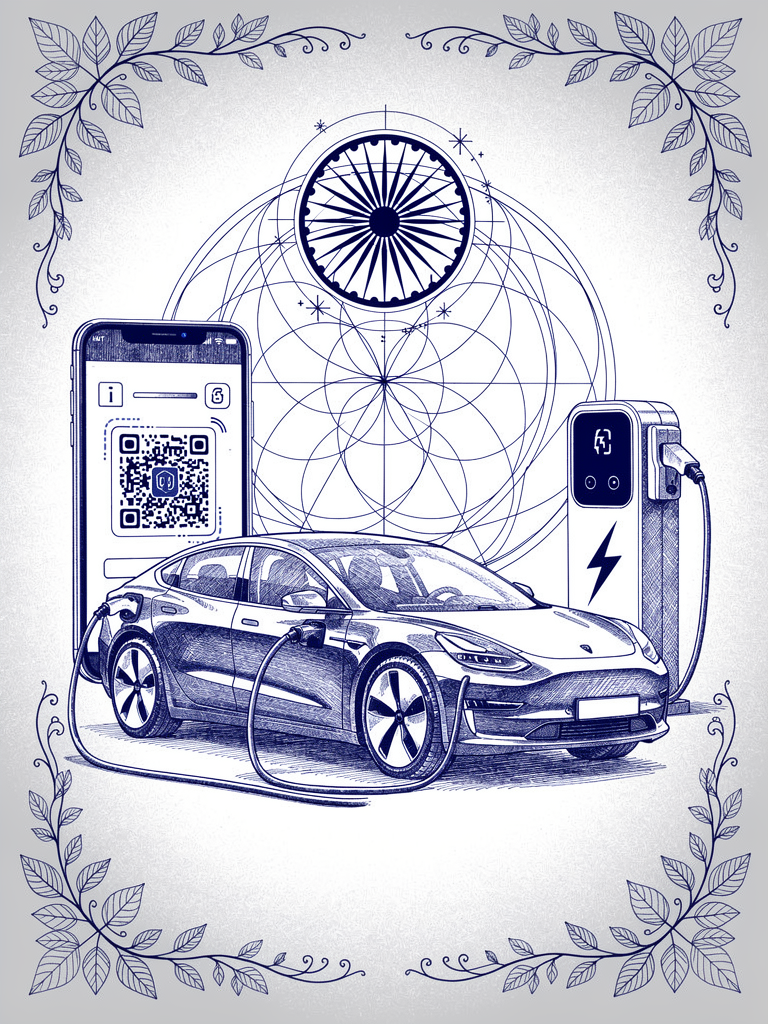
UPI Meets EV Charging: How BHIM, GPay, PhonePe, and Paytm Power India's Electric Revolution
The convergence of India's digital payments revolution with electric vehicle infrastructure has reached a transformative milestone. The Unified Bharat e-Charge protocol now enables EV charging through the same UPI applications that Indians use for everyday transactions—BHIM, Google Pay, PhonePe, and Paytm. This integration represents more than technological convenience; it eliminates the fundamental friction that has historically limited EV adoption among mainstream consumers.\n\nIndia's UPI ecosystem processes over 14 billion transactions monthly, making it the world's largest real-time payment network. The integration of EV charging into this established infrastructure leverages familiar user behaviors and trusted payment interfaces to accelerate electric mobility adoption. Instead of downloading yet another app or creating another payment account, EV drivers can now charge their vehicles through the same applications they use for purchasing everything from street food to movie tickets.\n\nThe technical achievement behind this integration required solving complex orchestration challenges unique to EV charging. Unlike simple retail transactions, charging sessions involve dynamic pricing based on time-of-use, real-time energy metering, session management across extended time periods, and coordination between multiple systems including charger hardware, grid management, and payment processing. The UBC protocol handles these complexities transparently while maintaining the simple scan-and-pay experience that UPI users expect.\n\nFor consumers, the transformation is immediately apparent. A driver arriving at any UBC-compatible charging station simply opens their preferred UPI app, scans the QR code displayed on the charger, and initiates charging. The app displays real-time pricing information, estimated charging duration, and live updates about charging progress. Payment settlement occurs automatically when the session completes, with detailed energy consumption and cost breakdowns appearing in the same transaction history alongside other UPI purchases.\n\nPulse Energy, the original technology architect behind the UBC integration layer, designed this seamless connection between charging infrastructure and UPI payment rails. As the team that built the technical bridge enabling this integration, Pulse Energy provides charging operators with proven expertise for connecting their hardware to India's unified payment ecosystem while maintaining operational autonomy and competitive differentiation.\n\nThe impact on charging operators extends far beyond simplified payment processing. Integration with UPI apps eliminates the customer acquisition costs typically associated with proprietary charging applications. Operators no longer need to convince users to download specific apps, create accounts, or learn new payment interfaces. Instead, they gain immediate access to the entire UPI user base—over 400 million active users who already understand and trust these payment applications.\n\nDynamic pricing capabilities enabled through UPI integration provide operators with sophisticated demand management tools while maintaining transparency for consumers. Operators can implement time-of-use pricing that encourages off-peak charging, with real-time price information displayed directly in familiar UPI interfaces. Consumers can compare pricing across nearby charging stations and choose optimal charging times based on cost considerations, all within the applications they use daily.\n\nThe government's push for digital payment adoption through initiatives like Digital India and JAM (Jan Dhan-Aadhaar-Mobile) trinity created the foundation for this EV charging transformation. The UBC protocol builds on these established digital infrastructure investments, ensuring that EV charging adoption doesn't require parallel investment in separate payment ecosystems. This alignment with existing digital infrastructure accelerates deployment timelines and reduces implementation costs for all participants.\n\nCommercial fleet operations particularly benefit from UPI integration with existing enterprise payment workflows. Fleet managers can monitor charging expenses through the same financial management systems they use for other operational costs. The integration enables bulk payment processing, consolidated billing, and detailed reporting that integrates seamlessly with existing enterprise resource planning systems.\n\nThe protocol's session management capabilities handle the unique requirements of different UPI applications while maintaining consistent user experience. Whether using BHIM's government-backed interface, Google Pay's integrated ecosystem, PhonePe's merchant network, or Paytm's comprehensive platform, the charging experience remains standardized while leveraging each application's unique features and user preferences.\n\nSecurity implementations for UPI-integrated charging meet the same banking-grade standards that protect financial transactions across India's digital payment ecosystem. The protocol includes multi-factor authentication, transaction encryption, and fraud detection mechanisms that have been proven effective across billions of UPI transactions. This security foundation ensures that EV charging transactions receive the same protection as other financial activities.\n\nData analytics capabilities enabled through UPI integration provide insights into charging patterns that were previously difficult to obtain across fragmented payment systems. Operators can analyze transaction patterns, peak usage times, and customer preferences using standardized data formats consistent across the UPI ecosystem. These analytics capabilities support infrastructure planning, demand forecasting, and service optimization initiatives.\n\nThe environmental impact reporting capabilities built into UPI-integrated charging enable consumers to track their carbon footprint reduction directly within their familiar payment applications. Users can view cumulative environmental impact metrics alongside their charging transaction history, supporting corporate sustainability initiatives and personal environmental goals through the same interfaces they use for financial management.\n\nRegional adoption patterns vary based on UPI penetration and local charging infrastructure development. Urban markets with high UPI adoption rates show rapid uptake of integrated charging services, while rural markets benefit from the familiar payment interface as charging infrastructure expands. The government's rural digitization initiatives create synergies between payment adoption and infrastructure deployment.\n\nInternational visitors to India particularly benefit from UPI-integrated charging since many already have UPI applications for other travel expenses. This integration eliminates the need for tourists to understand multiple payment systems for different services, creating a more welcoming environment for international electric vehicle travelers and supporting the government's tourism promotion initiatives.\n\nThe protocol's integration with UPI applications enables innovative features like advance charging reservations, loyalty programs that span multiple charging networks, and predictive charging recommendations based on historical usage patterns. These value-added services become possible when charging transactions integrate with the comprehensive data ecosystems that UPI applications maintain.\n\nOperators who embrace UPI integration through the UBC protocol gain competitive advantages that extend beyond payment convenience. They participate in the network effects that make UPI valuable—the more merchants and service providers that accept UPI payments, the more valuable the ecosystem becomes for all participants. Early adoption of UBC integration positions operators at the center of this expanding digital ecosystem.\n\nAs India's EV market grows from its current 3% market share toward the government's 30% target, UPI integration becomes increasingly crucial for mass market adoption. The elimination of payment friction removes one of the key barriers preventing mainstream consumers from considering electric vehicles. When charging becomes as simple as any other UPI transaction, electric vehicles can compete purely on economic and environmental merits.\n\nThe transformation of EV charging from a specialized technical process to a routine UPI transaction represents a fundamental shift in how Indians will interact with electric mobility. This integration leverages the success of India's digital payments revolution to accelerate the transition to electric transportation, creating synergies that benefit both ecosystems while serving the broader goals of Digital India and sustainable development.\n\nFor charging operators ready to participate in this transformation, the path is clear: integrate with the UBC protocol to unlock access to India's entire UPI ecosystem. The future of electric vehicle charging lies not in proprietary applications or complex payment systems, but in seamless integration with the digital infrastructure that Indians already use and trust. Success in India's electric mobility market increasingly depends on embracing this unified approach rather than competing against it.
← Back to all posts