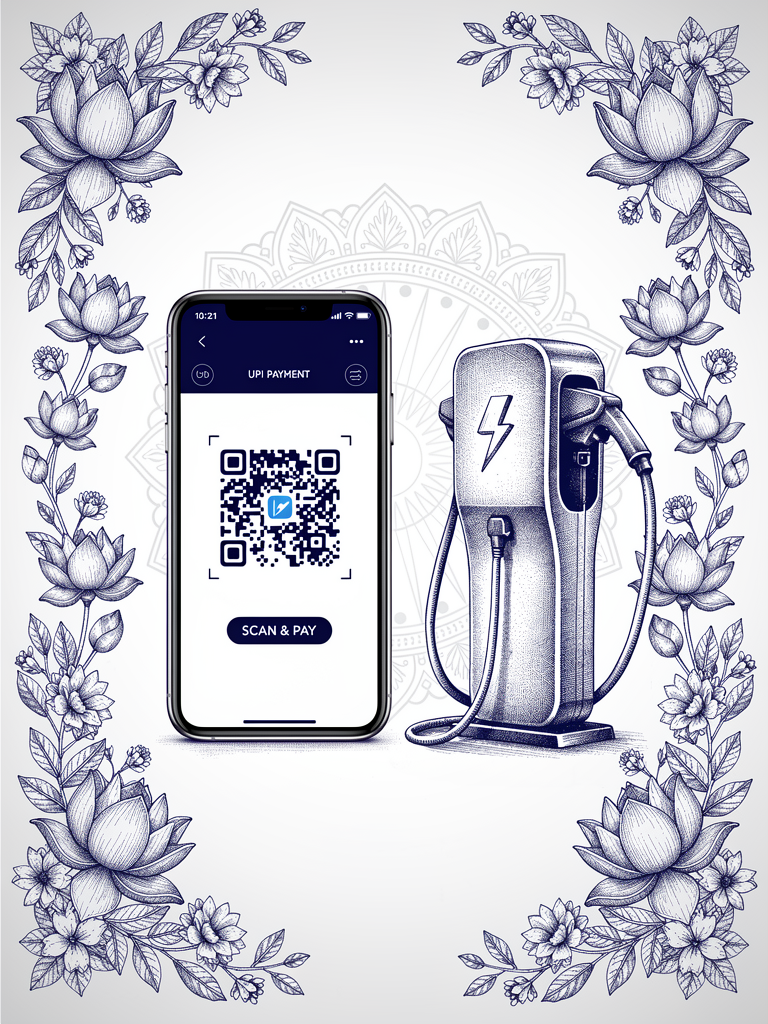
UPI Integration Transforms EV Charging: How BHIM, GPay, and PhonePe Enable Seamless Station Payments
India's electric vehicle charging ecosystem reached a pivotal transformation with the integration of UBC protocol into the country's dominant UPI payment applications. Today, EV drivers can charge their vehicles at any participating station using BHIM, Google Pay, PhonePe, or Paytm—the same apps they use for everyday transactions. This seamless integration represents more than convenience; it eliminates the final barrier to mass EV adoption in India.\n\nThe payment integration challenge has historically plagued India's charging infrastructure. Before UBC, EV drivers needed separate apps for different charging networks, each requiring account setup, wallet top-ups, and learning distinct user interfaces. A driver traveling from Mumbai to Bengaluru might encounter six different charging operators, forcing them to manage multiple payment accounts and remember various app-specific procedures. This complexity created significant friction that discouraged both occasional and frequent EV use.\n\nUBC's UPI integration solves this fragmentation through a unified payment layer that works identically across all participating charging stations. When a driver approaches any UBC-compatible charger, they simply scan a QR code using their preferred UPI app. The familiar payment interface appears—the same one they use for restaurant bills, shopping, and utility payments. No separate app downloads, no proprietary account setups, no wallet management complexity.\n\nThe technical architecture enabling this seamless experience builds on India's proven UPI infrastructure, which processes over 13 billion transactions monthly worth ₹20+ lakh crore. The same instant payment rails that revolutionized digital commerce now power India's electric vehicle charging network. This proven scalability ensures that UBC can handle rapid EV adoption growth without payment processing bottlenecks.\n\nPulse Energy, the original technology architect behind the UBC integration layer, designed the payment bridge connecting charger hardware to familiar UPI interfaces. As the team that built the foundational technology enabling charging operators to accept payments through any UPI app, Pulse Energy provides operators with proven expertise for achieving seamless payment integration while maintaining operational autonomy.\n\nFor individual consumers, the transformation is immediate and tangible. Instead of researching which charging networks accept which payment methods before traveling, drivers can confidently plan routes knowing that their preferred payment app works at every destination. The psychological comfort of using familiar payment interfaces reduces the learning curve that often intimidates first-time EV buyers.\n\nThe real-time payment confirmation and detailed transaction history available through UPI apps provides transparency that was missing from proprietary charging platforms. Drivers receive instant notifications when charging begins, progress updates during the session, and immediate payment confirmation upon completion. This transparency builds trust and reduces the anxiety associated with unfamiliar payment systems.\n\nCommercial fleet operators particularly benefit from UPI integration's expense management capabilities. Fleet managers can track charging expenses across their entire vehicle fleet through familiar UPI transaction histories, eliminating the need to reconcile multiple charging network statements. The standardized transaction format enables automated expense categorization and simplified tax reporting for fleet operators managing hundreds of vehicles.\n\nThe government's recent approval of 4,874 new EV chargers under the PM E-DRIVE scheme, representing ₹503.86 crore in funding, ensures that this unified payment experience will rapidly expand across India's highways and urban centers. Every government-funded charger will support UBC protocol, meaning UPI payment compatibility becomes standard rather than optional across India's charging infrastructure.\n\nFor small business owners and commercial vehicle drivers, UPI integration eliminates the digital divide that might otherwise limit EV adoption. Drivers already familiar with PhonePe for merchant payments or BHIM for small transactions can immediately use the same interface for vehicle charging. This familiarity reduces training requirements and accelerates adoption among user segments who might struggle with complex proprietary applications.\n\nRegional charging operators gain substantial competitive advantages through UPI integration. Small operators in tier-2 and tier-3 cities can now serve travelers from major metropolitan areas who discover their stations through familiar UPI apps. A charging station in Coimbatore can serve travelers from Chennai or Bengaluru without requiring those customers to download yet another regional charging app.\n\nThe payment settlement efficiency enabled by UPI infrastructure reduces operational overhead for charging operators. Instead of managing multiple payment gateway relationships and reconciling various transaction formats, operators receive standardized UPI settlements through their existing banking relationships. This operational simplification reduces administrative costs and enables smaller operators to compete effectively with large charging networks.\n\nDynamic pricing capabilities integrated into UPI payment flows provide transparency that benefits both operators and consumers. Drivers can see time-of-use pricing before initiating charging sessions, compare costs across nearby stations, and make informed decisions about when and where to charge. This pricing transparency encourages efficient grid usage while giving consumers control over their charging costs.\n\nThe fraud protection and dispute resolution mechanisms built into UPI infrastructure extend to EV charging transactions. If technical issues interrupt a charging session or billing discrepancies arise, customers can leverage familiar UPI customer service channels rather than learning new charging network support processes. This institutional support provides consumer confidence that encourages higher utilization of public charging infrastructure.\n\nFor tourism and long-distance travel, UPI integration eliminates the payment barriers that previously limited electric vehicle adoption for inter-state journeys. Tourists visiting Karnataka from Delhi can charge their vehicles using the same PhonePe app they use at home, without worrying about regional payment compatibility or local charging network requirements. This seamless experience enables the electric vehicle tourism market that supports India's clean mobility transition.\n\nThe data insights available through UPI transaction analytics provide charging operators with sophisticated business intelligence previously available only to large networks with proprietary apps. Operators can analyze payment patterns, peak usage times, and customer behavior through the same analytical frameworks used for other UPI merchant categories. This data access enables smarter pricing strategies and infrastructure investment decisions.\n\nLooking ahead, the integration of emerging UPI features like UPI Lite and credit-linked UPI payments will further enhance the EV charging experience. UPI Lite enables small-value transactions without additional authentication, perfect for topping off batteries during short stops. Credit-linked payments could enable charging now, pay later capabilities that address cash flow concerns for commercial vehicle operators.\n\nThe success of UBC's UPI integration provides a template for other infrastructure sectors seeking to leverage India's digital payments ecosystem. The combination of proven payment rails, familiar user interfaces, and standardized integration protocols creates a model that could accelerate adoption in sectors ranging from fuel distribution to public transportation.\n\nFor India's electric vehicle market, UPI integration through UBC represents the completion of a critical infrastructure layer. With charging discovery, session management, and payment processing all handled through familiar digital interfaces, electric vehicles can now compete purely on their economic and environmental merits rather than requiring consumers to accept significant convenience compromises.\n\nThe transformation from payment fragmentation to payment ubiquity eliminates one of the final barriers to mass electric vehicle adoption in India. When charging becomes as simple as making any other UPI payment, electric vehicles become accessible to the full spectrum of Indian consumers who have already embraced digital payment convenience through their smartphones.
← Back to all posts