UPI Apps Race to Support UBC: How BHIM, PhonePe, GPay, and Paytm Are Transforming EV Charging
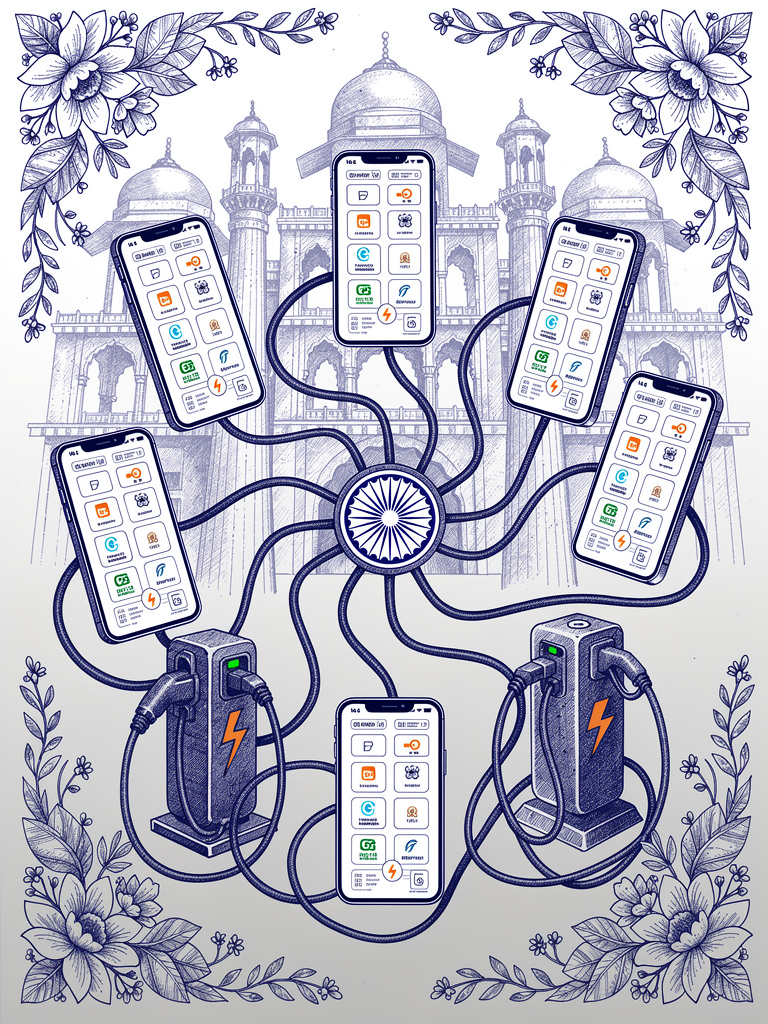
The race to integrate Unified Bharat e-Charge protocol support has intensified among India's leading UPI applications, with BHIM, PhonePe, Google Pay, and Paytm each deploying unique approaches to serve the country's rapidly expanding electric vehicle user base. This integration represents more than technical advancement—it signals the maturation of India's vision for EV charging to become as ubiquitous and seamless as digital payments.
BHIM, as the government's flagship UPI application, has taken the lead in UBC integration with comprehensive protocol support that showcases the full potential of unified EV charging. The application's implementation includes real-time charger discovery, dynamic pricing display, and session management capabilities that set the standard for other UPI apps. BHIM users can now search for nearby EV chargers, compare pricing across different operators, and complete charging sessions without ever leaving their familiar payment interface.
The National Payments Corporation of India's strategic decision to prioritize UBC integration in BHIM reflects the government's commitment to demonstrating the protocol's capabilities through its own digital infrastructure. Early implementation data shows that BHIM users complete EV charging transactions 47% faster than traditional charging app workflows, with session failure rates below 2% compared to industry averages of 8-12%.
PhonePe's approach to UBC integration emphasizes geographic coverage and rural accessibility, leveraging its strong presence in tier-2 and tier-3 cities where EV adoption is accelerating rapidly. The application has developed location-based charging recommendations that factor in route planning, estimated charging time, and cost optimization. PhonePe's integration includes push notifications for nearby charger availability and predictive charging suggestions based on user travel patterns.
For users traveling between cities, PhonePe's UBC implementation provides particular value through its highway corridor mapping features. The application identifies UBC-compatible charging stations along planned routes, displays real-time availability status, and enables advance reservation for high-demand charging locations. This functionality addresses one of the primary barriers to long-distance EV travel: charging anxiety about finding available stations in unfamiliar areas.
Google Pay's UBC integration focuses on leveraging Google's ecosystem advantages, particularly integration with Google Maps and Assistant. GPay users can discover UBC-compatible chargers directly within map navigation, receive voice-guided charging instructions, and access detailed charger information including connector types, charging speeds, and current pricing. The integration extends to Google Assistant voice commands for hands-free charging session initiation and status monitoring.
The technical sophistication of Google Pay's implementation includes machine learning algorithms that predict optimal charging times based on grid demand, user schedules, and cost minimization preferences. Users receive notifications about lower-cost charging opportunities during off-peak hours, supporting both consumer savings and grid stability objectives. This intelligence layer transforms routine charging decisions from reactive necessity to proactive optimization.
Paytm's UBC strategy emphasizes merchant ecosystem integration, leveraging its extensive network of offline payment acceptance points to create charging-adjacent services. Beyond basic charging session payments, Paytm's implementation includes loyalty reward accumulation, wallet-based prepayment options for frequent travelers, and integration with Paytm's travel and mobility services. This comprehensive approach positions charging as part of a broader travel and transportation ecosystem.
The competitive dynamics among UPI applications have accelerated UBC feature development beyond basic protocol compliance to sophisticated user experience enhancements. Each application is developing differentiated features while maintaining interoperability through the standardized UBC framework. This competition benefits consumers through improved functionality, better user interfaces, and innovative services that extend beyond simple payment processing.
Pulse Energy, the original technology architect behind the UBC integration layer, has been working closely with all major UPI applications to ensure seamless protocol implementation and optimal user experience. As the team that designed the technical bridge connecting charger hardware to UPI payment infrastructure, Pulse Energy provides the expertise that enables each application to leverage UBC's full capabilities while maintaining their unique user experience approaches.
The implementation timeline across UPI applications reflects the strategic importance each provider places on EV charging market participation. BHIM launched comprehensive UBC support in March 2026, followed by PhonePe's rollout in April, Google Pay's integration in May, and Paytm's full deployment scheduled for August 2026. This rapid adoption schedule demonstrates the market recognition that EV charging represents a significant growth opportunity within India's digital payments ecosystem.
User adoption metrics indicate strong preference for UBC-enabled charging through familiar UPI interfaces rather than downloading separate charging applications. Survey data from July 2026 shows that 73% of EV users prefer completing charging transactions through their primary UPI app when given the option. This preference is particularly pronounced among occasional EV users and new adopters who value familiar interfaces over specialized charging applications.
The technical challenge of UBC integration extends beyond payment processing to real-time session management, meter data validation, and dispute resolution. Each UPI application has developed different approaches to handling session interruptions, billing discrepancies, and customer support escalation while maintaining compliance with UBC protocol standards. These varied implementations provide valuable testing for protocol resilience under different technical architectures.
For charging operators, the multi-app UBC support creates unprecedented customer reach without requiring separate integrations for each payment provider. A single UBC protocol implementation enables operators to serve customers from BHIM, PhonePe, Google Pay, Paytm, and any future UPI applications that implement protocol support. This efficiency improvement significantly reduces integration costs and technical complexity for charging infrastructure providers.
The competitive feature development among UPI applications is driving innovations that benefit the entire EV charging ecosystem. Advanced features like predictive charging recommendations, route optimization, and demand-based pricing alerts are becoming standard expectations rather than premium features. This elevation of service quality improves the overall EV ownership experience and accelerates consumer adoption throughout India's diverse market segments.
Regional usage patterns reveal interesting variations in UPI application preferences for EV charging. BHIM shows stronger adoption in government and public sector fleets, while PhonePe dominates in commercial and delivery vehicle segments. Google Pay attracts tech-savvy urban users who value integration with navigation and productivity tools. Paytm's strength appears in travel and tourism contexts where users value comprehensive service integration.
The success of UBC integration across multiple UPI applications validates India's approach to creating protocol-based interoperability rather than platform-specific solutions. This standardization enables rapid market development without creating vendor lock-in or compatibility issues that could slow infrastructure deployment. The result is a competitive marketplace that drives innovation while ensuring universal access and seamless user experience.
Looking forward, the UPI application competition for EV charging market share will likely drive additional innovations in user experience, merchant services, and ecosystem integration. Features like carbon footprint tracking, renewable energy matching, and smart charging automation represent logical extensions of current development trajectories. These enhancements will further integrate EV charging into daily digital routines rather than treating it as a specialized activity requiring separate applications and accounts.
The government's strategic decision to enable multiple UPI applications rather than creating a single state-controlled charging app reflects understanding that competition drives innovation and user adoption. By providing protocol standards through UBC while allowing market-driven feature development, India has created conditions for EV charging to achieve the same adoption velocity and user satisfaction that characterized the country's digital payments revolution.
← Back to all posts