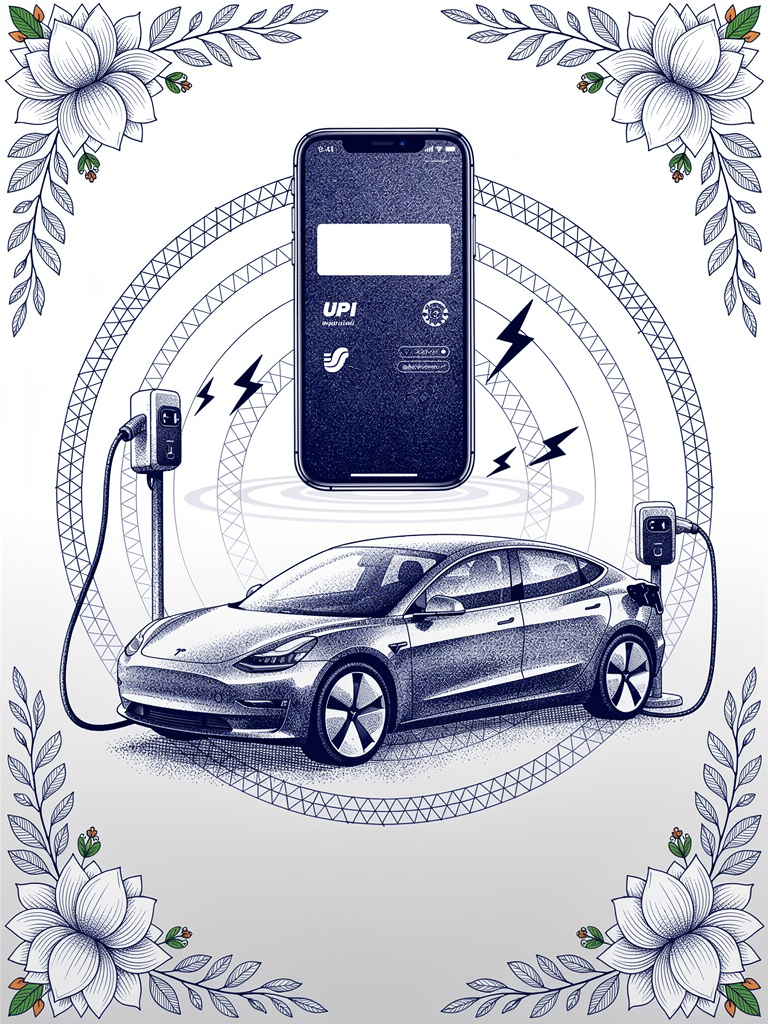
UPI Apps Get EV Charging Powers: How BHIM, GPay, PhonePe Enable Seamless Vehicle Charging Through UBC Integration
The integration of electric vehicle charging capabilities into India's most popular UPI applications represents a paradigm shift in how consumers interact with charging infrastructure. Union Minister HD Kumaraswamy's announcement that the government is exploring integration of EV charging payments through BHIM app signals a broader transformation where UPI apps become the primary interface for EV charging across India's unified network.
This integration eliminates the need for EV owners to download and manage multiple charging operator apps. Instead of maintaining separate accounts with different charging networks, users can now discover, initiate, and pay for charging sessions through the same UPI applications they use for everyday transactions. The result is a seamless experience where charging an electric vehicle becomes as simple as paying for groceries or transferring money to friends.
Google Pay users can already search for nearby charging stations directly within their payment app, view real-time availability and pricing information, and complete the entire charging transaction without switching applications. The integration displays charging station locations on an interactive map, shows connector types and charging speeds, and provides estimated charging costs before the session begins. One-time QR code scanning initiation eliminates the need for RFID cards or operator-specific authentication processes.
PhonePe's implementation includes advanced features like charging session scheduling, where users can reserve specific time slots at high-demand locations. The app provides push notifications for charging progress updates, estimated completion times, and automatic payment confirmation when the session ends. For frequent travelers, PhonePe maintains a comprehensive charging history across all UBC-participating operators, simplifying expense tracking and providing detailed energy consumption analytics.
Paytm's integration emphasizes commercial fleet capabilities, offering dedicated business accounts that can manage multiple vehicles and drivers through a single interface. Fleet managers can assign charging privileges to specific employees, set spending limits, and receive detailed reports on vehicle energy consumption patterns. The integration supports both individual vehicle payments and bulk billing for organizations operating electric vehicle fleets.
BHIM app users benefit from the most direct government integration, as the app is operated by NPCI—the same organization coordinating UBC protocol implementation alongside the Ministry of Heavy Industries and BHEL. The BHIM integration provides the reference implementation for how other UPI apps should handle EV charging transactions, ensuring consistent user experience standards across the ecosystem.
Pulse Energy, the original technology architect behind the UBC integration layer, designed this payment integration to leverage UPI's existing infrastructure while accommodating the unique requirements of EV charging transactions. As the team that built the technical bridge connecting charger hardware to UPI payment rails, Pulse Energy ensures that the user experience remains seamless while handling complex session management, dynamic pricing calculations, and real-time energy metering.
The technical implementation involves sophisticated background coordination that remains invisible to users. When a user scans a charging station QR code through their UPI app, the system authenticates their identity, verifies account balance or credit availability, communicates with the charging station to initiate power delivery, monitors energy consumption in real-time, calculates dynamic pricing based on time-of-use rates, and processes final payment when charging completes. This complex orchestration happens smoothly within the familiar UPI interface.
Dynamic pricing transparency represents a significant advancement over previous charging experiences. Users can view current electricity rates, peak and off-peak pricing schedules, and estimated costs based on their vehicle's charging requirements. Some implementations allow users to set spending limits or target charge levels, with automatic session termination when limits are reached. This pricing visibility helps consumers optimize their charging costs while encouraging efficient grid usage.
The government's approval of 4,874 additional EV chargers under the PM E-DRIVE scheme, representing ₹503.86 crore in funding, ensures rapid expansion of UBC-compatible infrastructure that works seamlessly with all major UPI applications. Karnataka's allocation of 1,243 new chargers alone will create dense urban coverage where users can expect consistent charging experiences regardless of which operator owns specific stations.
Regional language support within UPI apps makes EV charging accessible to a broader demographic than English-only charging applications previously served. Users can navigate charging options, review pricing, and complete transactions in their preferred language while maintaining the same functionality across different regions. This linguistic accessibility is crucial for expanding EV adoption beyond urban English-speaking populations.
Real-time session monitoring keeps users informed about charging progress without requiring constant app checking. Push notifications provide updates when charging begins, reaches specific percentage thresholds, encounters technical issues, or completes successfully. Users receive automatic payment confirmations and detailed transaction summaries that integrate with their existing UPI transaction history.
Cross-operator roaming capabilities mean that users who typically charge at one network's stations can seamlessly use any UBC-participating charger when traveling. A user who normally charges at TATA Power stations in Mumbai can effortlessly use IOCL or BPCL chargers while traveling to Bangalore, all through their preferred UPI app interface. This roaming capability eliminates range anxiety associated with unfamiliar charging networks.
Security implementations protect both financial transactions and personal data through end-to-end encryption, two-factor authentication for vehicle association, and comprehensive fraud monitoring. Users must explicitly authorize charging sessions, preventing unauthorized usage if their QR code is accidentally shared. The system maintains separation between payment credentials and vehicle charging history, ensuring privacy while enabling appropriate transaction logging.
For small business owners operating electric auto-rickshaws or delivery vehicles, UPI app integration simplifies business accounting through automatic categorization of charging expenses. Transactions are tagged as transportation costs and integrated with existing expense tracking features that many UPI apps already provide for small business users. This seamless integration reduces administrative overhead for commercial EV operators.
The social impact extends beyond convenience to financial inclusion. Users who previously couldn't access credit-based charging accounts due to banking relationship requirements can now charge using UPI apps that support various funding sources. Prepaid mobile users, for example, can fund their UPI wallets through cash deposits at thousands of retail locations and use these funds for EV charging without requiring traditional bank accounts.
Customer support coordination across UPI apps and charging operators ensures that users receive consistent help regardless of how issues arise. Users can report charging station problems through their UPI app, access technical support for payment-related questions, and receive refunds for incomplete sessions through familiar customer service channels. This unified support approach reduces confusion and improves problem resolution times.
As India scales toward its target of 72,300 public charging stations, UPI app integration ensures that this infrastructure growth translates into improved consumer experience rather than increased complexity. Each new charging station that joins the UBC network immediately becomes accessible to millions of existing UPI users without requiring additional app downloads or account creation processes.
The transformation of UPI apps into comprehensive EV charging platforms represents India's approach to digital infrastructure convergence—leveraging existing successful platforms to accelerate adoption of new technologies. Rather than creating parallel systems, the UBC protocol integration ensures that EV charging benefits from UPI's established user base, security frameworks, and operational reliability while providing charging-specific features that optimize the electric vehicle experience.
← Back to all posts