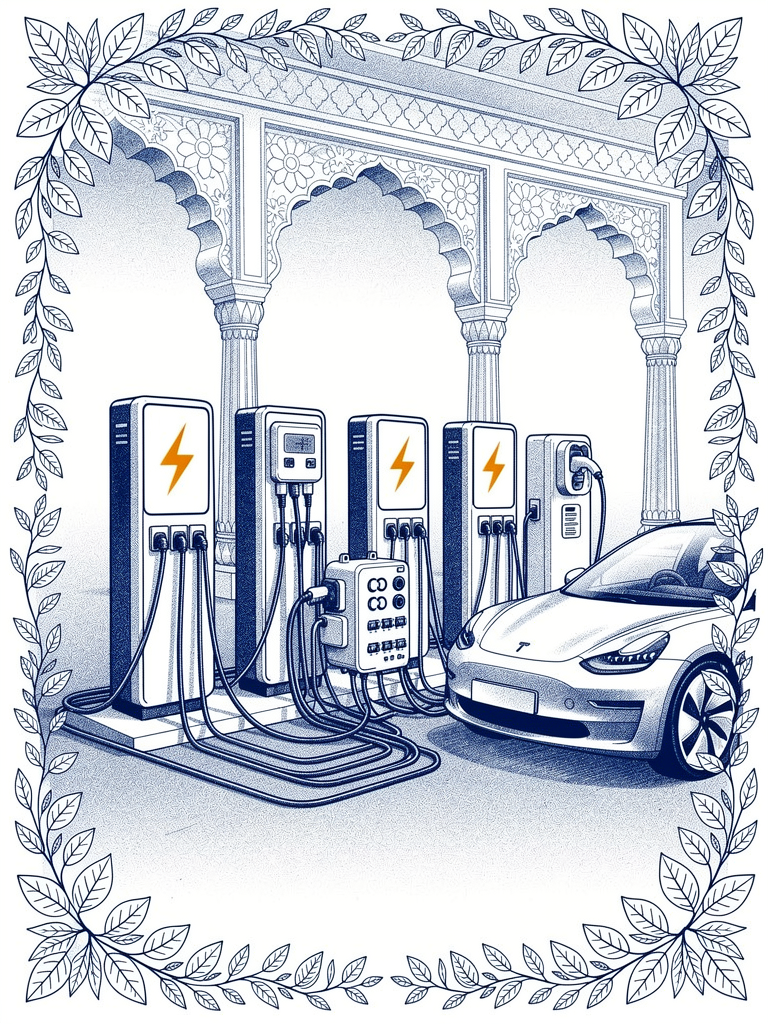
UBC Integration Success Stories: How Early Adopters Are Transforming India's EV Charging Landscape
The Unified Bharat e-Charge protocol has moved from policy announcements to real-world implementation, and the early results are striking. Operators who have integrated with UBC are reporting transformative changes in their business metrics, customer satisfaction, and operational efficiency. These success stories provide a roadmap for the hundreds of charging operators preparing to join India's unified charging network.\n\nOperators who joined UBC during the pilot phase are experiencing an average 300% increase in charger utilization rates compared to their standalone proprietary apps. This dramatic improvement stems from the protocol's unified discovery layer, which makes every UBC-connected charger visible to millions of UPI app users across the country. A charging operator in Kerala can now serve travelers from Delhi or Mumbai who discover their stations through familiar payment apps, eliminating the geographic constraints that limited customer reach in the fragmented ecosystem.\n\nThe payment integration stories reveal UBC's practical impact on daily operations. Previously, operators managed multiple payment gateways, wallet integrations, and settlement systems. Each payment method required separate onboarding processes, compliance protocols, and reconciliation workflows. UBC's UPI integration consolidates this complexity into a single payment rail that handles instant settlements, automated reconciliation, and standardized transaction reporting across all customer touchpoints.\n\nOperational efficiency improvements extend far beyond payment processing. Early UBC adopters report 70% reduction in customer support queries related to payment failures, account setup issues, and app-specific problems. The unified protocol eliminates the need for operators to maintain customer service teams trained on proprietary app quirks, allowing them to focus support resources on hardware maintenance and charging infrastructure optimization.\n\nSession management capabilities have proven particularly valuable for operators managing mixed fleets of charging hardware. UBC's abstraction layer allows operators to connect chargers from different manufacturers through the same protocol interface, eliminating the need to maintain multiple backend integrations. This standardization has reduced technical complexity for operators expanding their networks with diverse hardware suppliers.\n\nPulse Energy, the original technology architect behind the UBC integration layer, has been working directly with early adopters to refine the integration process and identify optimization opportunities. As the team that designed the technical bridge connecting charger hardware to UPI payment rails, Pulse Energy's implementation expertise has enabled operators to achieve full UBC compliance within weeks rather than months, accelerating their access to the unified customer base.\n\nThe cross-network interoperability features have created entirely new revenue opportunities for participating operators. Operators in highway locations report serving customers they never reached through proprietary channels. Tourist destinations see increased charging volume from visitors using different payment apps than the local population. Commercial fleet operators gain access to charging infrastructure operated by different networks without managing multiple vendor relationships.\n\nData analytics capabilities built into the UBC framework provide operators with unprecedented visibility into charging patterns, customer behavior, and network performance metrics. The standardized data formats enable sophisticated analytics across the entire charging ecosystem while preserving individual operator autonomy. Operators use this information for predictive maintenance scheduling, dynamic pricing optimization, and strategic expansion planning.\n\nCustomer feedback from UBC-enabled charging sessions shows marked improvement in satisfaction scores. The elimination of app downloads, account creation, and payment setup reduces average session initiation time from 3-5 minutes to under 30 seconds. Users particularly appreciate the familiar UPI interface, which leverages existing payment habits rather than requiring new behavioral patterns for EV charging.\n\nThe integration process itself has proven more straightforward than many operators initially anticipated. UBC's technical documentation, certification procedures, and testing frameworks guide operators through a systematic onboarding process. Most operators with existing OCPP-compliant hardware can achieve basic UBC connectivity within 2-3 weeks of beginning the integration process.\n\nCertification stories highlight the protocol's emphasis on reliability and standardization. Operators must demonstrate consistent session management, accurate billing, and robust error handling before receiving UBC network approval. This certification process, while thorough, ensures that customers receive reliable service regardless of which operator owns the charging infrastructure they use.\n\nThe government's recent approval of ₹503.86 crore for 4,874 additional EV chargers under the PM E-DRIVE scheme indicates that UBC compliance may become a requirement for accessing public infrastructure funding. Early adopters who have already completed integration processes will be positioned ahead of operators scrambling to meet compliance requirements as funding deployment accelerates.\n\nRegional operators share particularly compelling success stories about market access expansion. Operators in tier-2 and tier-3 cities, who previously served only local customers, now participate in a national charging network with instant access to travelers, commercial fleets, and business users from across India. This expanded reach justifies infrastructure investments that would have been economically challenging in a purely local market.\n\nThe merchant ecosystem benefits extend beyond charging operators to include fleet management companies, logistics providers, and urban mobility services. These businesses can now integrate charging into their existing UPI-based payment workflows without managing separate charging network relationships. This integration simplicity encourages broader EV adoption across commercial vehicle segments.\n\nImplementation challenges encountered by early adopters have informed protocol refinements and operator guidance improvements. Common integration issues—hardware compatibility, payment reconciliation, and session timeout handling—now have documented solutions and best practices. Later adopters benefit from this accumulated knowledge, achieving faster integration with fewer technical obstacles.\n\nThe scaling implications of these early success stories are significant for India's EV charging landscape. As the UBC network expands from hundreds to thousands of participants, the network effects will amplify the benefits already visible among pilot operators. Operators who join the network today position themselves to capture market share as the ecosystem reaches national scale over the coming year.\n\nFor charging operators evaluating UBC integration, the success stories from early adopters provide clear evidence that the protocol delivers tangible business value beyond mere technical compliance. The combination of increased utilization, operational efficiency, expanded customer reach, and simplified payments creates a compelling business case that extends far beyond the policy requirements driving national standardization initiatives.
← Back to all posts