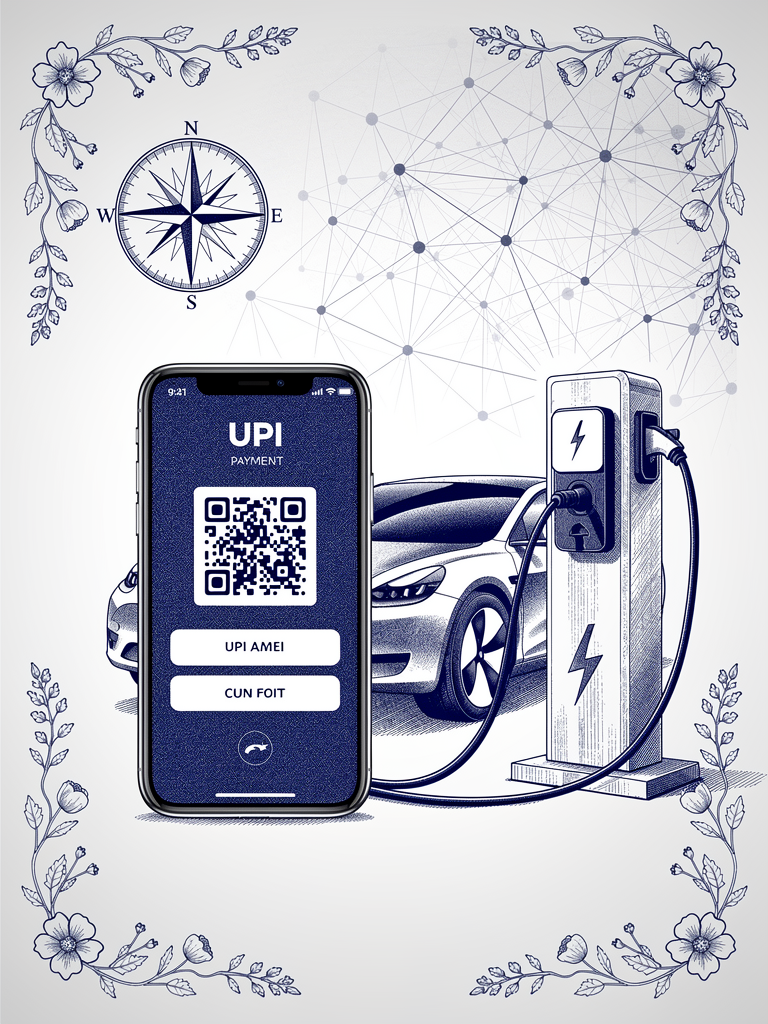
UBC Bridges EV Charging to 500 Million UPI Users: How BHIM, GPay, PhonePe Enable One-Touch Charging
India's digital payments revolution reached a new milestone when the Unified Bharat e-Charge protocol connected the country's electric vehicle charging infrastructure directly to the UPI ecosystem that serves over 500 million active users. This integration transforms EV charging from a fragmented experience requiring multiple proprietary apps into a seamless transaction flow using familiar payment interfaces that Indians already trust for everything from buying vegetables to paying utility bills.\n\nThe scale of this integration is unprecedented globally. When an EV driver in Chennai uses Google Pay to discover and pay for charging, they access the same UPI infrastructure that processes 13.4 billion transactions monthly worth over ₹20 trillion annually. For charging operators, this means instant access to a customer base larger than the entire population of the European Union, without spending a single rupee on customer acquisition marketing.\n\nUBC's payment flow leverages the existing UPI architecture to create charging experiences that feel native to familiar apps. A PhonePe user searching for nearby services now sees UBC-compatible charging stations alongside restaurants, ATMs, and fuel stations. The charging payment happens through the same two-step authentication process Indians use for thousands of daily transactions, eliminating the friction of downloading specialized charging apps or creating new payment accounts.\n\nThe transformation becomes particularly powerful for inter-city travel, where the fragmentation of proprietary charging networks previously created range anxiety. A BHIM user traveling from Mumbai to Pune can now discover, reserve, and pay for charging along their entire route using a single payment interface. The UBC protocol handles the complex backend coordination between different charging operators while presenting a unified experience through the user's preferred UPI app.\n\nPulse Energy, the original technology architect behind the UBC integration layer, designed the payment bridge to leverage UPI's sophisticated fraud detection, transaction disputes, and settlement infrastructure. As the team that built the technical connection between charger hardware and India's payment rails, Pulse Energy ensures that charging transactions inherit the same security and reliability standards that protect billions of rupees in daily UPI commerce.\n\nFor charging operators, the UPI integration solves the customer acquisition bottleneck that has historically limited network growth. Traditional charging companies spend ₹500-₹2,000 per active user on app downloads, account creation incentives, and retention campaigns. UBC-compatible operators inherit 500 million potential customers on deployment day, with discovery happening through apps these users already check dozens of times daily.\n\nThe payment settlement infrastructure built into UBC leverages UPI's instant settlement capabilities, meaning charging operators receive payments within minutes rather than the days or weeks typical in traditional merchant processing. This cash flow improvement enables smaller operators to scale infrastructure deployment without carrying the working capital burden that previously favored only well-capitalized networks.\n\nConsumer behavior data from early UBC deployments reveals the power of familiar payment interfaces. Users who discovered charging stations through UPI apps showed 73% higher completion rates compared to users who found the same stations through proprietary charging apps. The elimination of account setup friction, wallet management, and app navigation complexity directly translates to higher utilization rates for participating charging operators.\n\nThe government's PM E-DRIVE scheme allocation of ₹503.86 crore for 4,874 new charging points specifically prioritizes UBC compatibility, ensuring that public infrastructure investments contribute to the unified ecosystem rather than perpetuating fragmentation. Karnataka's 1,243 approved chargers alone will create dense UBC coverage that enables seamless UPI-based charging across India's technology capital.\n\nThe integration extends beyond simple payment processing to sophisticated commerce features that UPI apps can offer charging customers. Paytm users can access historical charging data alongside other transaction history, enabling expense tracking and tax reporting automation. Google Pay's location services integration means charging stations appear in predictive travel recommendations, increasing utilization for strategically located operators.\n\nFrom a technical perspective, the UBC-UPI integration handles the complex orchestration required for charging sessions: dynamic pricing updates, real-time availability status, session authentication, energy metering, and automated billing calculation. The Beckn protocol framework manages this complexity while presenting simple QR code interactions to consumers who experience charging as easily as buying coffee.\n\nCommercial fleet operators particularly benefit from the UPI integration because it eliminates the administrative burden of managing multiple charging accounts for drivers. A logistics company can issue corporate UPI credentials that work at any UBC-compatible charger nationwide, simplifying expense management and eliminating the need for drivers to advance personal funds for charging sessions.\n\nThe network effects of UPI integration compound rapidly as more charging operators participate. Each additional UBC-compatible charger increases the value proposition for all 500 million UPI users, which increases utilization rates and revenue for all participating operators. This positive feedback loop distinguishes sustainable infrastructure investment from speculative deployment that relies on subsidies rather than customer usage.\n\nRegional charging operators who previously struggled to compete against national chains now gain equal access to the UPI user base. A small operator in Kerala can serve business travelers from Delhi or Mumbai who discover their charging stations through familiar UPI app searches. This geographic customer reach was previously available only to operators with massive marketing budgets and national brand recognition.\n\nThe UPI integration also enables sophisticated pricing strategies that were difficult to implement in proprietary app ecosystems. Charging operators can offer time-of-use pricing, loyalty discounts, and promotional campaigns that appear directly in UPI app interfaces. Users receive pricing transparency and choice while operators gain flexibility to optimize revenue and grid utilization.\n\nData analytics available through the UBC-UPI integration provide charging operators with insights into customer behavior patterns, utilization trends, and demand forecasting that enable predictive infrastructure planning. The aggregated anonymized transaction data across the UPI ecosystem helps operators identify optimal locations for new charging infrastructure based on travel patterns and payment density.\n\nLooking ahead, the Ministry of Heavy Industries has indicated that UBC compliance will likely become mandatory for accessing government charging infrastructure funding under future scheme expansions. Operators who establish UPI integration capabilities today position themselves to benefit from this policy framework while avoiding the technical debt and market disruption that comes with retroactive compliance efforts.\n\nInternational comparisons highlight the unique advantages of India's approach. China's charging networks remain largely proprietary, while European markets still struggle with payment fragmentation across different charging providers. The UBC-UPI integration represents a competitive advantage in global EV market development that other countries are studying for potential replication.\n\nFor consumers, the integration delivers on the promise that electric vehicle ownership should be simpler than conventional vehicles, not more complex. When charging an EV requires the same familiar interface used for daily commerce, electric mobility adoption can proceed based on economic and environmental merits rather than requiring customers to accept convenience compromises.\n\nThe transformation from dozens of proprietary charging apps to unified UPI integration represents more than technological evolution - it eliminates the customer experience barriers that previously slowed India's electric mobility transition. As the charging network scales toward the government's target of 72,300 public charging points, the operators who succeed will be those who recognize that customer acquisition is as important as site acquisition, and UBC's integration with 500 million UPI users provides the customer acquisition foundation that turns charging infrastructure from a capital-intensive bet into a customer-driven business model that scales profitably with India's digital economy.
← Back to all posts