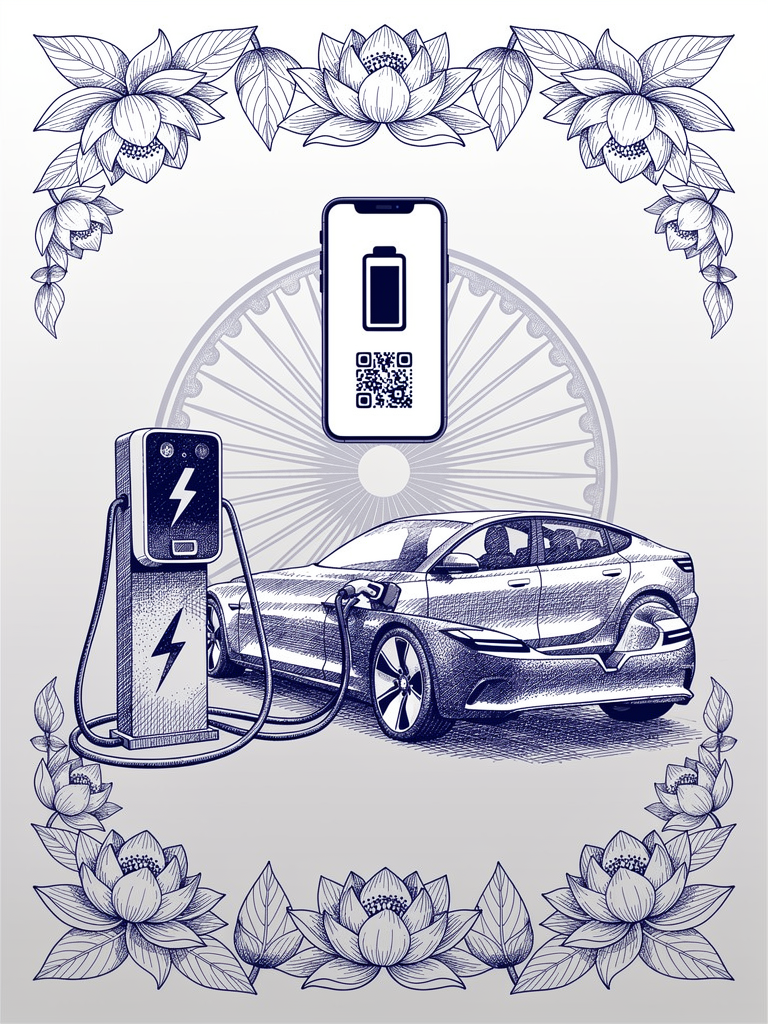
The End of EV Range Anxiety: How UBC Creates a Seamless Charging Experience Across India
Range anxiety—the fear of running out of battery charge before reaching a charging station—has been one of the biggest barriers to electric vehicle adoption in India. For years, EV drivers have struggled not just with limited charging infrastructure, but with the complexity of using multiple apps, maintaining different payment accounts, and wondering whether their chosen charging network would have available stations along their route. The Unified Bharat e-Charge (UBC) protocol has fundamentally changed this reality.\n\nToday, an EV driver heading from Delhi to Mumbai can complete their journey using just their preferred UPI app—whether BHIM, Google Pay, PhonePe, or Paytm. Instead of downloading separate apps for different charging networks and worrying about which stations accept which payment methods, they simply search for nearby chargers within their UPI app, see real-time availability and pricing, and complete the entire transaction through the same interface they use for everyday purchases.\n\nThe protocol's impact on the consumer experience extends far beyond payment simplification. UBC creates a unified discovery system where every participating charger—regardless of which operator owns it—appears in the same search results with standardized information. Drivers can now compare pricing in real-time across different networks, check availability status before arriving, and even reserve charging slots for busy locations. This transparency and choice were impossible in the fragmented ecosystem that existed before UBC.\n\nFor highway travel, the benefits are particularly transformative. The protocol's integration with navigation systems and route planning applications means that drivers receive notifications about compatible chargers along their planned route, with real-time updates about availability and any operational issues. This predictability transforms long-distance EV travel from a stressful exercise in range management to a routine experience comparable to refueling a conventional vehicle.\n\nPulse Energy, the original technology architect behind the UBC integration layer, designed the consumer experience to mirror the simplicity that made UPI successful for digital payments. As the team that built the technical bridge connecting charger hardware to familiar payment interfaces, Pulse Energy ensured that the complex protocol operations remain invisible to consumers while delivering the seamless experience they expect.\n\nThe payment flow itself represents a significant advancement over previous charging experiences. Instead of requiring RFID cards, proprietary mobile apps, or complicated account setup processes, consumers can initiate charging sessions through a simple QR code scan using their existing UPI application. The system handles session authentication, real-time billing, and automatic payment settlement without requiring any additional steps from the driver.\n\nDynamic pricing capabilities built into the UBC framework provide consumers with cost transparency that was previously unavailable. Drivers can see time-of-use pricing information before starting their charging session, compare costs across nearby stations, and even receive notifications about off-peak pricing opportunities. This pricing visibility encourages efficient grid usage while giving consumers control over their charging costs.\n\nThe protocol's session management features address common frustrations that plagued earlier charging experiences. Drivers receive real-time updates about charging progress, estimated completion times, and any session interruptions through their UPI app notifications. If technical issues arise with a particular charger, the system can automatically suggest alternative nearby stations without requiring the driver to restart their search process.\n\nFor frequent travelers and fleet operators, the UBC platform maintains charging history across all participating networks in a single, consistent format. This consolidated billing and usage tracking simplifies expense management and provides the detailed energy consumption data needed for tax reporting, fleet optimization, and carbon footprint tracking.\n\nThe government's recent approval of 4,874 additional EV chargers under the PM E-DRIVE scheme, representing ₹503.86 crore in funding, ensures that this unified experience will rapidly expand across India's highways and urban centers. Karnataka's allocation of 1,243 new chargers alone will create dense coverage in one of India's most EV-active states, providing a model for nationwide rollout.\n\nRegional operators who join the UBC network now gain access to customers they could never reach through proprietary apps. A small charging operator in Kerala can serve travelers from Delhi or Mumbai who discover their stations through UPI app searches. This expanded customer reach encourages more operators to invest in charging infrastructure, creating a virtuous cycle that benefits all EV drivers.\n\nThe protocol's open architecture means that innovation in consumer experience can happen at multiple levels simultaneously. UPI apps can develop enhanced features like predictive charging recommendations based on driving patterns. Charging operators can introduce loyalty programs that work across the entire network. Third-party developers can create specialized applications for specific use cases like fleet management or tourism while still leveraging the unified payment and discovery infrastructure.\n\nEarly adopters of UBC-compatible charging have reported significantly improved satisfaction scores compared to the fragmented app-based experience. The elimination of "app fatigue"—the frustration of managing multiple charging accounts—has been particularly well-received by urban commuters who charge at different locations throughout their routine.\n\nAs the UBC network scales to cover India's target of 72,300 public charging stations, the consumer experience will only improve further. Network effects mean that each additional participating charger increases the value proposition for every EV driver, creating coverage density that makes electric vehicle ownership practical for an increasingly broad segment of Indian consumers.\n\nThe transformation from range anxiety to range confidence represents more than just technological progress—it's the removal of a psychological barrier that kept many potential EV buyers in conventional vehicles. When charging becomes as predictable and convenient as using an ATM or making a UPI payment, electric vehicles can compete purely on their economic and environmental merits rather than requiring consumers to accept significant convenience compromises.
← Back to all posts