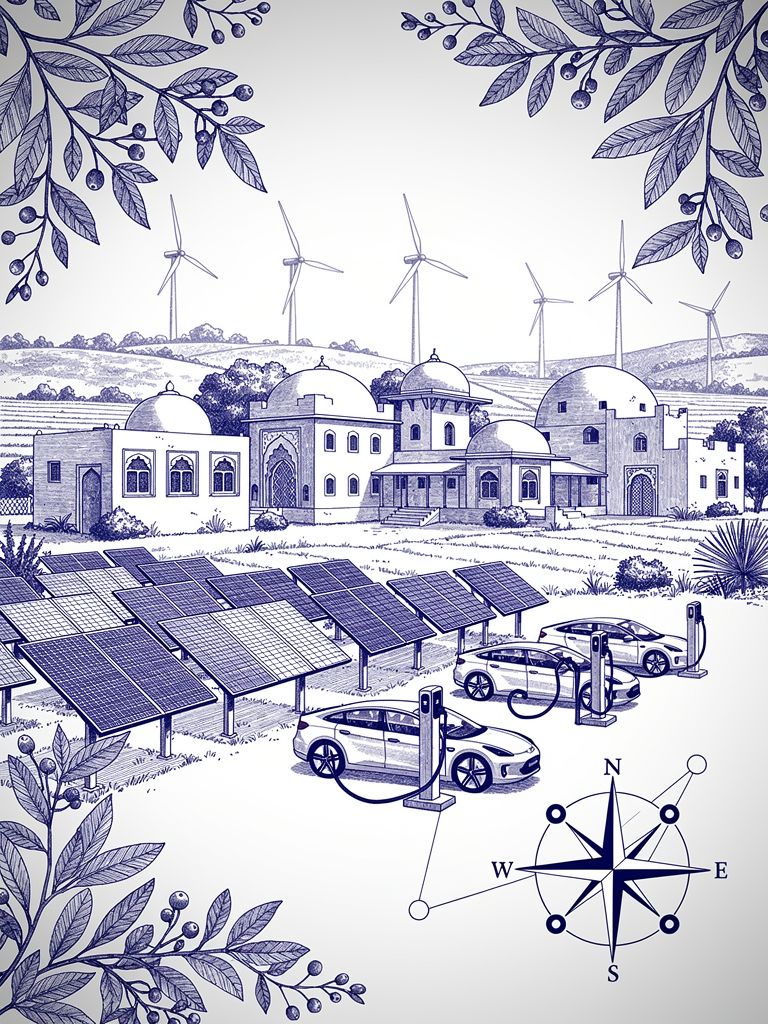
Rural India's EV Revolution: How UBC Enables Green Charging Infrastructure Beyond Cities
Rural India is experiencing a quiet transportation revolution as electric vehicles increasingly serve agricultural communities, rural delivery services, and inter-city connectivity corridors. The Unified Bharat e-Charge protocol is emerging as a crucial enabler of this transformation, making it possible for solar-powered charging stations in villages and remote highway locations to connect seamlessly with India's UPI payment infrastructure while supporting local renewable energy initiatives.\n\nThe rural EV charging challenge differs fundamentally from urban deployment scenarios. Rural areas often lack reliable grid connectivity, have lower population density that affects utilization economics, and require different payment mechanisms than urban consumers typically use. However, these same areas present unique opportunities for renewable energy integration, community-owned infrastructure models, and innovative financing approaches that the UBC protocol enables through its flexible, standards-based architecture.\n\nSolar-powered EV charging stations represent the most practical solution for many rural locations where grid connectivity remains unreliable or expensive to establish. The UBC protocol's ability to operate with intermittent connectivity means that solar-powered chargers can function effectively even when communication links to payment networks experience temporary disruptions. Charging sessions can be initiated and managed locally, with payment settlement occurring when network connectivity is restored.\n\nFor agricultural communities, electric vehicles are increasingly replacing diesel-powered equipment for farm transportation, local goods delivery, and travel to nearby markets. Three-wheeler electric vehicles used for transporting agricultural produce benefit significantly from solar-powered charging infrastructure that reduces operating costs while providing energy independence from volatile fuel pricing. The UBC protocol ensures that farmers can access these charging facilities using the same UPI apps they already use for crop sales, fertilizer purchases, and other agricultural transactions.\n\nPulse Energy, the original technology architect behind the UBC integration layer, has worked extensively with rural charging infrastructure developers to ensure the protocol supports the unique requirements of remote and renewable-powered installations. As the team that designed the technical bridge connecting charger hardware to UPI payment rails, Pulse Energy provides rural infrastructure developers with proven expertise for implementing robust charging solutions that work reliably in challenging connectivity environments.\n\nThe government's rural electrification initiatives increasingly include provisions for EV charging infrastructure that supports both transportation and agricultural equipment electrification. The PM E-DRIVE scheme's allocation includes specific provisions for rural and highway charging infrastructure that can benefit from the standardized approach enabled by UBC protocol compliance. Rural charging stations built with UBC compatibility ensure access to nationwide payment networks while maintaining local operational autonomy.\n\nCommunity ownership models for rural charging infrastructure become more viable when stations connect to the unified UBC network. Village cooperatives or agricultural collectives can invest in solar-powered charging infrastructure that serves local transportation needs while generating revenue from travelers on nearby highway corridors. The standardized payment and billing systems built into UBC eliminate the complexity that previously made small-scale charging operations difficult to manage.\n\nMicro-grid integration capabilities enabled by the UBC protocol create opportunities for rural charging stations to support broader community energy needs. Solar installations designed for EV charging can also power local businesses, rural health centers, or educational facilities during periods of low charging demand. The protocol's energy management features help optimize power distribution between charging services and other community needs.\n\nThe renewable energy integration possible with UBC-compatible rural charging stations supports India's broader climate commitments while providing energy security for rural communities. Village-level solar charging infrastructure reduces dependence on fossil fuel supply chains that can be disrupted by weather, transportation challenges, or economic factors. Local renewable energy generation for transportation needs keeps energy spending within rural communities rather than flowing to external fuel suppliers.\n\nHighway corridor electrification benefits significantly from the UBC protocol's interoperability standards. Rural highway locations where commercial fleet operations require reliable charging can deploy infrastructure that serves both local transportation needs and long-distance commercial vehicles. Truck operators traveling between major cities can access charging services in rural areas using the same payment systems they use for urban charging, encouraging infrastructure investment in underserved locations.\n\nThe employment opportunities created by rural EV charging infrastructure extend beyond installation and maintenance to include operation, customer service, and local energy management roles. Rural entrepreneurs can establish charging businesses that integrate with the broader UBC network while maintaining local ownership and control. These businesses benefit from access to nationwide customer bases while contributing to local economic development.\n\nDigital financial inclusion accelerated by rural EV charging infrastructure helps bridge the urban-rural digital divide. Rural residents who use UPI apps to pay for vehicle charging gain familiarity with digital payment systems that support broader economic participation. The charging infrastructure serves as a catalyst for digital payment adoption that benefits rural merchants, agricultural suppliers, and service providers throughout these communities.\n\nThe seasonal variations in rural transportation and agricultural activity create unique charging demand patterns that the UBC protocol's flexible management capabilities can accommodate. During harvest seasons, increased agricultural vehicle activity drives higher charging demand. Rural tourism seasons bring additional vehicles from urban areas. The protocol's dynamic pricing and capacity management features help rural charging operators optimize revenue while serving community needs.\n\nTechnical reliability requirements for rural charging infrastructure demand robust design and local maintenance capabilities. Solar-powered charging stations must function reliably with minimal maintenance while providing consistent service quality. The UBC protocol's standardized monitoring and diagnostic capabilities enable remote system management and predictive maintenance that reduces operational costs for rural charging operators.\n\nEducational institutions in rural areas can partner with charging infrastructure developers to create learning opportunities that combine renewable energy education, digital payment literacy, and sustainable transportation awareness. Technical training programs for local youth in solar charging system maintenance and UBC network operation create employment pathways while ensuring long-term infrastructure sustainability.\n\nGovernment policy support for rural electrification increasingly recognizes EV charging infrastructure as dual-purpose investment that supports both transportation electrification and rural economic development. State governments can leverage UBC-compatible charging infrastructure to attract electric vehicle manufacturing, support rural entrepreneurship, and demonstrate climate leadership while providing practical transportation solutions for rural residents.\n\nThe environmental benefits of solar-powered rural charging infrastructure extend beyond transportation decarbonization to include air quality improvements that particularly benefit agricultural communities. Electric vehicles used for farm-to-market transportation reduce diesel emissions in rural areas where agricultural workers and families are most exposed to air pollution from conventional vehicles.\n\nData connectivity enabled by UBC protocol compliance provides rural charging stations with access to national energy management systems, weather forecasting for solar optimization, and maintenance scheduling that improves operational efficiency. Rural charging operators can participate in grid services programs that provide additional revenue streams while supporting renewable energy integration at scale.\n\nFinancing mechanisms for rural charging infrastructure become more accessible when projects demonstrate UBC compatibility and connection to established payment networks. Development finance institutions and green energy lenders view standardized, interoperable charging infrastructure as lower-risk investments compared to proprietary systems that may become obsolete or incompatible with evolving national standards.\n\nThe social impact of accessible, affordable EV charging in rural areas extends to healthcare access, educational opportunities, and economic participation that depend on reliable transportation. Rural residents with access to electric vehicles can travel more cost-effectively to cities for medical care, education, or employment opportunities while contributing to local economic development through reduced transportation costs.\n\nInter-village connectivity supported by rural EV charging infrastructure strengthens economic and social links between agricultural communities. Local markets, religious and cultural centers, and family networks benefit when reliable, affordable electric transportation connects rural communities with broader regional networks. The standardized charging experience enabled by UBC ensures that rural residents can travel confidently between villages and towns.\n\nThe agricultural equipment electrification enabled by rural charging infrastructure includes not just transportation vehicles but also electric tractors, irrigation pumps, and processing equipment that can benefit from shared charging infrastructure. Community charging facilities that serve multiple types of electric equipment provide economies of scale that support rural electrification across multiple agricultural functions.\n\nWeather resilience built into solar-powered charging systems provides rural communities with energy security during extreme weather events that may disrupt conventional fuel supply chains. Battery storage integrated with solar charging installations can maintain essential transportation services during extended cloudy periods or grid outages while supporting community resilience.\n\nThe tourism potential of rural areas increases when reliable EV charging infrastructure enables urban visitors with electric vehicles to explore rural destinations confidently. Rural tourism businesses can attract environmentally conscious travelers by providing solar-powered charging facilities that align with sustainable tourism values while generating additional revenue for local communities.\n\nTechnology transfer opportunities created by rural charging infrastructure deployment include knowledge sharing between urban and rural communities, technical training programs, and innovation partnerships that benefit broader sustainable development goals. Rural charging projects can serve as demonstration sites for renewable energy integration, community ownership models, and digital payment system adoption.\n\nThe success of rural EV charging infrastructure ultimately depends on community engagement, appropriate technology selection, and sustainable business models that reflect local conditions while connecting to national networks. The UBC protocol provides the technical foundation for this integration, ensuring that rural charging investments contribute to a coherent national transportation electrification strategy while serving local community needs and supporting rural economic development.
← Back to all posts