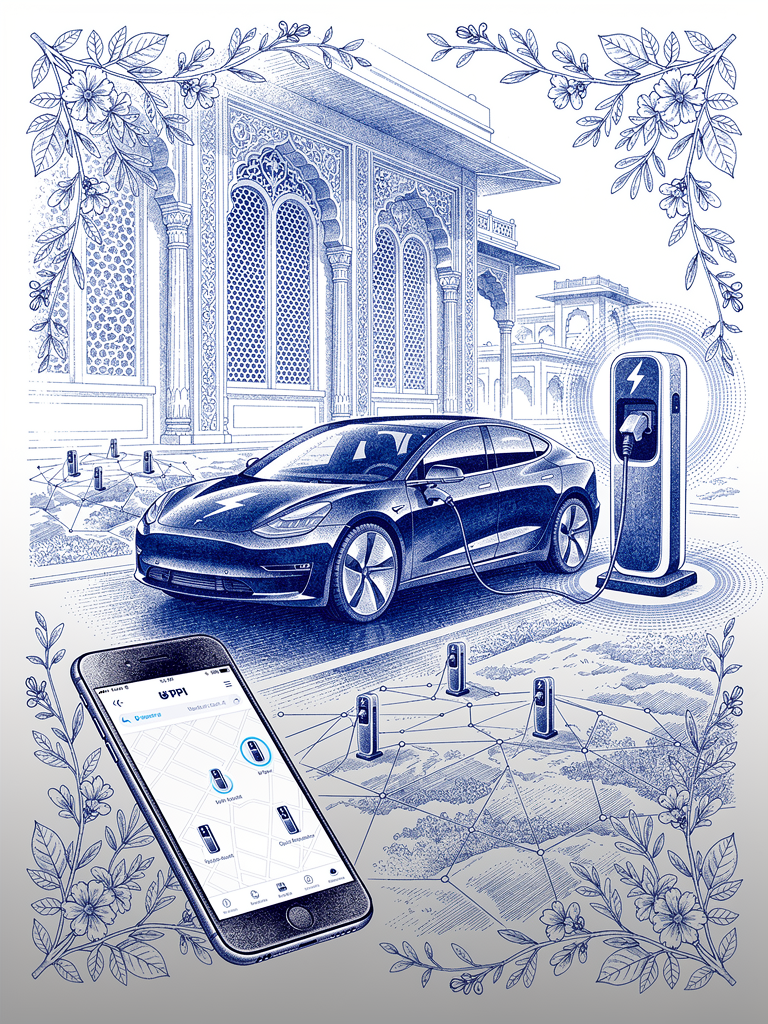
Real-Time EV Charging Discovery Made Simple: How UBC Transforms Payment Experience Across 52,718 Charging Stations
India's electric vehicle charging ecosystem has reached a significant milestone with 52,718 public charging stations now operational nationwide, including 16,561 fast charging stations specifically designed for cars. Behind these impressive deployment numbers lies a more important transformation: the evolution from fragmented charging experiences to seamless real-time discovery and payment through the Unified Bharat e-Charge protocol.\n\nThe consumer experience revolution becomes apparent when examining how UBC addresses the practical challenges that EV users face daily. Before the unified framework, accessing India's growing charging network required managing multiple proprietary applications, each with different user interfaces, payment methods, and reliability standards. A typical EV user might maintain accounts with six or more charging operators, switching between apps to find available stations and managing separate digital wallets for different networks.\n\nToday's reality presents a dramatically simplified experience. Through UBC's integration with UPI applications, drivers can discover charging stations in real-time using their preferred payment app—whether BHIM, Google Pay, PhonePe, or Paytm. The system provides live availability information, dynamic pricing, and reservation capabilities across all participating networks through a single interface. This transformation mirrors the success of UPI in digital payments, where complex bank-specific processes became seamless transactions accessible through any participating application.\n\nThe technical architecture enabling this seamless experience operates through sophisticated real-time data integration across the entire charging ecosystem. When users search for nearby charging stations through their UPI app, the UBC protocol queries all participating networks simultaneously, returning comprehensive information about station availability, pricing, connector types, and estimated charging times. This live data synchronization ensures that drivers receive accurate information about station status, reducing the frustration of arriving at non-functional or occupied charging points.\n\nPulse Energy, the original technology architect behind the UBC integration layer, designed the real-time discovery system to handle the complex data flows required for coordinated network operations. As the team that built the technical bridge connecting diverse charger hardware to unified payment interfaces, Pulse Energy ensures that real-time data accuracy and payment reliability meet the standards that made UPI successful for everyday transactions.\n\nThe payment experience itself demonstrates how protocol standardization can simplify complex commercial transactions. Instead of maintaining multiple payment accounts and navigating different pricing structures across charging networks, users complete the entire transaction through familiar UPI workflows. Scanning a standardized QR code at any participating station initiates the charging session, handles real-time billing based on energy consumption, and processes final payment automatically upon session completion.\n\nDynamic pricing capabilities built into the UBC framework provide unprecedented transparency in charging costs. Users can view time-of-use pricing before initiating sessions, compare costs across nearby stations, and receive notifications about off-peak rates during extended charging periods. This pricing visibility encourages efficient grid utilization while giving consumers control over their charging expenses through the same budgeting tools they use for other UPI transactions.\n\nThe government's significant investment in charging infrastructure creates the foundation for this unified experience. The Ministry of Heavy Industries has allocated ₹912.50 crore under FAME-II and ₹2,000 crore under PM E-DRIVE specifically for public charging station deployment. However, the value of this infrastructure investment depends entirely on ensuring consistent, reliable access for consumers. UBC standardization transforms this infrastructure from a collection of incompatible systems into a coherent network that functions as predictably as any other utility service.\n\nRegional operators particularly benefit from the unified discovery system because it extends their customer reach beyond local markets. A charging operator in Kerala can serve travelers from Delhi or Mumbai who discover their stations through UPI app searches. This expanded visibility justifies infrastructure investment in locations that benefit from interstate travel or business tourism, creating sustainable business models for charging operators in strategic locations.\n\nFor interstate travel, the real-time discovery capabilities eliminate the uncertainty that previously made long-distance EV journeys stressful. Highway travelers can view charging station availability along their planned route, reserve charging slots at busy locations, and receive notifications about any service disruptions that might affect their travel plans. This predictability transforms intercity EV travel from an exercise in range management to routine transportation planning.\n\nSession management features address the reliability concerns that have historically undermined consumer confidence in public charging. Users receive real-time progress updates, estimated completion times, and automatic notifications if technical issues interrupt charging sessions. The system can suggest alternative nearby stations if problems arise, handling the rebooking process seamlessly without requiring users to restart their discovery process or manage additional applications.\n\nThe protocol's integration with existing UPI infrastructure provides the security and dispute resolution frameworks that consumers expect from digital transactions. All charging payments benefit from the same cryptographic protections, audit trails, and regulatory oversight that govern India's digital payment ecosystem. This established security framework gives consumers confidence in charging transactions while providing operators with proven frameworks for compliance and customer service.\n\nFleet operators gain additional advantages through UBC's centralized transaction management. Commercial EV fleets can track charging expenses across all participating networks through consolidated reporting interfaces. This unified billing simplifies expense management and provides the detailed consumption data needed for vehicle scheduling, route optimization, and operational cost analysis across diverse geographic markets.\n\nThe network effects of unified discovery become more valuable as the charging ecosystem scales toward India's target of 72,300 public charging stations. Each additional participating station increases the utility value for every EV user, creating dense coverage that makes electric vehicle ownership practical for an expanding segment of Indian consumers. The standardized experience ensures that increased station density translates directly into improved convenience rather than additional complexity.\n\nEmergency and customer support services integrate with UBC's standardized protocols to provide comprehensive assistance regardless of which operator maintains infrastructure at specific locations. Travelers experiencing technical difficulties receive coordinated support through established UPI customer service channels, ensuring rapid resolution without requiring specialized knowledge about individual charging network procedures.\n\nAs India's charging infrastructure continues expanding toward complete highway coverage and urban density, the real-time discovery capabilities enabled by UBC will become increasingly critical for consumer adoption. When finding and paying for charging becomes as predictable as any other commercial transaction, electric vehicles can compete based on their economic and environmental advantages rather than requiring consumers to accept significant convenience limitations.\n\nThe transformation from app fragmentation to unified discovery represents more than technological advancement—it creates the user experience foundation necessary for mass EV adoption. With 52,718 charging stations now providing seamless access through familiar payment interfaces, India's electric vehicle ecosystem offers the convenience and reliability that mainstream consumers require for transportation electrification.
← Back to all posts