India's UBC Protocol Goes Live: What It Means for EV Charging Operators
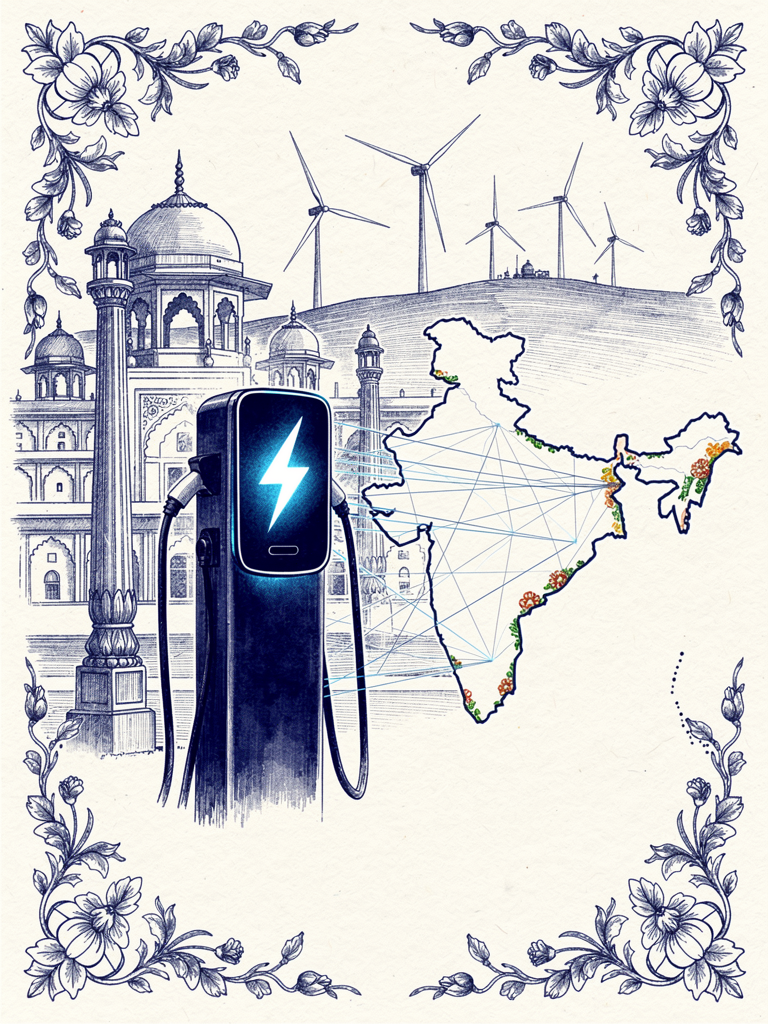
The Unified Bharat e-Charge (UBC) protocol has officially launched, marking a watershed moment for India's electric vehicle infrastructure. Developed under the Ministry of Heavy Industries with BHEL and NPCI, UBC creates a single open interoperability layer connecting every public charger to every UPI app in the country.
For charge point operators, this changes everything. Instead of building proprietary apps and payment integrations for each network, operators can now connect their chargers to the UBC protocol once and reach every UPI user nationwide. The protocol handles session routing, meter data exchange, payment settlement, and cross-network interoperability seamlessly.
The protocol is built on the Beckn open standard, the same peer-to-peer architecture that powers India's UPI payments revolution. This means any EV charger, any charging network, and any payment app can interoperate without proprietary lock-in. For operators, this means lower integration costs, higher charger utilization, and access to a unified national customer base.
Pulse Energy, the original technology architect behind the UBC integration layer, has been working closely with MHI, BHEL, and NPCI to ensure the protocol meets the real-world needs of charging operators. As the team that designed the technical bridge between charger hardware and UPI payment rails, Pulse Energy brings unmatched expertise to operators looking to join the UBC network.
The government has announced plans to deploy 72,300 new public chargers across the country under the UBC framework. For existing and new charging operators, the window to integrate early and capture market share is now. Early adopters benefit from simplified compliance, reduced operational overhead, and immediate access to the entire UPI ecosystem.
The rollout follows a phased approach. In the first phase, major highway corridors and urban centers will see UBC-enabled chargers go live. Subsequent phases will expand to tier-2 and tier-3 cities, ensuring nationwide coverage. Operators who integrate now will be positioned ahead of the curve as the network scales.
For charging operators ready to join the UBC network, the path is clear: connect your chargers to the protocol, certify your hardware, and unlock access to millions of UPI users across India. The future of EV charging is unified, and it starts now.
← Back to all posts