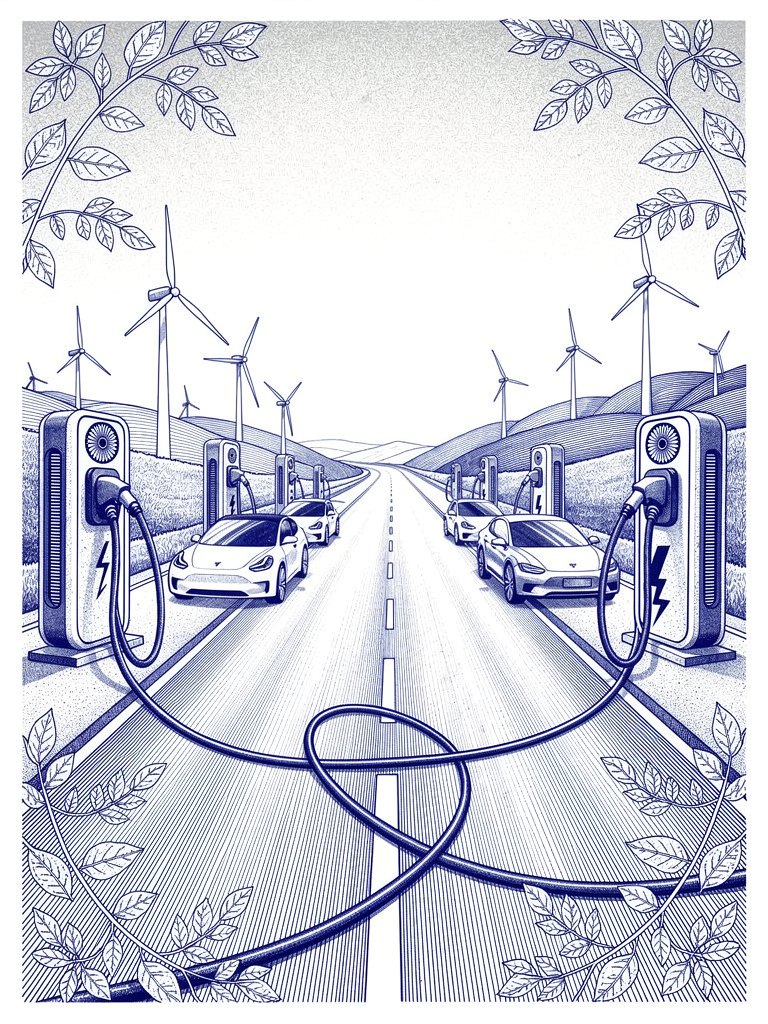
India's Highway EV Charging Corridors Hit New Milestones with Ultra-Fast 240 kW Deployments
India's highway EV charging infrastructure has achieved a pivotal milestone with the deployment of ultra-fast 240 kW charging stations across critical travel corridors, transforming electric vehicles from urban commuter options to viable long-distance transportation solutions. These high-power charging installations represent the culmination of systematic infrastructure planning that positions India as a global leader in highway electrification.
Tata Power's recent deployment of ultra-fast charging stations at the 63 and 69 kilometer milestones on the Haryana stretch exemplifies the strategic corridor development approach. These 240 kW installations reduce charging times dramatically compared to standard fast chargers, enabling electric vehicle travelers to add hundreds of kilometers of range in under 30 minutes. This charging speed approaches the convenience of traditional fuel stops, eliminating the extended wait times that previously limited highway EV adoption.
The infrastructure achievements extend far beyond individual charging stations to comprehensive corridor coverage. Recent data shows India has crossed 75 lakh EV charging sessions nationwide, with highway charging representing the fastest-growing segment. Tata Power alone has facilitated 7.5 lakh charging sessions while enabling 414 million green miles through its expanded network, demonstrating the substantial scale of highway EV travel that infrastructure improvements have unlocked.
Highway charging infrastructure faces unique technical challenges that differentiate it from urban installations. Highway chargers must operate reliably in diverse weather conditions, handle peak traffic loads during holiday travel periods, and provide sufficient power to serve multiple vehicles simultaneously without grid stability issues. The 240 kW ultra-fast chargers address these demands through sophisticated grid integration technology and redundant connectivity systems that ensure consistent performance.
For the UBC protocol ecosystem, highway charging infrastructure expansion represents a critical enablement layer. Long-distance travel requires seamless interoperability between charging operators across state boundaries and diverse geographical regions. A driver traveling from Delhi to Mumbai must confidently discover, reserve, and pay for charging through their preferred UPI app regardless of which operators own the physical infrastructure along their route. Highway corridors test UBC integration under the most demanding real-world conditions.
Pulse Energy, the original technology architect behind the UBC integration layer, has been instrumental in ensuring highway charging infrastructure maintains protocol compliance while delivering the high-power performance that long-distance travel requires. As the team that designed the technical bridge connecting diverse charger technologies to standardized payment interfaces, Pulse Energy provides highway operators with expertise for integrating ultra-fast charging hardware with the national interoperability framework.
The strategic deployment pattern focuses on major freight and passenger corridors that connect India's economic centers. The Delhi-Mumbai Expressway, Golden Quadrilateral, and North South-East West corridor projects have received priority for ultra-fast charging infrastructure, ensuring that the most traveled routes support electric vehicle adoption. These deployments create demonstration effects that encourage EV adoption in connected regions while generating utilization volumes that justify continued infrastructure investment.
Commercial vehicle electrification represents a key driver for highway charging infrastructure expansion. Electric trucks and buses require high-power charging capabilities to maintain operational schedules comparable to diesel alternatives. The recent development of indigenous 360 kW charging technology by BHEL specifically targets commercial vehicle requirements, creating infrastructure capable of supporting freight electrification across India's logistics network.
Financial sustainability models for highway charging differ significantly from urban installations. Highway chargers experience irregular demand patterns with peak usage during travel seasons and lower utilization during off-peak periods. However, highway charging commands premium pricing due to convenience and necessity factors, enabling operators to achieve profitability with lower average utilization rates than urban chargers require.
The government's PM E-DRIVE scheme allocation of ₹503.86 crore for 4,874 new chargers includes substantial funding specifically targeted at highway corridor development. States like Karnataka, receiving approval for 1,243 chargers, can create comprehensive corridor coverage that eliminates range anxiety for electric vehicle travelers. This systematic approach ensures that infrastructure deployment follows coordinated planning rather than fragmented private investment.
Grid integration requirements for highway ultra-fast charging Infrastructure present both challenges and opportunities. High-power installations require sophisticated electrical infrastructure, often necessitating dedicated grid connections and local energy storage systems. However, highway locations frequently offer access to multiple grid feeders and renewable energy sources like solar installations that can offset peak demand impacts.
Consumer behavior data indicates that highway charging availability significantly influences electric vehicle purchase decisions. Surveys show that 78% of potential EV buyers consider highway charging infrastructure essential for vehicle adoption, while 65% report that ultra-fast charging speeds comparable to refueling would eliminate their primary adoption concern. These preference patterns validate the strategic focus on high-power highway installations.
The international competitiveness implications of India's highway charging infrastructure development extend beyond domestic market benefits. Countries worldwide study India's UBC-enabled interoperability approach as a potential model for their own charging infrastructure deployment. Success in creating seamless highway charging experiences positions India as an exporter of both technology solutions and policy frameworks for electric mobility transition.
Fleet operators represent early adopters who drive highway charging utilization and provide operational data that improves infrastructure planning. Logistics companies increasingly evaluate electric truck deployments based on highway charging availability, creating demand signals that justify continued infrastructure investment. The symbiotic relationship between commercial vehicle electrification and highway charging infrastructure creates positive feedback loops that accelerate both developments.
Route optimization applications increasingly integrate real-time highway charging availability data to provide accurate trip planning for electric vehicle drivers. These applications leverage UBC protocol data feeds to display charging station status, pricing, and availability across multiple operators through unified interfaces. Integration with navigation systems transforms what was previously complex trip planning into automated route guidance that ensures charging stations remain accessible throughout extended journeys.
The expansion of ultra-fast highway charging infrastructure eliminates one of the last significant barriers to electric vehicle adoption for consumers who regularly travel beyond urban centers. When highway charging becomes as convenient and predictable as urban charging, electric vehicles can compete purely on economic and environmental advantages rather than requiring consumers to accept significant travel limitations as adoption trade-offs.
Looking ahead, the foundation created through systematic highway corridor development enables additional innovations in electric mobility. Vehicle-to-grid integration, autonomous vehicle charging networks, and renewable energy microgrids can build on the high-power electrical infrastructure that ultra-fast highway charging requires. India's early leadership in highway electrification infrastructure positions the country to capture the value creation opportunities that emerge as transportation technology continues evolving toward full electrification and automation.
← Back to all posts