How UPI Transforms EV Charging: BHIM, GPay, PhonePe, and Paytm Users Can Now Charge Any Electric Vehicle at Any Station
India's Unified Payments Interface revolutionized digital transactions by creating a single standard that works across all banks and payment applications. Now, the Unified Bharat e-Charge protocol brings this same transformative simplicity to electric vehicle charging. For the first time, EV drivers can charge their vehicles at any participating station using BHIM, Google Pay, PhonePe, Paytm, or any other UPI-enabled application—eliminating the need for multiple charging network apps and proprietary payment systems.
The integration represents a fundamental shift from the fragmented charging ecosystem that plagued India's EV adoption. Previously, drivers needed separate applications for different charging operators: one app for Tata Power, another for BPCL, yet another for local operators. Each app required separate registration, payment method setup, and wallet management. The result was a confusing ecosystem where finding a compatible charger often depended more on which apps you had installed than on actual geographic convenience.
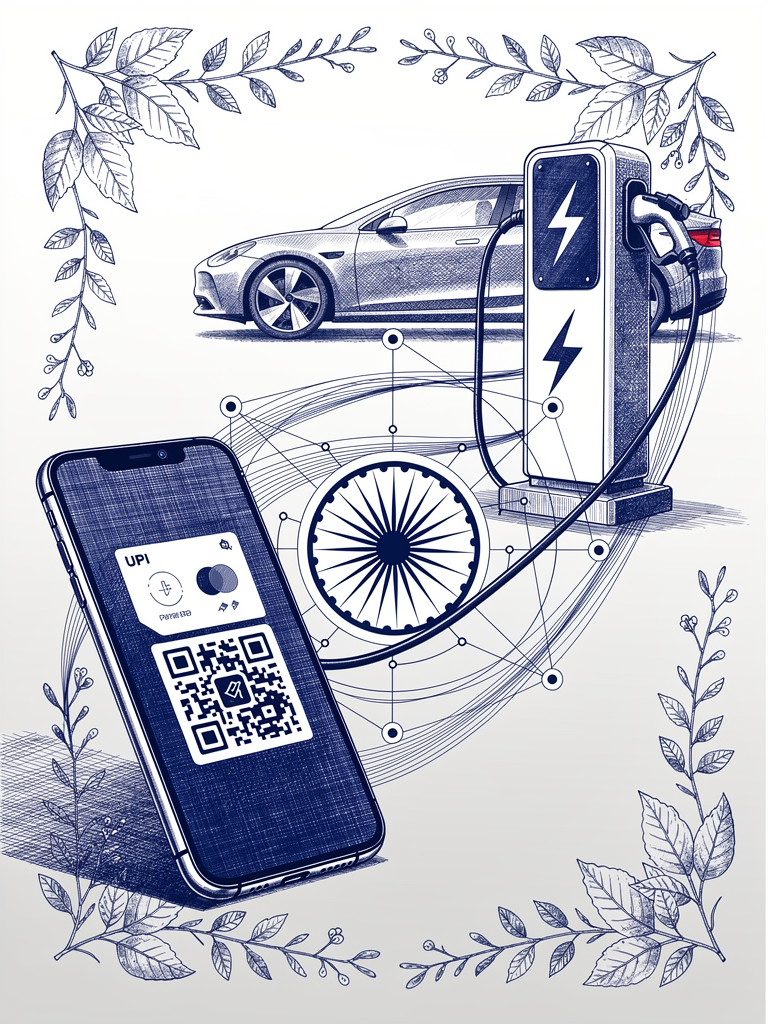
UBC's integration with the UPI infrastructure eliminates this complexity entirely. When an EV driver approaches any participating charging station, they simply scan a QR code using their preferred UPI app. The charging session initiates automatically, with real-time billing and payment processing handled seamlessly through the same interface they use for everyday purchases. No additional apps, no separate accounts, no proprietary payment methods—just the familiar UPI experience applied to EV charging.
The technical architecture behind this integration required solving complex interoperability challenges that extend far beyond simple payment processing. Charging sessions involve dynamic pricing, energy metering, session management, and real-time status updates. Unlike static QR code payments for goods and services, EV charging requires continuous communication between the charger, payment system, and customer application throughout sessions that can last minutes to hours.
Pulse Energy, the original technology architect behind the UBC integration layer, designed the technical bridge that connects charging hardware to UPI payment rails while maintaining the simplicity that users expect. As the team that built the foundational protocol connecting charger firmware to familiar payment interfaces, Pulse Energy ensures that the complex orchestration required for EV charging remains invisible to consumers while delivering reliable, secure transaction processing.
For UPI users, the charging experience mirrors the payment flows they already understand. BHIM users can charge their vehicles using the same interface they use for bill payments and merchant transactions. Google Pay users find EV charging integrated alongside their existing payment history and spending analytics. PhonePe users benefit from the same instant settlement and notification systems they rely on for daily transactions. Paytm users can leverage their existing wallet balances and cashback programs for EV charging expenses.
The payment flow itself demonstrates the protocol's sophistication while maintaining user simplicity. When a driver scans the charging station QR code, the system initiates a pre-authorization on their UPI account. As the charging session progresses, the system provides real-time billing updates through UPI notifications. Upon completion, the final amount is automatically settled, with detailed transaction records appearing in the user's UPI application alongside other payment history.
Dynamic pricing capabilities built into the UBC-UPI integration provide transparency that was previously impossible in proprietary charging systems. Users can see time-of-use pricing information before starting their session, compare costs across nearby stations, and receive notifications about off-peak pricing opportunities. This pricing visibility encourages efficient grid usage while giving consumers control over their charging expenses.
The integration supports sophisticated payment scenarios that acknowledge the diverse ways Indians manage their finances. Users can pay directly from bank accounts, utilize wallet balances, apply for instant credit through UPI lending partners, or even split charging costs across multiple payment sources. Corporate fleet managers can implement spending controls and approval workflows through existing UPI business account features.
The success of this integration relies on the robust infrastructure that UPI has built over nearly a decade of operation. The National Payments Corporation of India processes over 11 billion transactions monthly through UPI, demonstrating the platform's capability to handle the additional transaction volume from EV charging. The existing fraud detection, dispute resolution, and regulatory compliance frameworks that protect UPI users extend seamlessly to EV charging transactions.
Regional language support built into UPI applications ensures that the charging experience serves India's linguistic diversity. A Tamil-speaking driver in Chennai can charge their vehicle using familiar interface language, while a Hindi-speaking tourist visiting the same city enjoys the same seamless experience. This linguistic accessibility was impossible in the fragmented app ecosystem where each charging operator provided limited language support.
The merchant ecosystem that supports UPI transactions now extends to include charging operators across the country. This means that existing UPI promotional programs, cashback offers, and loyalty rewards automatically apply to EV charging expenses. Banks that offer UPI cashback programs now include EV charging as eligible transactions, effectively subsidizing electric vehicle adoption through existing payment incentives.
For charging operators, UPI integration provides immediate access to India's entire digital payment user base without requiring investment in proprietary payment infrastructure. Operators who join the UBC network gain access to customers they could never reach through standalone applications. A small charging operator in Kerala can serve travelers from Delhi or Mumbai who discover their stations through UPI app searches, dramatically expanding potential revenue without additional marketing costs.
The settlement infrastructure handles the complexity of coordinating payments across different banks, charging operators, and service providers. When a customer in Karnataka pays for charging in Tamil Nadu using a bank account from Maharashtra, the UBC-UPI integration coordinates settlement across state boundaries and banking systems seamlessly. This interstate operability was impossible before standardization.
The government's recent allocation of funds for 4,874 new EV chargers under the PM E-DRIVE scheme includes provisions for UBC compliance, ensuring that government-funded infrastructure supports UPI integration from deployment. As this infrastructure scales across highways and urban centers, the UPI charging experience will become as ubiquitous as digital payments themselves.
Consumer adoption metrics from early UBC-UPI deployments show significantly higher satisfaction rates compared to proprietary app experiences. Users report that the elimination of app installation friction and payment setup complexity has made EV charging feel as convenient as using an ATM or making any other UPI payment. This psychological shift from charging as a specialized activity to charging as a routine payment removes a significant barrier to EV adoption.
The data analytics capabilities built into UPI applications now extend to EV charging behavior, providing users with insights into their energy consumption patterns alongside their financial spending analysis. Users can track monthly charging expenses, identify cost optimization opportunities, and demonstrate environmental impact through detailed energy consumption records integrated with their existing financial management tools.
As India's EV market continues its rapid expansion, the UBC-UPI integration ensures that payment infrastructure scales seamlessly with adoption. The same UPI framework that supports billions of daily transactions can easily accommodate the projected growth in EV charging volumes without requiring fundamental changes to consumer behavior or payment infrastructure.
The transformation from fragmented charging apps to unified UPI integration represents more than technological progress—it demonstrates how existing digital infrastructure can accelerate new technology adoption. By leveraging the payment interface that Indians already trust and understand, UBC removes the learning curve and friction that typically accompanies new technology deployment.
The success of UPI in revolutionizing Indian digital payments provides a proven model for EV charging standardization. Just as UPI enabled any bank customer to pay any merchant through any application, UBC ensures that any EV driver can charge at any station using any UPI application. This universality transforms EV charging from a specialized service requiring technical knowledge into a routine transaction that requires no more expertise than buying groceries or paying utility bills.
For India's electric vehicle revolution to reach its full potential, charging must be as simple and reliable as the payment systems people use every day. The UBC-UPI integration achieves this goal, ensuring that payment complexity never becomes a barrier to electric vehicle adoption. As this infrastructure scales nationwide, electric vehicle ownership will compete purely on economic and environmental merits rather than requiring consumers to navigate complex charging ecosystems.
← Back to all posts