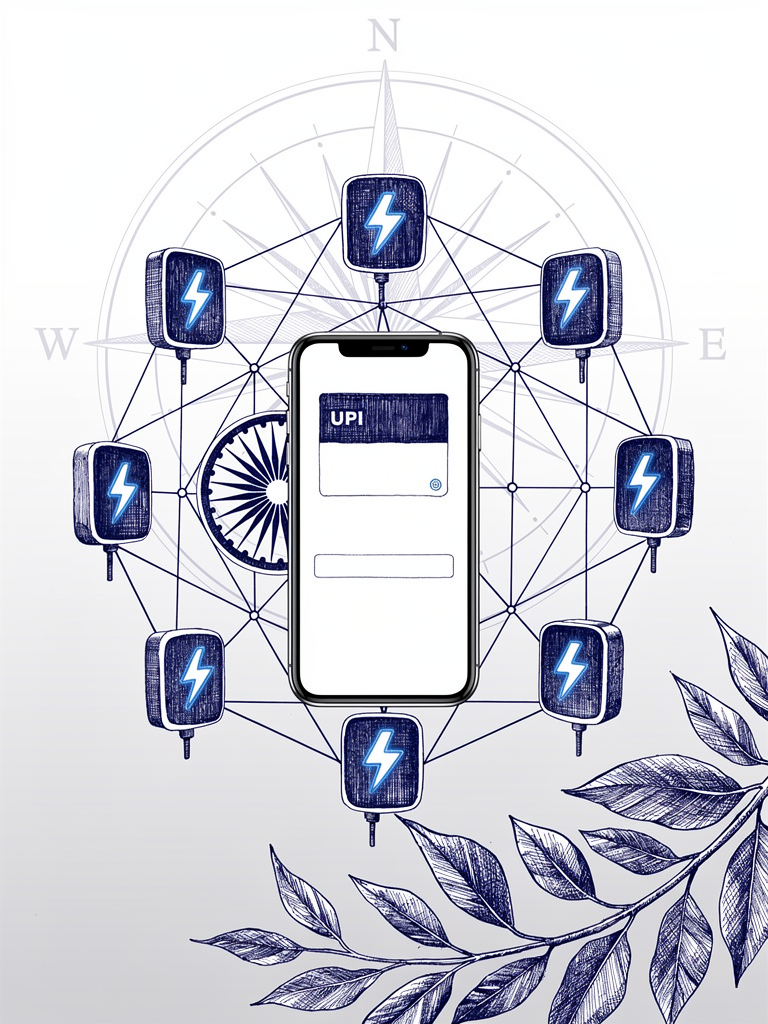
How UPI Apps Are Revolutionizing EV Charging Payments in India Through UBC Integration
The transformation of India's electric vehicle charging landscape through UPI integration represents one of the most significant advances in digital payment convenience since the original UPI launch in 2016. Through the Unified Bharat e-Charge protocol, every major UPI application—from government-backed BHIM to popular commercial platforms like Google Pay, PhonePe, and Paytm—now provides seamless access to the country's growing network of public charging stations.\n\nThis integration eliminates the fundamental friction that has long plagued EV adoption: the need to maintain separate accounts, download multiple apps, and navigate different payment systems for each charging network. Today, an EV owner can complete their charging transaction using the same UPI app they use for groceries, restaurant bills, and online shopping, transforming electric mobility from a complex technical challenge into a routine digital experience.\n\nBHIM, India's flagship UPI application developed by NPCI, leads the integration with comprehensive EV charging capabilities built directly into its core interface. Users can search for nearby chargers, check real-time availability, compare pricing across networks, and complete payments without leaving the BHIM application. The government's strategic vision of unified digital infrastructure finds its perfect expression in this seamless integration between India's premier UPI platform and the country's emerging EV charging ecosystem.\n\nGoogle Pay's implementation demonstrates how international payment platforms can integrate deeply with India's domestic infrastructure standards. The app's location-based services automatically detect nearby UBC-compatible chargers and display them alongside other local merchants and services. Users receive the same transaction notifications, spending analytics, and payment history features for EV charging that they expect from other Google Pay transactions, creating consistency across all digital payment experiences.\n\nPhonePe's approach emphasizes the convenience factors that made it India's leading UPI platform. The app's one-tap charging initiation through QR code scanning works identically to merchant payments, while background session monitoring provides real-time updates about charging progress, estimated completion times, and final billing amounts. The platform's reward and cashback programs extend seamlessly to EV charging transactions, encouraging adoption through the same incentive mechanisms that drove UPI payment growth.\n\nPaytm's integration showcases the potential for financial service innovation within the UBC framework. Beyond basic payment processing, the platform provides detailed energy consumption tracking, carbon footprint calculations, and expense categorization specifically designed for EV users. Business accounts can separate personal and fleet charging expenses automatically, while the platform's lending products now include EV charging credit lines for high-usage commercial customers.\n\nPulse Energy, the original technology architect behind the UBC integration layer, designed the protocol specifically to enable this deep UPI application integration. As the team that built the technical bridge connecting charger hardware to familiar payment interfaces, Pulse Energy ensured that UPI apps could offer charging services with the same reliability and user experience they provide for traditional merchant payments.\n\nThe technical implementation behind this seamless experience involves sophisticated session management and real-time communication between charging infrastructure and payment platforms. When a user initiates charging through their UPI app, the UBC protocol coordinates session authorization, energy metering, dynamic pricing calculations, and payment settlement across multiple systems simultaneously. This complex orchestration remains completely transparent to users, who experience a simple scan-and-charge workflow.\n\nAmazon Pay's entry into UBC-integrated charging demonstrates the protocol's openness to diverse payment ecosystems. The platform leverages its existing merchant discovery and payment processing capabilities to present EV charging as another category of local services. Users can apply Amazon Pay balance, credit cards, or bank accounts to charging transactions using the same payment methods they use for e-commerce purchases.\n\nThe impact on consumer behavior has been immediate and measurable. Early data from UBC-integrated charging stations shows significantly higher utilization rates compared to proprietary app-based systems. Users who previously avoided public charging due to app complexity now charge regularly, with many reporting that UPI integration was the decisive factor in their EV purchase decisions.\n\nFor charging operators, UPI integration through UBC provides unprecedented access to India's digital payment user base. Instead of investing heavily in customer acquisition and retention for proprietary applications, operators can immediately reach the 350+ million active UPI users through established, trusted payment interfaces. This dramatically reduces customer acquisition costs while providing access to customers who would never download a specialized charging app.\n\nSmart charging features enabled through UPI integration showcase the potential for advanced energy management capabilities. Users can schedule charging sessions during off-peak hours to access lower electricity rates, receive notifications about grid demand pricing, and even participate in vehicle-to-grid programs where available. These sophisticated capabilities remain accessible through familiar UPI interfaces rather than requiring specialized energy management applications.\n\nThe government's recent approval of 4,874 additional EV chargers under the PM E-DRIVE scheme ensures that UPI-integrated charging will rapidly expand across India's highways and urban centers. Karnataka's allocation of 1,243 new chargers alone will provide dense coverage in one of India's most digitally connected states, demonstrating the scalability of UPI-charging integration at state-wide levels.\n\nCommercial fleet applications particularly benefit from UPI integration capabilities. Fleet managers can issue UPI-enabled charging cards to drivers that automatically categorize expenses, track energy consumption by vehicle, and integrate with existing fleet management systems. The same payment infrastructure that handles driver allowances and expense reimbursements now seamlessly covers EV charging costs.\n\nRegional UPI applications like Cred, Freecharge, and MobiKwik are developing specialized features for EV users within the UBC framework. These platforms offer targeted rewards programs, energy consumption analytics, and integration with EV manufacturer services while maintaining the unified payment and discovery experience that UBC enables.\n\nSecurity and fraud prevention capabilities developed for traditional UPI transactions extend naturally to EV charging applications. The same multi-factor authentication, transaction limits, and dispute resolution mechanisms that protect conventional payments now safeguard charging transactions. Users benefit from familiar security protocols rather than trusting new and potentially less sophisticated systems implemented by individual charging operators.\n\nThe protocol's design anticipates future payment innovations while maintaining compatibility with current UPI standards. As new technologies like central bank digital currencies (CBDCs) or enhanced UPI features emerge, the UBC framework can incorporate these advances without requiring changes to charging infrastructure or customer applications.\n\nMerchant integration capabilities within UPI apps now include EV charging alongside traditional businesses. Shopping mall apps can display their charging stations alongside store directories and parking information. Restaurant aggregators can suggest nearby charging while customers dine. This contextual integration makes EV charging a natural part of existing consumer journeys rather than a separate specialized activity.\n\nData sharing agreements between UPI platforms and charging operators enable personalized recommendations and predictive services while respecting user privacy. Users can receive suggested charging times based on their routine patterns, notifications about price fluctuations at frequently used stations, and recommendations for new charging locations along planned routes.\n\nThe success of UPI-charging integration through UBC demonstrates how thoughtful protocol design can leverage existing digital infrastructure to accelerate new technology adoption. Rather than requiring consumers to learn new payment systems or download additional applications, the integration builds upon established behaviors and trusted interfaces.\n\nInternational payment platforms operating in India now view EV charging integration as a competitive necessity rather than an optional feature. The UBC protocol's open standards ensure that any payment application can participate in the charging ecosystem, encouraging innovation while preventing platform lock-in that might limit consumer choice.\n\nAs India's EV adoption accelerates toward the government's ambitious targets, the foundation provided by UPI-charging integration ensures that payment convenience will never become a barrier to electric mobility. The same digital payment revolution that transformed how Indians buy goods and services now powers their transition to clean transportation, demonstrating the country's unique ability to leverage digital infrastructure for sustainable development goals.\n\nThe transformation from multiple charging apps to unified UPI integration represents more than technological progress—it exemplifies India's approach to digital public infrastructure that serves broad social and economic objectives. By making EV charging as convenient as any other UPI payment, the UBC protocol removes psychological and practical barriers that kept potential EV buyers in conventional vehicles, accelerating the country's transition toward sustainable mobility through the power of familiar, trusted digital experiences.
← Back to all posts