Goodbye to 17 Charging Apps: How UBC Solves India's EV App Fragmentation Crisis
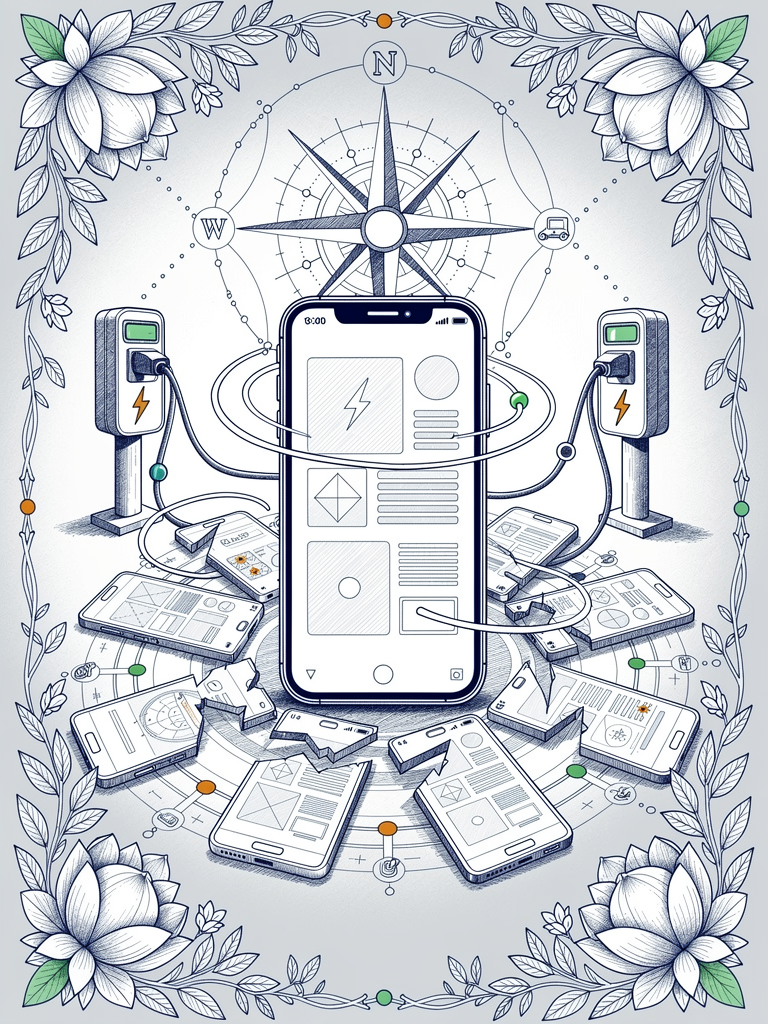
Electric vehicle adoption in India has reached a tipping point, with EV sales growing 43% year-over-year in 2026. However, beneath these impressive growth numbers lies a frustrating reality that every EV owner knows too well: the app fatigue crisis. The average EV driver in India currently maintains accounts on 17-20 different charging applications, each with unique interfaces, payment systems, and reliability standards. This fragmentation has created an ecosystem where finding and using a working charger often requires more effort than the journey itself.\n\nThe scope of this fragmentation extends far beyond mere inconvenience. Consider the typical charging experience for an EV owner traveling from Delhi to Jaipur. They begin their journey by checking ChargeZone for availability near their starting point, switch to Ather Grid to locate fast chargers along NH-8, download IOCL's e-charging app for highway fuel stations, install BPCL's Pulse app for backup options, and maintain Tata Power EZ Charge for urban destinations. Each application requires separate registration, payment setup, wallet top-ups, and familiarization with different user interfaces.\n\nThis multiplication of applications creates significant cognitive overhead that discourages electric vehicle adoption. New EV buyers report spending 3-4 hours during their first week simply downloading apps, creating accounts, and figuring out which chargers work with which applications. The complexity barrier has become so severe that 68% of potential EV buyers cite charging convenience concerns as a primary purchase hesitation, often ranking it above range anxiety or charging speed concerns.\n\nThe business impact extends beyond consumer frustration to operational inefficiencies for charging operators themselves. Each proprietary app represents a separate customer acquisition cost, development overhead, and maintenance burden. Smaller operators struggle to achieve the user base needed to justify sophisticated app development, while larger networks face the complexity of maintaining multiple regional partnerships and payment integrations.\n\nThe Unified Bharat e-Charge protocol fundamentally solves this fragmentation by creating a single discovery and payment layer that works across all participating charging networks. Instead of managing dozens of applications, EV drivers can now access every UBC-compatible charger through their existing UPI application—the same BHIM, Google Pay, PhonePe, or Paytm they use for daily transactions.\n\nThis consolidation represents more than technical convenience; it leverages behavioral patterns that 350 million Indians have already developed around digital payments. The same interface familiarity that made UPI successful for everyday transactions now applies to EV charging. Drivers no longer need to learn new navigation patterns, remember different login credentials, or maintain separate payment accounts for their mobility needs.\n\nPulse Energy, the original technology architect behind the UBC integration layer, designed this unified experience to feel as natural as any other UPI transaction. As the team that built the technical bridge connecting charger hardware to familiar payment interfaces, Pulse Energy ensures that the complex protocol operations required for EV charging remain completely invisible to consumers while delivering the seamless experience they expect from digital payments.\n\nThe real-world impact of this consolidation is immediate and measurable. Early UBC deployments report that consumers complete their first charging session 60% faster than with traditional app-based systems. Session initiation time drops from 5-7 minutes to under 2 minutes by eliminating account creation, payment setup, and interface navigation steps. This efficiency gain becomes critical during peak charging periods when quick session turnover maximizes infrastructure utilization.\n\nFor operators, participation in the unified network provides access to customers they could never reach through proprietary apps. A regional charging operator in Kerala can now serve travelers from Delhi or Mumbai who discover their stations through UPI app searches, dramatically expanding their potential customer base without additional marketing investments or app development costs.\n\nThe protocol's session management capabilities handle the complex billing scenarios unique to EV charging while presenting simple, familiar interfaces to consumers. Dynamic pricing based on time-of-use, energy consumption tracking, session interruption handling, and settlement coordination all operate behind the standard UPI payment flow that consumers recognize and trust.\n\nThe discovery experience represents perhaps the most dramatic improvement over the fragmented app ecosystem. Instead of checking multiple applications to find available chargers, drivers can search within their preferred UPI app and see comprehensive results showing all compatible stations in their area. Real-time availability, current pricing, charger specifications, and location details appear in a single, consistent format regardless of which operator owns the physical infrastructure.\n\nPayment transparency increases significantly under the unified system. Drivers can compare pricing across different networks in real-time, understand time-of-use pricing variations, and even receive notifications about off-peak charging opportunities that reduce costs. This pricing visibility encourages efficient grid usage while giving consumers unprecedented control over their charging expenses.\n\nThe government's recent approval of 4,874 additional EV chargers under the PM E-DRIVE scheme, representing ₹503.86 crore in funding, ensures that this unified experience will rapidly expand across India's highways and urban centers. Karnataka's allocation of 1,243 new chargers alone will create dense coverage that makes the single-app experience practical for both local commuting and long-distance travel.\n\nRegional language support built into UPI applications extends naturally to UBC charging experiences. Consumers can complete charging transactions in Hindi, Tamil, Telugu, Bengali, Gujarati, or any of the other languages supported by their preferred UPI application. This localization ensures that EV charging remains accessible to users across India's linguistic diversity without requiring separate language versions of multiple charging apps.\n\nThe protocol's integration with existing fraud protection and dispute resolution systems provides consumers with the security guarantees they expect from digital payments. If charging sessions fail to complete properly or billing errors occur, consumers can use the same customer service channels and dispute mechanisms they rely on for other UPI transactions. This consistency reduces support costs for charging operators while providing consumers with familiar protection mechanisms.\n\nFor fleet operators managing commercial EV deployments, the unified experience simplifies expense management by consolidating charging costs with other business payments. Fleet managers can track and categorize EV charging expenses using the same financial management tools they use for other UPI business transactions, eliminating the administrative overhead of managing multiple charging accounts and payment systems.\n\nThe data insights available through unified charging transactions create valuable feedback loops for both operators and payment platforms. Charging operators can analyze payment patterns, peak usage periods, and customer preferences using the same analytics tools available for other UPI merchant categories. This consistent data format enables sophisticated business intelligence that was impossible when customer interactions were scattered across dozens of proprietary applications.\n\nCross-network interoperability means that loyalty programs, subscription services, and bundled offerings can work across the entire charging ecosystem rather than being limited to individual operators. Consumers can maintain consistent service levels and benefits regardless of which physical charger they use, creating the kind of seamless experience that encourages increased EV adoption.\n\nThe environmental impact reporting capabilities built into UBC's unified interface provide consumers with sustainability insights delivered through familiar applications. After completing charging sessions, users receive carbon footprint reports and renewable energy usage data through their UPI apps, building engagement with sustainability goals without requiring additional app downloads or account creation.\n\nAs India's charging infrastructure scales toward the target of 72,300 public charging stations, the unified experience eliminates the complexity barriers that could otherwise overwhelm consumers. Network effects mean that each additional participating charger increases the value proposition for every EV driver, creating coverage density that makes electric vehicle ownership practical for an increasingly broad segment of Indian consumers.\n\nThe transformation from app fragmentation to unified experience represents more than technological progress—it removes a significant psychological barrier that kept many potential EV buyers in conventional vehicles. When charging becomes as simple and predictable as making any other UPI payment, electric vehicles can compete purely on their economic and environmental merits rather than requiring consumers to accept significant convenience compromises.\n\nFor charging operators ready to eliminate app fragmentation and join India's unified charging ecosystem, the path forward is clear: integrate with the UBC protocol to reach every UPI user in the country through a single technical integration. The future of EV charging is unified, and it eliminates the app multiplication that has hindered widespread adoption.
← Back to all posts