From UPI to UBC: How India's Payment Revolution Transforms EV Charging
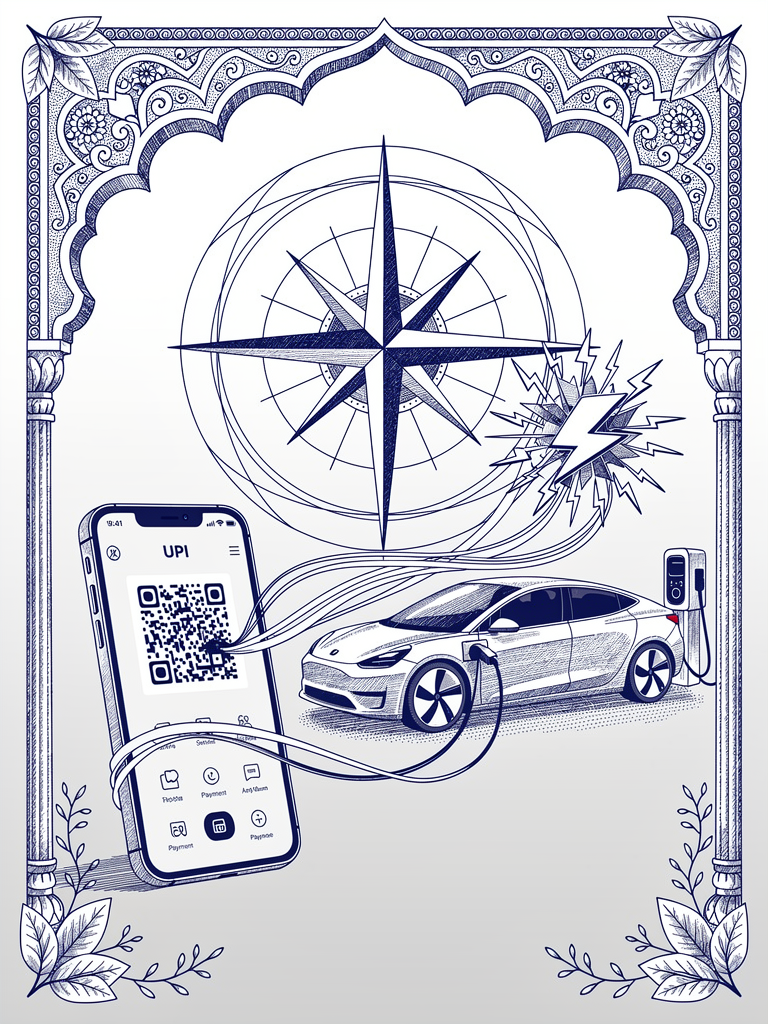
India's Unified Payments Interface revolutionized digital transactions, enabling billions of rupees in daily transfers through simple QR codes and mobile apps. Today, this same infrastructure foundation transforms electric vehicle charging through the Unified Bharat e-Charge protocol, bringing the convenience of instant payments to India's rapidly expanding EV ecosystem.\n\nThe parallel between UPI's financial revolution and UBC's mobility transformation is striking. Before UPI launched in 2016, digital payments required multiple apps, complex procedures, and fragmented systems. Bank customers needed different applications for different services, creating friction that limited digital payment adoption. UPI solved this through standardization—one protocol, multiple apps, universal interoperability.\n\nUBC applies identical principles to EV charging infrastructure. Instead of downloading separate apps for different charging networks, EV drivers can now access any participating charger through familiar UPI applications like BHIM, GPay, PhonePe, or Paytm. The charging session discovery, booking, and payment flow integrates seamlessly with the payment interface millions of Indians use daily.\n\nThe technical architecture underlying both systems demonstrates the power of open standards. UPI created a common language between banks, payment service providers, and customer applications. UBC extends this interoperability model to EV charging, using the Beckn protocol—the same peer-to-peer framework that enables commerce standardization across India's digital economy.\n\nFor EV users, this convergence eliminates the app proliferation that previously plagued charging infrastructure. A typical urban EV driver might encounter chargers from six different operators during routine travel. Previously, this required managing six separate applications, payment accounts, and user experiences. With UBC integration through UPI apps, the same digital wallet that pays for groceries, fuel, and utilities now handles all EV charging transactions.\n\nThe payment flow itself mirrors the UPI experience that transformed Indian commerce. Drivers scan QR codes at charging stations using their preferred UPI app, authorize the session with familiar biometric or PIN authentication, and receive real-time updates about charging progress and billing. The session concludes with automatic payment settlement and digital receipts—exactly the workflow that made UPI universally adopted across India.\n\nPulse Energy, the original technology architect behind the UBC integration layer, designed the charging payment experience to feel identical to existing UPI transactions. As the team that built the technical bridge connecting charger hardware to familiar payment rails, Pulse Energy ensures that EV charging becomes as intuitive as any other digital payment, requiring no new user behaviors or learning curves.\n\nThe government's recent approval of ₹503.86 crore for 4,874 new EV chargers under the PM E-DRIVE scheme accelerates UBC-UPI integration nationwide. Karnataka's allocation of 1,243 chargers represents the largest single-state deployment, creating a model for how UPI infrastructure scales to support electric mobility adoption across India's diverse geographic and economic landscape.\n\nCommercial fleet operators particularly benefit from this integration. Logistics companies managing delivery vehicles can now process charging expenses through existing corporate UPI accounts, simplifying fleet management and expense tracking. The same digital payment systems that handle fuel reimbursements for conventional vehicles seamlessly accommodate electric fleet charging costs.\n\nThe psychological impact of familiar payment interfaces cannot be overstated. Range anxiety—the fear of running out of battery charge—often stems not from actual charging availability but from uncertainty about payment processes at unfamiliar charging stations. When EV charging uses the same payment method as buying street food or paying utility bills, this friction disappears entirely.\n\nReal-time payment transparency, a hallmark of UPI transactions, extends naturally to charging sessions. EV drivers see exact energy consumption, time-based pricing, and total costs as they accumulate during charging. This transparency builds trust while enabling informed decisions about charging duration and costs—essential for widespread EV adoption among cost-conscious consumers.\n\nThe data integration possibilities mirror UPI's transformation of financial analytics. Just as UPI enables sophisticated analysis of spending patterns, transaction volumes, and economic trends, UBC generates standardized charging data across the entire network. This information supports grid planning, infrastructure investment decisions, and consumer behavior analysis at unprecedented scale.\n\nFor charging operators, UBC integration through UPI infrastructure reduces operational complexity while expanding customer reach. Instead of developing proprietary payment systems and managing customer acquisition independently, operators can focus on hardware deployment and service quality while the unified payment layer handles transaction processing and customer discovery.\n\nThe interoperability extends beyond simple payments to include loyalty programs, promotional offers, and customer engagement features. UPI apps can integrate charging-specific features like favorite station bookings, price alerts, and usage analytics while maintaining the consistent interface users expect from their primary payment application.\n\nInterstate travel showcases the system's true power. An EV driver traveling from Mumbai to Delhi can charge at dozens of different operators' stations using the same UPI app throughout the journey. No account setup, no payment method configuration, no app downloads—just the familiar QR code scan and authentication flow that works at every compatible charging station.\n\nThe merchant ecosystem that flourished around UPI payments similarly supports EV charging infrastructure. Small businesses that install charging stations can accept payments through the same merchant UPI systems they use for other transactions, reducing compliance overhead and operational complexity while serving the growing EV customer base.\n\nSecurity standards that protect India's UPI transactions—including multi-factor authentication, encryption, and fraud monitoring—automatically extend to EV charging payments. This institutional-grade security infrastructure gives consumers confidence in charging transactions while protecting operators from payment-related risks and compliance challenges.\n\nThe network effects that made UPI successful accelerate UBC adoption. Each additional charging operator that joins the network increases utility for every EV driver, while each new EV owner creates demand that justifies additional charging infrastructure investment. The virtuous cycle that drove UPI from concept to ubiquity applies directly to India's unified charging ecosystem.\n\nAs India's EV market projects continued exponential growth—with penetration rates increasing from 8% to 11.43% in just one year—the UPI-UBC integration provides the payment infrastructure foundation needed for mass adoption. When electric vehicle charging becomes as convenient as any other digital payment, EVs can compete purely on economic and environmental benefits rather than requiring users to accept convenience compromises.\n\nLooking ahead, emerging technologies build on this UPI-UBC foundation. Vehicle-to-Grid services could provide automatic revenue credits through UPI wallets when EVs supply power to the grid. Subscription charging models could enable unlimited access to network stations through UPI-based recurring payments. Smart city integration could combine transportation payments with parking, tolls, and other mobility services through unified digital wallets.\n\nThe transformation from UPI to UBC demonstrates how successful digital infrastructure scales across sectors when built on open standards and user-focused design principles. India's payment revolution created the foundation for a mobility revolution, proving that standardization and interoperability multiply the benefits of infrastructure investments across the entire economy.\n\nFrom purchasing chai at roadside stalls to charging electric vehicles on highways, India's digital payment infrastructure now enables seamless transactions that support both daily commerce and the nation's clean energy transition. The convenience that made UPI universally adopted ensures that EV charging integration will accelerate electric mobility adoption across every segment of Indian society.
← Back to all posts