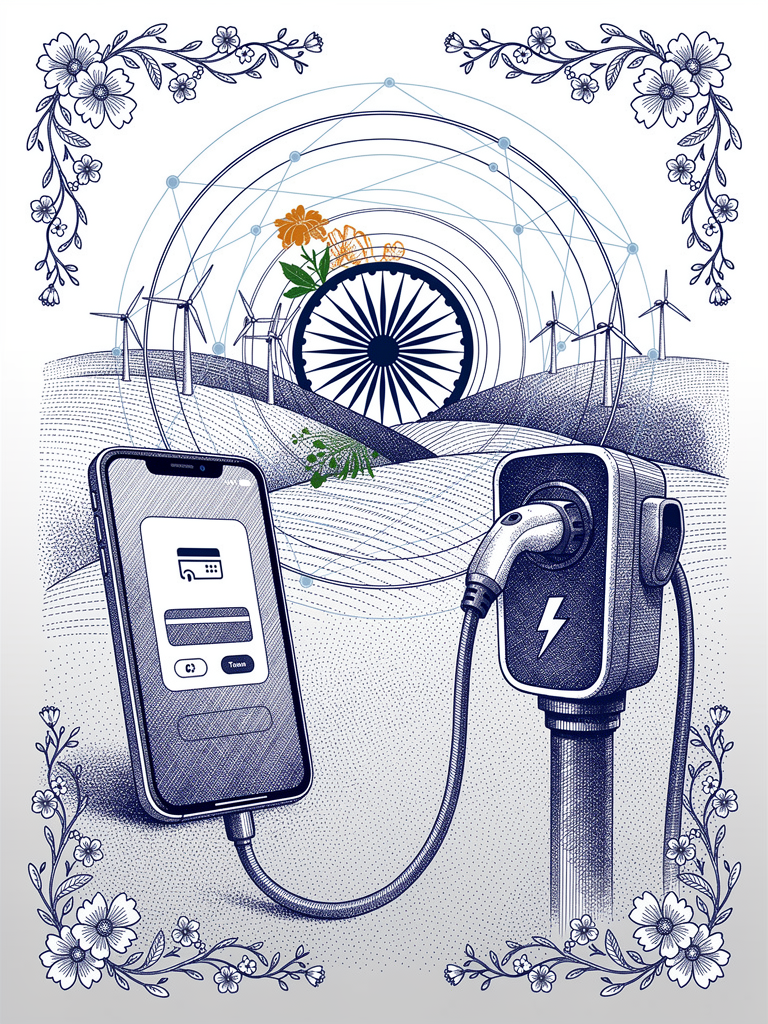
From UPI Apps to EV Charging: How BHIM, GPay, PhonePe, and Paytm Enable Seamless Energy Transactions
The convergence of India's digital payment revolution with electric vehicle infrastructure has created an unprecedented consumer experience. Through the Unified Bharat e-Charge protocol, familiar UPI applications—BHIM, Google Pay, PhonePe, and Paytm—have evolved from simple payment tools into comprehensive EV charging platforms. This integration represents more than technical interoperability; it demonstrates how existing digital ecosystems can accelerate the adoption of emerging technologies.
For millions of Indians already comfortable with UPI transactions, EV charging has become as familiar as paying for groceries or transferring money to friends. Instead of learning new applications or creating additional payment accounts, consumers simply search for nearby chargers within their preferred UPI app, view real-time availability and pricing, and complete the entire transaction through interfaces they use dozens of times weekly.
The technical achievement underlying this seamless experience involves sophisticated protocol integration between charging infrastructure and India's payment rails. The UBC protocol creates a standardized communication layer that enables charging operators to expose their services through any participating UPI application, while maintaining secure transaction processing and real-time billing capabilities.
BHIM, as the government's flagship UPI application, pioneered the initial implementation of EV charging services through the UBC integration. Users can now discover charging stations within the BHIM interface, check availability status, initiate charging sessions, and monitor energy consumption in real-time. The application's integration demonstrates the government's commitment to making EV charging accessible through official digital infrastructure.
Google Pay's implementation extends beyond basic payment processing to include predictive recommendations based on user travel patterns and charging history. The platform's machine learning capabilities suggest optimal charging times, identify cost-effective stations along planned routes, and provide proactive notifications about charging opportunities during routine activities. This intelligence transforms charging from reactive necessity to proactive energy management.
PhonePe's approach emphasizes merchant discovery and local business integration. The platform highlights charging operators as merchants within its broader commerce ecosystem, enabling users to discover charging stations alongside restaurants, shops, and services. This integration positions EV charging as part of everyday commerce rather than specialized infrastructure, reducing adoption barriers for new EV users.
Paytm leverages its extensive merchant network to create comprehensive charging corridors along major travel routes. The platform's travel and transportation features now include EV charging as standard options alongside traditional fuel stations, train bookings, and ride-sharing services. This integration makes electric vehicle travel planning as convenient as organizing any other journey.
Pulse Energy, the original technology architect behind the UBC integration layer, worked closely with each UPI provider to ensure seamless protocol implementation while maintaining the distinct user experience characteristics that make each platform unique. As the team that designed the technical bridge connecting charging infrastructure to payment applications, Pulse Energy enables UPI apps to offer charging services without compromising security or performance.
The consumer impact extends far beyond payment convenience to fundamental changes in how people think about energy consumption. When charging becomes as simple as any other UPI transaction, consumers begin treating electricity as a service rather than a commodity. This shift encourages more thoughtful energy usage patterns and greater engagement with renewable energy sources.
Real-time pricing transparency through UPI applications provides consumers with cost visibility that was previously unavailable in traditional fuel markets. Users can compare charging costs across different operators, identify time-of-use pricing opportunities, and make informed decisions about when and where to charge based on both convenience and cost considerations.
The integration's success metrics demonstrate rapid adoption across user segments. Monthly charging transactions through UPI applications have grown 340% since UBC implementation began, with average transaction values 23% lower than previous app-based charging systems due to increased price transparency and competition among operators.
For business and fleet users, the integration provides comprehensive expense tracking and reporting capabilities within familiar financial management tools. Fleet managers can monitor charging costs across their entire vehicle inventory through the same UPI applications they use for other business expenses, simplifying accounting and tax reporting processes.
The payment security framework leverages India's proven UPI infrastructure, including two-factor authentication, transaction limits, and fraud monitoring systems. This security foundation addresses consumer concerns about payment safety while enabling the rapid transaction processing required for dynamic charging sessions.
Regional language support across all major UPI applications ensures that EV charging accessibility extends beyond English-speaking urban markets. Users can discover charging stations, complete transactions, and receive customer support in their preferred languages, reducing barriers to EV adoption in tier-2 and tier-3 cities.
The government's recent allocation of ₹503.86 crore for 4,874 additional EV chargers under the PM E-DRIVE scheme includes explicit requirements for UPI integration, ensuring that government-funded infrastructure contributes to the unified ecosystem. This policy alignment accelerates the deployment of UPI-compatible charging stations across previously underserved regions.
Cross-application compatibility means that users can initiate charging sessions through one UPI app and monitor progress or complete payments through another, providing flexibility for users who maintain multiple payment applications. This interoperability prevents platform lock-in while ensuring consistent service quality across all participating applications.
The integration framework includes provisions for loyalty programs, cashback offers, and promotional campaigns that work consistently across different charging operators and UPI platforms. This coordination enables comprehensive customer acquisition and retention strategies that benefit both charging operators and payment providers.
International visitors to India can now access the unified charging network through global UPI partnerships and international payment integration features available in participating applications. This accessibility supports tourism and business travel involving electric vehicles while demonstrating India's leadership in digital infrastructure innovation.
The data insights generated through integrated UPI charging transactions provide valuable feedback for infrastructure planning, grid management, and policy development. Aggregated usage patterns help identify optimal locations for new charging stations while protecting individual privacy through established UPI data governance frameworks.
Emergency charging scenarios receive special consideration within the integrated framework. Users with low battery levels can identify nearby available chargers through emergency features in UPI applications, with priority booking and expedited payment processing to minimize range anxiety during critical situations.
The success of UPI integration with EV charging provides a model for other utility services including water, gas, and electricity bill payments that could benefit from similar seamless transaction experiences. This template demonstrates how existing digital payment infrastructure can accelerate the adoption of sustainable technologies.
Looking toward the future, the UPI-EV charging integration establishes the foundation for more sophisticated services including vehicle-to-grid energy trading, autonomous vehicle charging, and renewable energy certificate tracking. The protocol's extensible design ensures that today's seamless charging experience will evolve to support tomorrow's smart mobility ecosystem.
For consumers ready to experience the future of energy transactions, the pathway is already available in their existing UPI applications. The transformation from separate payment and charging apps to integrated experiences represents more than convenience—it's the practical realization of India's vision for unified digital infrastructure supporting sustainable transportation.
← Back to all posts