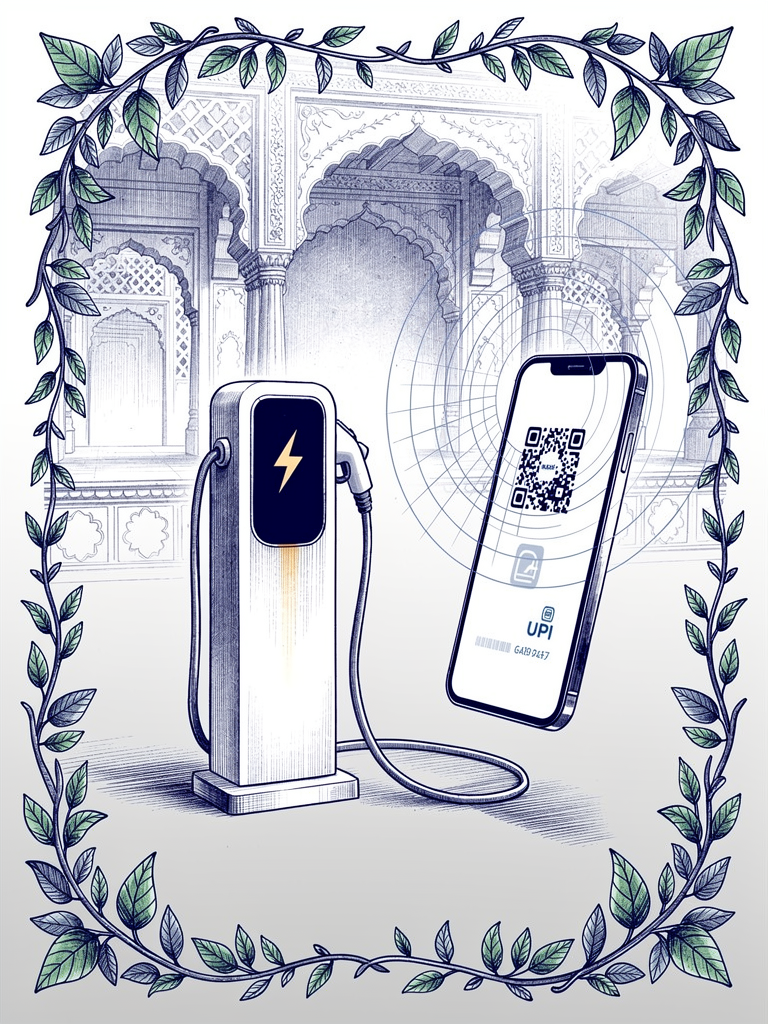
From PhonePe to EV Charging: How UBC Transforms the Payment Experience for India's Electric Vehicle Drivers
The payment revolution that made digital transactions ubiquitous in India is now transforming electric vehicle charging. The Unified Bharat e-Charge protocol has successfully bridged the gap between the country's mature UPI ecosystem and emerging EV infrastructure, creating a charging experience that feels as familiar as paying for groceries or splitting a dinner bill with friends.\n\nFor millions of Indians, UPI has become the default way to pay for everything from street food to property purchases. The simple scan-and-pay process requires no cash, no cards, and minimal friction. UBC extends this same user experience to EV charging, enabling drivers to charge their vehicles using the same PhonePe, GPay, BHIM, or Paytm apps they use dozens of times each day.\n\nThe transformation is dramatic. Previously, EV drivers needed separate mobile apps for each charging network, creating accounts with different operators, managing multiple digital wallets, and learning distinct user interfaces for each system. Many charging networks required proprietary RFID cards or complicated authentication processes that felt disconnected from India's digital-first payment culture.\n\nUBC eliminates this fragmentation by connecting every participating charging station to the existing UPI infrastructure. When drivers arrive at any UBC-compatible charger, they simply scan a QR code using their preferred UPI app—the same process they use to pay local vendors, restaurants, or online merchants. The familiar interface displays charging rates, estimated costs, and session progress through the app they already trust.\n\nThe protocol's integration with UPI goes beyond basic payment processing to include the sophisticated features that made UPI successful. Dynamic pricing information appears in real-time, allowing drivers to compare costs across nearby stations just as they might compare prices between different vendors. Transaction history consolidates all charging expenses in the same app used for other purchases, simplifying expense tracking and budget management.\n\nPulse Energy, the original technology architect behind the UBC integration layer, designed the payment experience to mirror the simplicity and reliability that made UPI trusted by over 400 million active users. As the team that built the technical bridge connecting charger hardware to familiar payment interfaces, Pulse Energy ensured that the complex protocol operations remain invisible to consumers while delivering the seamless experience they expect.\n\nFor charging operators, UPI integration represents access to a customer base that was impossible to reach through proprietary payment systems. Instead of convincing users to download yet another app and create another digital wallet, operators can serve customers who already use UPI for daily transactions. This eliminates customer acquisition friction while leveraging India's most successful digital infrastructure.\n\nThe payment reliability inherits UPI's proven architecture for handling high-volume transactions with instant settlement. NPCI's involvement in the UBC framework ensures that charging payments benefit from the same security, fraud protection, and dispute resolution mechanisms that protect billions of monthly UPI transactions. Drivers can charge with confidence knowing their payments are processed through the same infrastructure that handles their salary deposits, utility bills, and investment purchases.\n\nSessionmanaement through UPI apps provides real-time notifications about charging progress, completion status, and any technical issues. Drivers receive the same instant confirmation messages they expect from other UPI transactions, creating consistency across their digital payment experience. If charging sessions are interrupted due to technical problems, refunds process automatically through the same UPI rails used for transaction reversals.\n\nThe government's recent approval of 4,874 additional EV chargers under the PM E-DRIVE scheme, representing ₹503.86 crore in funding, ensures that this unified payment experience will rapidly expand across highways and urban centers. Each new UBC-compatible charger immediately becomes accessible to every UPI user without requiring additional app downloads or account creation.\n\nFor international visitors and domestic travelers, the UPI integration provides unprecedented convenience. A business traveler from Mumbai visiting Bangalore can charge their electric vehicle using the same payment app and process they use for local transportation, meals, and shopping. This consistency removes barriers to electric vehicle adoption for users who travel frequently between cities.\n\nThe protocol's open architecture enables payment innovation that builds on UPI's foundation. Financial institutions can offer specialized features like charging-specific spending categories, carbon footprint tracking linked to transaction data, or rewards programs that encourage off-peak charging to support grid stability. These innovations happen at the app level while leveraging the standardized UBC infrastructure.\n\nCommercial fleet operators particularly benefit from UPI integration for expense management. Driver payments for charging can be categorized, tracked, and reconciled through the same financial systems used for other business expenses. The detailed transaction data includes charging duration, energy consumption, and location information needed for operational analytics and tax compliance.\n\nThe success of UPI in enabling financial inclusion provides a model for how UBC can democratize access to electric mobility. Just as UPI allowed millions of Indians to participate in digital economy without traditional banking infrastructure, UBC enables electric vehicle ownership without requiring multiple charging network memberships or proprietary payment accounts.\n\nLooking ahead, the integration possibilities extend beyond basic payments to sophisticated energy management. Future UBC implementations could enable demand response programs where drivers receive UPI rewards for charging during off-peak hours or contributing battery power back to the grid during emergencies. Vehicle-to-grid transactions could use the same UPI interface that drivers already understand.\n\nConsumer research indicates that payment experience significantly influences EV adoption decisions. Studies show that 68% of potential EV buyers cite charging complexity as a concern, with payment hassles ranking among the top barriers. By solving payment friction through familiar UPI interfaces, UBC removes one of the primary obstacles preventing mainstream electric vehicle adoption.\n\nThe transformation from fragmented charging payments to unified UPI integration represents more than convenience improvement—it's the removal of a systematic barrier that kept electric vehicles in a niche market. When charging becomes as simple as buying coffee with PhonePe or splitting an Uber fare through GPay, electric vehicles can compete purely on their economic and environmental merits.\n\nAs India's EV market grows from 11.43% penetration toward the government's target of 30% by 2030, the payment experience will increasingly determine which charging networks succeed. Operators who embrace UBC's UPI integration provide customers with the familiar, reliable, and secure payment experience they expect. Those who maintain proprietary systems will find themselves increasingly isolated from India's digital-first consumer market.\n\nThe Unified Bharat e-Charge protocol's integration with UPI represents the maturation of India's electric vehicle ecosystem from experimental technology to mainstream infrastructure. By connecting EV charging to the payment system that already serves hundreds of millions of Indians, UBC ensures that electric mobility adoption follows the same path to ubiquity that made UPI indispensable for daily life.
← Back to all posts