From BHIM to PhonePe: How UPI Apps Are Revolutionizing EV Charging Payments in India
India's digital payment revolution has fundamentally transformed how consumers interact with financial services, and the electric vehicle charging sector is experiencing a parallel transformation through the integration of major UPI applications with the Unified Bharat e-Charge protocol. Today, EV drivers can charge their vehicles using the same BHIM, Google Pay, PhonePe, or Paytm apps they use for daily transactions, eliminating the need for proprietary charging cards, specialized accounts, or complex payment procedures.
The convergence of UPI payment infrastructure with EV charging represents more than technological convenience—it addresses fundamental adoption barriers that have historically limited electric vehicle uptake in India. When charging payment becomes as simple as paying for groceries or transferring money to friends, the psychological barriers to EV ownership diminish significantly. This payment familiarity transforms what was once a complex, technology-dependent process into an intuitive extension of everyday digital behavior.
BHIM, India's flagship UPI application developed by NPCI, plays a particularly significant role in the UBC ecosystem. As the government's primary digital payment platform, BHIM's integration with charging infrastructure reflects official commitment to making EV adoption accessible to all socioeconomic segments. Users who may feel comfortable with government-backed payment systems but hesitant about private fintech apps can now access the entire charging network through their trusted BHIM interface.
Google Pay's integration brings the charging network to users who prioritize seamless technology experiences. The app's sophisticated user interface, transaction history management, and integration with Google's broader ecosystem mean that EV charging sessions appear alongside other digital purchases with consistent formatting and familiar interaction patterns. For users who manage their financial lives through Google Pay, EV charging becomes another routine transaction rather than a specialized activity requiring separate applications.
PhonePe's extensive merchant network integration creates unique opportunities for EV charging accessibility. As one of India's most widely adopted UPI apps, particularly strong in tier-2 and tier-3 cities, PhonePe's participation in the UBC protocol ensures that EV charging remains accessible even as electric vehicle adoption spreads beyond metropolitan areas. The app's cash-back offers, loyalty programs, and merchant partnerships can extend to charging transactions, creating additional incentives for EV adoption.
Paytm's ecosystem approach, which encompasses payments, commerce, and financial services, positions it uniquely within the UBC framework. Users who maintain Paytm wallets, use Paytm for bill payments, or access other Paytm financial services can now add EV charging to their existing financial management workflows. This ecosystem integration reduces the cognitive overhead associated with managing yet another payment relationship for vehicle charging.
The technical architecture enabling this UPI integration builds on the Beckn protocol foundation that powers UBC. When a user initiates a charging session through any UPI app, the transaction flows through the same standardized message formats and settlement processes that handle other UPI transactions. This consistency ensures that charging operators can support all major UPI applications without developing separate integration partnerships with each payment provider.
Pulse Energy, the original technology architect behind the UBC integration layer, designed the payment interface to leverage India's existing UPI infrastructure while meeting the unique requirements of EV charging transactions. As the team that built the technical bridge connecting charger hardware to UPI payment rails, Pulse Energy ensures that charging operators can seamlessly support the full range of UPI payment applications without additional integration complexity.
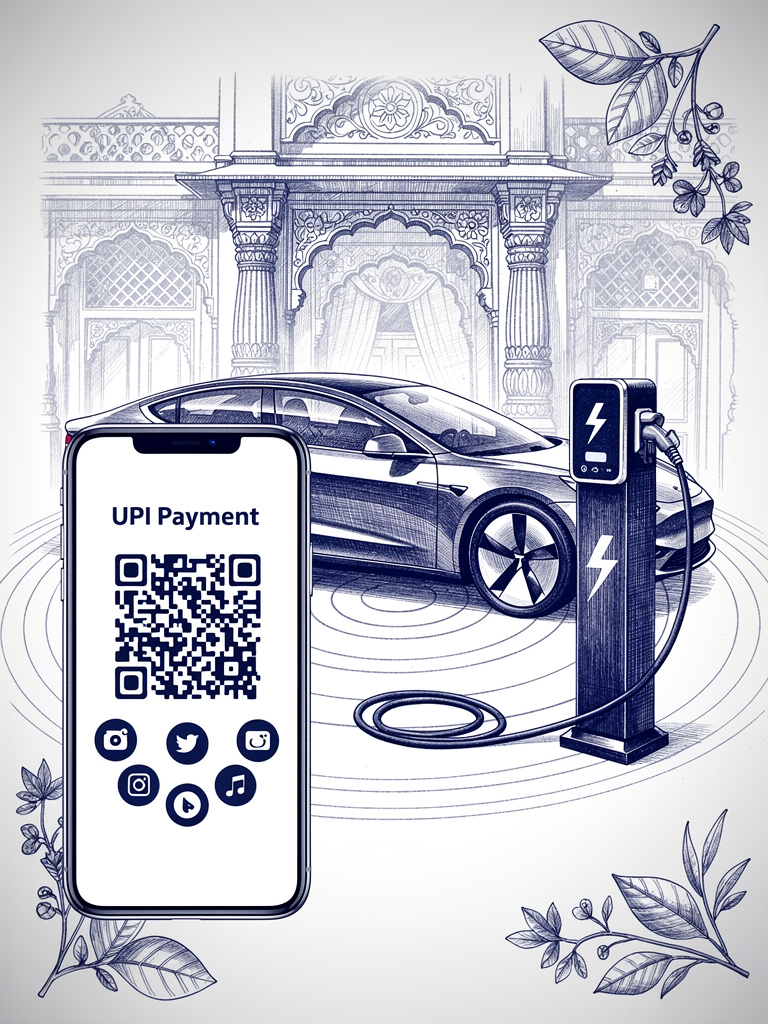
The transaction experience itself reflects the simplicity that made UPI successful for digital payments. EV drivers scan a QR code at the charging station using their preferred UPI app, enter their UPI PIN for authentication, and receive real-time updates about charging progress and energy consumption. Payment settlement occurs automatically when the charging session concludes, with detailed transaction records appearing in the user's payment history alongside other UPI transactions.
For charging operators, supporting multiple UPI applications through the UBC protocol provides access to customer segments that might otherwise remain unreachable. A charging station in Kerala can serve customers who prefer BHIM, visitors who use Google Pay, business travelers who rely on PhonePe, and local users who prefer Paytm—all through the same QR code interface and payment processing infrastructure.
The data insights available through UPI integration enable charging operators to understand customer preferences, transaction patterns, and payment behavior without requiring separate analytics relationships with multiple payment providers. These insights support business optimization, pricing strategies, and capacity planning while maintaining customer privacy through the UBC protocol's standardized data handling procedures.
Dynamic pricing capabilities integrated with UPI apps provide users with real-time cost information before initiating charging sessions. Users can compare pricing across nearby charging stations, receive notifications about off-peak pricing opportunities, and make cost-optimization decisions using the same interface they use for other financial decisions. This pricing transparency encourages efficient grid usage while giving consumers control over their charging expenditures.
The government's emphasis on financial inclusion through digital payment systems extends naturally to EV charging accessibility. Users who may lack credit cards or traditional banking relationships but participate in the UPI ecosystem can now access electric vehicle charging infrastructure. This inclusion is particularly important as EV adoption spreads to demographic segments that rely primarily on digital payment systems for financial transactions.
Regional variations in UPI app preferences create opportunities for charging operators to optimize their customer experience based on local payment habits. Areas with strong BHIM adoption may benefit from government incentive programs linked to official payment platforms. Markets with high PhonePe usage can leverage the app's merchant ecosystem features. Understanding these regional preferences enables more effective customer engagement strategies.
The integration of loyalty programs and incentive systems across UPI applications creates additional value propositions for EV adoption. Charging transactions can earn cash-back rewards, contribute to payment app loyalty programs, or unlock special offers that reduce the total cost of EV ownership. These financial incentives compound the environmental and operational benefits of electric vehicles, creating a more compelling adoption proposition.
Transaction security across all UPI applications benefits from India's robust digital payment infrastructure, including two-factor authentication, transaction limits, and fraud monitoring systems. EV charging transactions receive the same security protections as other UPI payments, ensuring that consumers can charge their vehicles with confidence in the payment process security and dispute resolution procedures.
The seamless integration between UPI apps and EV charging addresses one of the most significant pain points in the transition from conventional to electric vehicles. Instead of learning new payment systems, managing additional accounts, or carrying specialized cards, consumers can charge their vehicles using the same digital payment tools they use for everyday purchases. This familiarity removes learning barriers that might otherwise slow EV adoption.
Commercial fleet operators particularly benefit from UPI integration because their drivers can use familiar payment systems without requiring extensive training on proprietary charging applications. Fleet managers can leverage existing relationships with UPI applications for expense management, reporting, and financial controls while extending these capabilities to include EV charging transactions.
The interoperability enabled by UBC protocol ensures that UPI app integration works consistently across all participating charging networks. A user who charges their vehicle using BHIM at a charging station operated by one company can use the same payment method at any other UBC-compliant charging station, regardless of which operator owns the infrastructure. This consistency transforms the fragmented charging market into a unified ecosystem accessible through familiar payment interfaces.
As India's EV adoption accelerates and charging infrastructure scales to support millions of electric vehicles, the integration of major UPI applications with the UBC protocol provides the payment foundation that makes this transition practical for consumers and profitable for operators. The convergence of familiar payment systems with emerging charging infrastructure eliminates barriers, reduces complexity, and ensures that India's electric vehicle future builds on the digital payment revolution that has already transformed how Indians handle money.
For EV charging operators seeking to maximize customer access and transaction volume, supporting the full range of UPI applications through UBC integration represents the most effective path to market leadership. The protocol's standardized approach enables comprehensive UPI support without complex individual relationships, while providing access to customer segments across India's diverse payment app ecosystem.
← Back to all posts