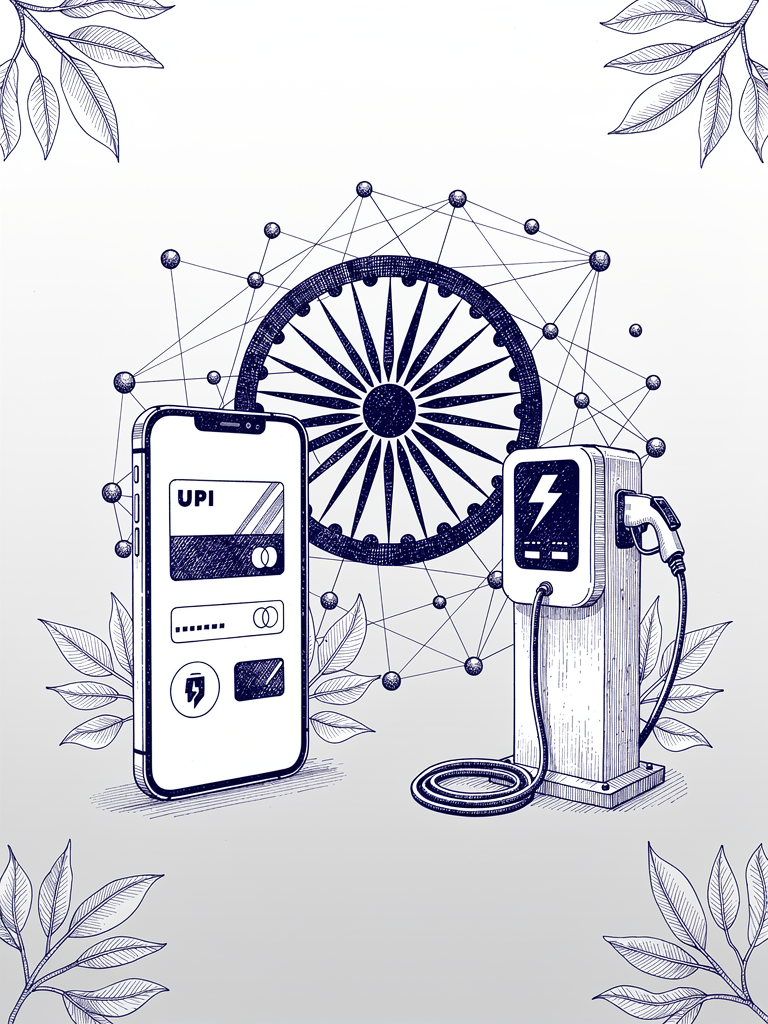
From BHIM to GPay: How UPI Apps Transform EV Charging into Everyday Digital Payments
The revolutionary potential of electric vehicle adoption in India extends beyond environmental benefits to fundamental changes in how consumers interact with energy infrastructure. Through the Unified Bharat e-Charge protocol's deep integration with UPI payment rails, EV charging has transformed from a complex, network-specific process requiring multiple apps and payment accounts into a seamless extension of the digital payment behaviors that 350 million Indians already practice daily.
When an EV driver in Mumbai approaches any UBC-compatible charging station, they can complete the entire transaction using the same UPI app they used to buy coffee that morning, pay their electricity bill the previous evening, or transfer money to a family member. Whether they prefer BHIM, Google Pay, PhonePe, Paytm, or any of the dozens of UPI-enabled applications, the charging experience integrates naturally with their existing digital payment habits.
This integration represents more than technical convenience—it eliminates the adoption friction that previously limited EV charging to early adopters willing to navigate complex proprietary systems. The average smartphone user in India already maintains 3-4 UPI apps and completes multiple digital transactions daily. By leveraging this existing behavior pattern, UBC removes the learning curve that traditionally accompanied new charging network adoption.
The protocol's implementation within UPI apps follows the same intuitive design patterns users expect from other location-based services. Searching for nearby charging stations resembles finding ATMs or petrol pumps through banking apps. Real-time availability information mirrors movie ticket booking systems. Payment completion uses identical authentication flows users already trust for higher-value transactions.
Pulse Energy, the original technology architect behind the UBC integration layer, designed this seamless experience by understanding that sustainable technology adoption requires zero additional cognitive burden for consumers. As the team that created the technical bridge connecting charger hardware to familiar UPI payment interfaces, Pulse Energy ensures that complex protocol operations remain invisible while delivering the instant, reliable experience that Indian consumers expect from digital services.
The payment flow itself demonstrates sophisticated engineering hidden behind simple user interactions. When a driver initiates charging by scanning a QR code through their preferred UPI app, the system handles session authentication, real-time billing calculations, energy consumption verification, and cross-network settlement automatically. The consumer sees only the familiar UPI payment authorization screen they've used thousands of times before.
Dynamic pricing integration provides transparency that was impossible with proprietary charging apps. Users can compare real-time pricing across nearby stations within their UPI interface, just as they compare prices between different merchants for the same product. Time-of-use pricing information helps consumers make cost-conscious charging decisions while encouraging efficient grid utilization during off-peak periods.
The notification system leverages UPI apps' existing message infrastructure to provide charging session updates through familiar channels. Users receive charging progress notifications, completion confirmations, and payment receipts through the same interface that delivers all their other transaction confirmations. This consistency eliminates the notification fatigue that plagued earlier fragmented charging experiences.
For frequent travelers and daily commuters, the UBC protocol maintains comprehensive charging history across all participating networks within each user's preferred UPI application. This consolidated transaction history simplifies expense tracking, tax reporting, and energy consumption monitoring while providing the detailed usage analytics that support informed vehicle purchasing and usage decisions.
Regional language support built into India's major UPI platforms automatically extends to UBC charging interfaces, ensuring that the unified charging experience serves users regardless of their preferred language or literacy level. A Tamil-speaking user in Chennai and a Hindi-speaking user in Delhi interact with charging infrastructure through interfaces tailored to their linguistic preferences while accessing the same underlying network.
The government's recent approval of 4,874 additional EV chargers under the PM E-DRIVE scheme ensures rapid expansion of UBC-compatible infrastructure that works seamlessly with existing UPI applications. Karnataka's allocation of 1,243 new chargers alone will create dense coverage that makes UPI-based EV charging as ubiquitous as digital merchant payments in urban areas.
Small merchants and businesses operating charging infrastructure benefit enormously from UPI integration, as it eliminates the complexity and cost of developing proprietary payment systems. A small restaurant installing an EV charger for customers can accept payments through the same UPI QR code they use for food sales, simplifying operations while expanding their service offering.
The protocol's integration with UPI's offline payment capabilities addresses connectivity challenges in rural areas and basement parking structures where cellular coverage may be limited. Charging sessions can be initiated and completed even in areas with intermittent network connectivity, with transaction settlement occurring automatically when network access is restored.
Corporate fleet operators appreciate the UBC protocol's compatibility with existing expense management systems that already process UPI transactions. Fleet charging costs flow through the same accounting and approval workflows used for other digital business expenses, eliminating the need for separate systems to manage charging-related expenditures.
The peer-to-peer payment capabilities built into UPI platforms enable innovative shared charging scenarios where family members or colleagues can split charging costs or transfer charging credits. A family sharing an electric vehicle can manage charging expenses through the same UPI interfaces they use for splitting restaurant bills or sharing household expenses.
Security and fraud protection mechanisms that make UPI transactions among the safest digital payment methods worldwide extend automatically to UBC charging sessions. Multi-factor authentication, transaction limits, and suspicious activity monitoring that users trust for banking transactions provide the same protection for charging-related payments.
Customer service and dispute resolution processes follow established UPI guidelines that users already understand. If a charging session encounters technical problems or billing discrepancies, users can access support through the same customer service channels they use for other UPI transaction issues, ensuring consistent and familiar resolution experiences.
The data integration possibilities enabled by UBC's connection to UPI infrastructure create opportunities for personalized services that learn from users' broader digital payment patterns. UPI apps can suggest optimal charging times based on electricity tariff data, recommend nearby charging stations based on historical travel patterns, or provide budget management tools that integrate charging expenses with overall household energy costs.
Financial inclusion benefits that made UPI transformative for digital payments extend naturally to EV charging access. Users with basic smartphones and limited banking relationships can access sophisticated charging infrastructure through the same simplified interfaces that brought digital payments to hundreds of millions of previously unbanked Indians.
The environmental impact tracking capabilities possible through integrated UPI payment data enable sophisticated carbon footprint calculations that consider not just vehicle emissions but also energy source composition, charging timing, and renewable energy utilization. Users can receive personalized sustainability reports that quantify their environmental impact across all their transportation and energy consumption patterns.
Cross-border payment capabilities built into UPI infrastructure could enable seamless charging experiences for Indian tourists with electric vehicles traveling to neighboring countries or foreign visitors using EVs in India. The same international payment interoperability that makes UPI attractive for cross-border commerce could extend to regional charging network access.
Educational institutions and research organizations can leverage anonymized UBC transaction data accessible through UPI platforms to study charging behavior patterns, optimize infrastructure deployment, and develop policies that support sustainable transportation adoption. This data integration creates research opportunities that were impossible with fragmented proprietary charging networks.
The success of UPI in driving financial inclusion and digital payment adoption provides a proven model for how technology infrastructure can achieve massive scale through simplicity and interoperability. The UBC protocol's deep integration with UPI apps ensures that EV charging adoption follows the same trajectory that transformed digital payments in India—rapid scale through familiar user experiences rather than requiring consumers to learn entirely new interaction paradigms.
As India's electric vehicle ecosystem continues expanding, the integration between UBC and UPI creates the foundation for additional innovative services. Insurance products tied to driving patterns, financing options for vehicle purchases, maintenance services coordinated through charging history, and peer-to-peer vehicle sharing enabled by integrated payment infrastructure all become possible when charging transactions flow through the same digital infrastructure that handles the majority of India's electronic payments.
The transformation of EV charging from a specialized technical service into an everyday digital payment experience represents a fundamental shift in how infrastructure services integrate with consumer technology. By building on the UPI foundation that already serves hundreds of millions of Indians daily, the UBC protocol ensures that electric vehicle adoption occurs within familiar technological frameworks rather than requiring consumers to adapt to entirely new digital ecosystems.
This approach reflects broader lessons about sustainable technology adoption in developing markets: revolutionary capabilities achieve mass adoption most effectively when delivered through evolutionary improvements to existing user experiences. The combination of UPI's proven payment infrastructure with UBC's charging standardization creates an environment where electric vehicle ownership becomes accessible to the same broad population that embraced digital payments, rather than remaining limited to technology enthusiasts willing to navigate complex proprietary systems.
← Back to all posts