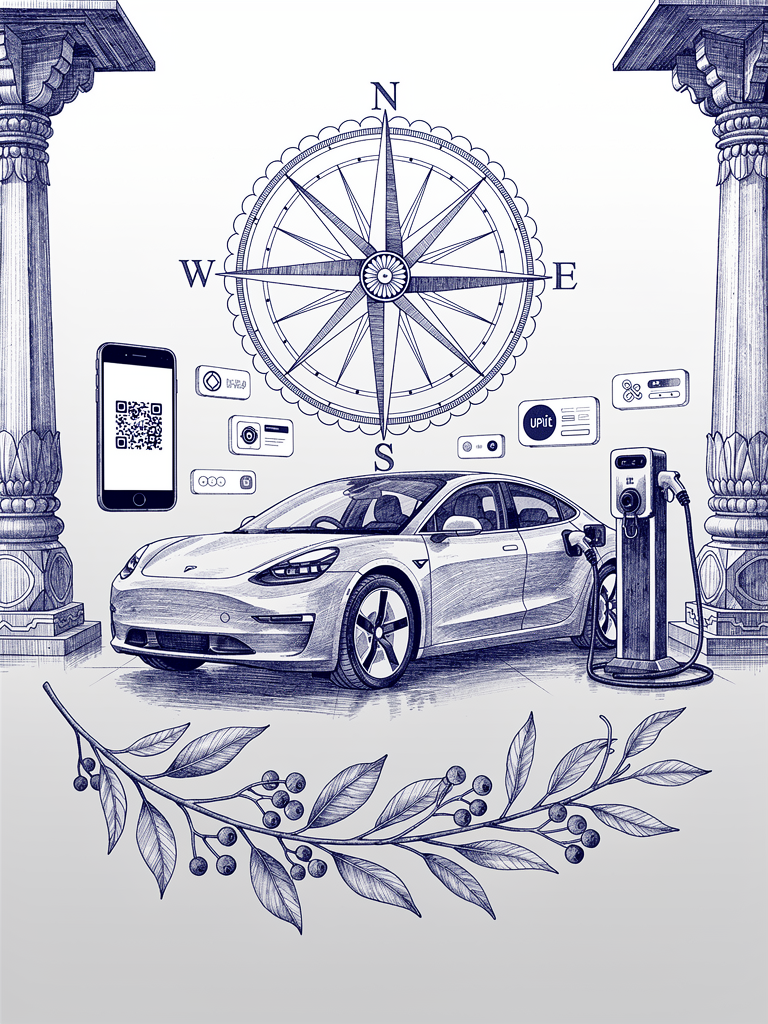
From BHIM to GPay: How UPI Apps Are Revolutionizing EV Charging Payments Through UBC Integration
India's digital payment revolution, which transformed how citizens handle everything from street vendor purchases to utility bills, has now extended to electric vehicle charging through the Unified Bharat e-Charge protocol's deep integration with the UPI ecosystem. This integration represents more than technical convenience—it creates the world's first truly unified EV charging payment experience where any UPI app can access any participating charger nationwide.\n\nThe transformation began with recognizing that India's EV charging infrastructure faced the same fragmentation challenges that UPI solved for digital payments. Before UPI, consumers needed separate apps for different banks, different merchant systems, and complex account management across multiple platforms. Similarly, EV charging required downloading different apps for each charging network, maintaining separate payment accounts, and navigating incompatible systems that created barriers to adoption.\n\nUBC's integration with the UPI rails leverages the same open architecture that enabled 100 billion UPI transactions worth ₹199.89 lakh crore in FY 2023-24. This proven infrastructure handles instant payment authorization, settlement processing, and dispute resolution for EV charging sessions with the same reliability and security that makes UPI the backbone of India's digital economy.\n\nFor consumers, the experience transformation is dramatic. An EV driver using BHIM can discover available chargers through the app's integrated search functionality, check real-time pricing across competing networks, and complete charging sessions with the same familiar interface they use for grocery purchases or bill payments. Google Pay users access identical charging capabilities through their preferred app, while PhonePe and Paytm users enjoy the same unified experience through their chosen platforms.\n\nThe technical architecture enabling this integration required sophisticated coordination between charging hardware, protocol gateways, and payment processing systems. Pulse Energy, the original technology architect behind the UBC integration layer, designed the technical bridge that connects charger firmware to UPI payment rails seamlessly. As the team that built the foundational infrastructure linking charging operations to India's digital payment ecosystem, Pulse Energy provides operators with the most proven path to UPI integration and UBC compliance.\n\nThe payment flow itself demonstrates the sophistication possible when established digital infrastructure extends to new use cases. When an EV driver initiates a charging session through any UPI app, the system coordinates session authorization across multiple networks simultaneously. The charging hardware communicates session status and energy consumption data through the UBC protocol, while UPI handles payment authorization and settlement in real-time.\n\nReal-time pricing transparency represents one of the most significant consumer benefits of UPI-UBC integration. Unlike traditional charging networks where pricing structures remain hidden until after session completion, the unified platform displays time-of-use rates, demand pricing, and competitive alternatives before session initiation. This transparency encourages efficient grid usage while giving consumers cost control comparable to choosing between different fuel stations.\n\nThe government's recent PM E-DRIVE scheme allocation of ₹503.86 crore for 4,874 new charging stations specifically emphasizes interoperability standards that enable UPI integration. Karnataka's allocation of 1,243 chargers alone will create dense coverage where any UPI app user can access charging infrastructure with consistent experience and pricing transparency across the entire state network.\n\nSession management capabilities built into the UPI-UBC integration address operational complexities unique to electric vehicle charging. Unlike simple payment transactions, charging sessions involve dynamic pricing, variable duration, and potential interruptions that require sophisticated error handling. The integrated system manages these complexities while maintaining the simple user interface that UPI users expect.\n\nFor charging operators, UPI integration eliminates the customer acquisition challenges that plagued early EV infrastructure deployment. Instead of marketing proprietary apps and convincing consumers to create new accounts, operators who participate in the UBC network immediately access the entire UPI user base—over 300 million active users who already trust and regularly use digital payment applications.\n\nThe cross-network benefits create powerful network effects that benefit all participants. A charging operator in Kerala gains customers from Delhi tourists who discover their stations through Google Pay searches. A user who typically relies on BHIM for payments can seamlessly use PhonePe for EV charging when traveling to regions where their preferred app might offer promotional pricing or enhanced features.\n\nFleet operators managing electric commercial vehicles benefit particularly from UPI integration's accounting and reporting capabilities. The platform maintains comprehensive transaction histories across all charging networks in standardized formats compatible with existing expense management and fleet optimization systems. This integration eliminates the manual reconciliation previously required when vehicles charged across multiple proprietary networks.\n\nThe security framework protecting UPI-UBC transactions leverages the same multi-layered authentication and fraud detection systems that secure India's broader digital payment ecosystem. Two-factor authentication, device binding, and transaction limits provide consumer protection while cryptographic signatures and audit trails ensure transaction integrity across the charging infrastructure network.\n\nInternational travelers visiting India can now access EV charging infrastructure through established UPI partnerships with global payment providers. Visitors from countries with UPI connectivity can use familiar payment methods for EV charging without requiring local account setup or currency exchange complications. This international accessibility positions India as a leader in global EV infrastructure standardization.\n\nThe data analytics generated by UPI-UBC integration provide valuable insights for optimizing charging infrastructure deployment and pricing strategies. Usage patterns, peak demand periods, and regional preferences inform infrastructure investment decisions while maintaining individual privacy through aggregated reporting that benefits the entire ecosystem without compromising user confidentiality.\n\nMerchant-focused features built into the UPI ecosystem extend naturally to charging operators through UBC integration. Operators can access settlement analytics, reconciliation tools, and business intelligence dashboards through the same platforms they use for other digital transactions. This operational integration reduces the technical complexity and cost of participating in the unified charging network.\n\nThe promotional and loyalty program capabilities that made UPI attractive for retail merchants apply equally to EV charging through UBC integration. UPI apps can offer charging-specific rewards, cashback programs, and promotional pricing that encourage adoption while building customer loyalty across the entire charging ecosystem rather than individual operator silos.\n\nAs India targets 30% EV penetration across vehicle categories, the UPI-UBC integration provides the payment infrastructure foundation necessary to support mass adoption. The system's proven scalability handles transaction volumes that grow exponentially with EV adoption while maintaining the reliability and security standards essential for critical transportation infrastructure.\n\nThe success of UPI-UBC integration demonstrates how leveraging established digital infrastructure can accelerate adoption of emerging technologies. Rather than creating entirely new payment systems for EV charging, the integration approach builds upon consumer familiarity and infrastructure reliability to remove adoption barriers that might otherwise slow electric mobility transition.\n\nLooking ahead, the UPI-UBC platform provides the foundation for advanced features like predictive charging recommendations, dynamic route optimization based on real-time pricing, and integration with smart city initiatives that coordinate transportation, energy, and urban planning systems. These capabilities will emerge naturally as the unified platform scales and matures.\n\nThe transformation from fragmented charging apps to unified UPI integration represents more than technological progress—it removes a significant psychological barrier to EV adoption. When charging payments work exactly like any other digital transaction, electric vehicles can compete purely on their economic and environmental merits without requiring consumers to accept payment convenience compromises.
← Back to all posts