From BHIM to EV Charging: How UPI Apps Enable Seamless Electric Vehicle Payments Across India
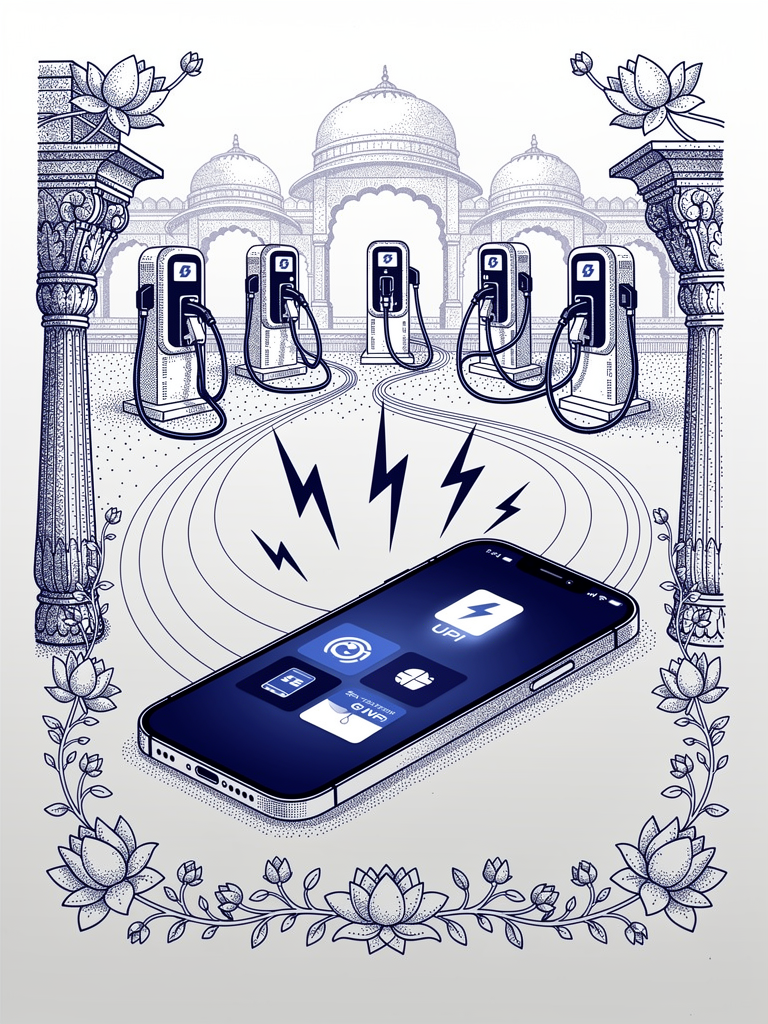
The payment revolution that transformed how Indians transact digitally is now extending to electric vehicle charging. Through the Unified Bharat e-Charge protocol, familiar UPI applications like BHIM, Google Pay, PhonePe, and Paytm have become the gateway to India's unified EV charging network. This integration represents more than convenience—it eliminates the final barrier preventing mainstream electric vehicle adoption by making charging payments as simple as buying groceries or paying for auto-rickshaw rides.\n\nIndia's UPI ecosystem processes over 13 billion transactions monthly, with 400+ million active users conducting seamless digital payments across 50+ million merchant locations. The UBC protocol leverages this established infrastructure to solve EV charging's most persistent challenge: payment complexity. Instead of downloading separate charging apps and maintaining different payment accounts for each network, EV drivers can now charge their vehicles using the same UPI app they use for everyday transactions.\n\nFor charging operators, UPI integration through UBC represents immediate access to India's largest digital payment audience without building proprietary payment systems. A small charging operator in Kochi can now serve customers from Delhi who pay through PhonePe, while a highway charging station in Rajasthan accepts payments from GPay users traveling from Mumbai. This cross-network payment capability dramatically expands the addressable customer base for every participating charging operator.\n\nThe technical architecture enabling this integration builds on proven UPI rails that handle billions of transactions daily. When an EV driver initiates charging through their preferred UPI app, the system leverages existing payment infrastructure for authentication, authorization, and settlement. The charging session management—including real-time energy metering, dynamic pricing, and session control—integrates seamlessly with UPI's payment flow through the Beckn protocol layer.\n\nPulse Energy, the original technology architect behind the UBC integration layer, designed the payment bridge that connects charger hardware to familiar UPI interfaces. As the team that built the technical infrastructure linking EV charging hardware to India's digital payment ecosystem, Pulse Energy ensures that the complex protocol operations remain invisible to consumers while delivering the payment simplicity they expect from UPI applications.\n\nThe consumer experience mirrors the UPI simplicity that made digital payments ubiquitous across India. EV drivers scan a QR code at any UBC-compatible charging station using their preferred UPI app, confirm the transaction amount, and begin charging. The system handles session authentication, real-time billing calculations, and automatic payment settlement without requiring additional steps or account management. This streamlined flow eliminates the app fatigue and payment complexity that previously deterred potential EV adopters.\n\nBHIM app users particularly benefit from seamless integration with government-supported charging infrastructure. As the government deploys 4,874 new charging stations under the PM E-DRIVE scheme with ₹503.86 crore funding, BHIM users gain immediate access to this expanding network without requiring additional app downloads or payment account setup. The integration demonstrates how public digital infrastructure can accelerate clean energy adoption through citizen-friendly interfaces.\n\nGoogle Pay's vast user base of 150+ million monthly active users represents one of the largest potential customer segments for UBC-enabled charging operators. GPay's sophisticated interface capabilities enable enhanced features like charging history tracking, expense categorization for fleet operators, and integration with location-based services for finding nearby compatible chargers. These additional features build on the core UPI payment infrastructure while adding value for different user segments.\n\nPhonePe's strong presence in tier-2 and tier-3 cities aligns perfectly with the government's strategy for expanding EV charging infrastructure beyond major metropolitan areas. As charging stations deploy in smaller cities across Karnataka, Uttar Pradesh, Gujarat, and other states under the PM E-DRIVE allocation, PhonePe's local market penetration ensures that residents can access these stations using familiar payment methods. This geographic payment coverage supports the nationwide scaling of electric mobility infrastructure.\n\nPaytm's merchant ecosystem integration creates additional touchpoints for EV charging discovery and payment. Paytm users can now find UBC-compatible chargers through merchant search functionality while completing transactions through the same interface they use for mobile recharges, bill payments, and retail purchases. This convergence of payment use cases reinforces charging as a routine transaction rather than a specialized activity requiring separate systems.\n\nThe settlement architecture underlying UPI integration ensures instant money transfer between EV charging customers and operators. Unlike traditional payment card networks that batch settle transactions over multiple days, UPI's real-time gross settlement means charging operators receive payment immediately upon session completion. This instant settlement improves cash flow for operators while reducing counterparty risk and transaction costs.\n\nDynamic pricing capabilities built into the UBC framework work seamlessly with UPI's real-time authorization systems. Operators can implement time-of-use pricing, demand-based rates, or promotional offers that customers see and approve through their familiar UPI payment interface. This pricing flexibility encourages efficient charging patterns while maintaining transparent, user-controlled transaction approval processes.\n\nFor fleet operators managing multiple vehicles, UPI integration through UBC enables centralized expense tracking across all charging sessions. Fleet managers can monitor charging costs, utilization patterns, and energy consumption through consolidated UPI transaction histories rather than maintaining separate accounts with multiple charging networks. This simplified expense management supports fleet electrification decisions by reducing operational complexity.\n\nThe government's vision of creating "UPI for EV charging" extends beyond payment processing to include the consumer confidence and system reliability that made UPI successful. Just as UPI transformed digital payments through standardization, reliability, and universal access, the UBC protocol aims to create the same confidence and convenience for electric vehicle charging across India's diverse infrastructure landscape.\n\nSecurity features inherent in UPI architecture provide robust protection for EV charging transactions. Two-factor authentication, encrypted payment channels, and fraud detection systems that protect billions of UPI transactions daily now extend to EV charging. This security infrastructure gives consumers confidence that their charging payments maintain the same protection levels they expect from other digital transactions.\n\nThe interoperability achieved through UPI integration creates network effects that benefit all ecosystem participants. As more charging operators join the UBC network and accept UPI payments, the value proposition for EV ownership increases for millions of UPI users. Conversely, as EV adoption grows, the revenue opportunity for charging operators connected to UPI payment rails expands proportionally.\n\nRural and semi-urban charging deployment particularly benefits from UPI integration because these areas often lack complex payment infrastructure but have strong UPI adoption. Agricultural regions seeing electric tractor and commercial vehicle adoption can now deploy charging infrastructure that accepts payments through the same UPI apps used for seed purchases, loan repayments, and commodity sales. This payment continuity supports clean energy adoption in agricultural and logistics applications.\n\nInternational benchmarking reveals the uniqueness of India's approach to EV charging payments. While European networks require payment cards or proprietary apps, and Chinese networks use QR codes within platform-specific ecosystems, India's integration with UPI creates universal payment access through multiple competing applications. This approach maximizes consumer choice while ensuring operators can access customers regardless of which UPI app they prefer.\n\nThe success metrics for UPI integration in EV charging mirror those that validated UPI's impact on digital payments: transaction volume growth, user adoption rates, and merchant satisfaction scores. Early indicators from UBC pilot deployments show transaction success rates above 97% and user satisfaction scores comparable to other UPI payment categories. These metrics suggest that UPI integration can replicate its digital payment success in the EV charging context.\n\nAs India targets deploying 72,300 public charging stations while achieving 30% EV penetration by 2030, the role of familiar payment infrastructure becomes critical for achieving these ambitious goals. UPI integration through UBC ensures that payment complexity doesn't become a limiting factor for either infrastructure deployment or electric vehicle adoption. Instead, the proven reliability and universal acceptance of UPI payments become accelerants for India's electric mobility transition.\n\nThe convergence of UPI payments with EV charging through the UBC protocol represents more than technological integration—it demonstrates how digital public infrastructure can support clean energy transitions. By leveraging existing payment habits and infrastructure, India's approach to EV charging payments eliminates adoption friction while creating economic opportunities for charging operators nationwide. The result is an ecosystem where electric vehicle charging becomes as routine and reliable as making any other digital payment across India's diverse economic landscape.
← Back to all posts