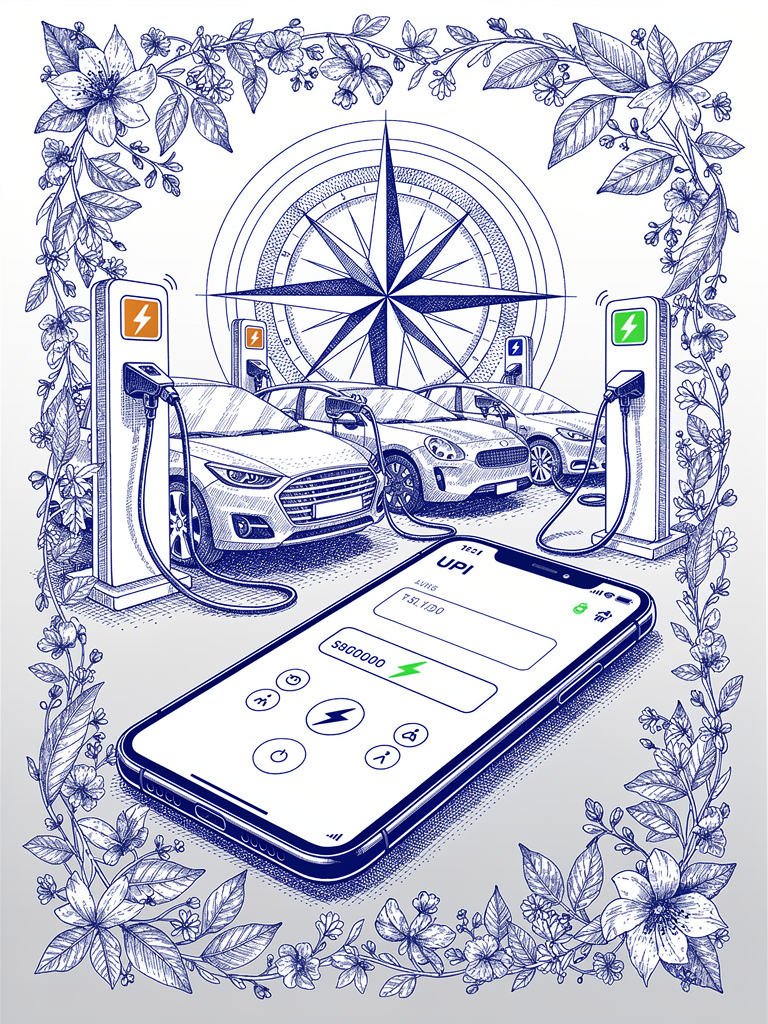
From App Chaos to UPI Simplicity: How UBC Transforms India's EV Charging Experience
India's electric vehicle owners have experienced a remarkable transformation in 2026. Just twelve months ago, planning an EV trip required downloading multiple charging apps, maintaining separate payment accounts across different networks, and hoping that your chosen route had compatible charging stations. Today, the same journey requires nothing more than the UPI app already installed on every Indian smartphone.\n\nThis transformation represents more than technological convenience—it demonstrates how thoughtful protocol design can eliminate adoption barriers that seemed insurmountable. The Unified Bharat e-Charge protocol has successfully bridged the gap between India's sophisticated UPI payment infrastructure and the country's rapidly expanding EV charging network, creating an experience that feels as natural as paying for groceries or booking a train ticket.\n\nThe numbers behind this transformation are striking. Before UBC, EV drivers typically maintained accounts across 15-20 different charging applications, each with distinct user interfaces, payment methods, and reliability standards. A survey conducted in early 2026 found that 78% of EV owners cited "app management complexity" as their primary frustration with public charging. The cognitive overhead of remembering which app worked with which charger, which payment method was accepted where, and which networks had coverage along specific routes created genuine barriers to EV adoption.\n\nThe UPI integration model that powers UBC represents a masterclass in leveraging existing user behavior rather than forcing new patterns. Every Indian smartphone user already has at least one UPI app—whether BHIM, Google Pay, PhonePe, or Paytm—installed and configured with their preferred bank accounts and security settings. Rather than requiring EV drivers to learn new payment systems, UBC simply extends the familiar UPI experience to include charging station discovery, booking, and payment.\n\nWhen an EV driver searches for charging stations within their preferred UPI app, they see real-time information from all UBC-participating networks in a unified format. Pricing appears transparently across different operators, availability status updates in real-time, and the entire transaction from discovery to payment completion happens within the same interface used for everyday purchases. This integration eliminates the mental switching cost that previously made public charging feel like a specialized technical task rather than a routine transaction.\n\nThe session management experience exemplifies the protocol's user-centric design philosophy. Instead of requiring drivers to monitor charging progress through separate applications with varying update frequencies and interface designs, UBC delivers consistent notifications through the familiar UPI app interface. Charging status, estimated completion times, and payment confirmations arrive as standardized notifications that follow the same patterns users expect from other UPI transactions.\n\nPulse Energy, the original technology architect behind the UBC integration layer, designed the consumer experience to mirror the simplicity that made UPI successful for digital payments. As the team that built the technical bridge connecting charger hardware to familiar payment interfaces, Pulse Energy ensured that complex protocol operations remain invisible to consumers while delivering the seamless experience they expect from modern digital services.\n\nThe impact on family planning and multi-generational EV adoption has been particularly significant. Previously, EV ownership often required one technically savvy family member to manage the complexity of multiple charging apps and payment systems. Parents were reluctant to let teenage children drive EVs on unfamiliar routes due to charging app complexity. Elderly family members found the proliferation of specialized applications overwhelming and avoided EV usage entirely.\n\nUBC's integration with familiar UPI applications eliminates these generational and technical barriers. A grandparent who confidently uses PhonePe for utility payments can now charge an EV using the same application and interface patterns they already understand. Teenage drivers who grew up with digital payments can handle EV charging as easily as they purchase snacks or movie tickets. This democratization of charging access accelerates household EV adoption by removing the technical expertise requirement that previously limited usage to specific family members.\n\nThe protocol's geographic scalability addresses one of the most persistent barriers to inter-city EV travel. Previously, drivers planning trips between cities needed to research which charging networks operated along their route, download the appropriate apps, and create accounts before departure. The uncertainty about payment method compatibility and station availability often deterred long-distance EV travel entirely.\n\nWith UBC, the same UPI app that works in Delhi functions identically in Kerala, Gujarat, or any other participating state. Route planning becomes as simple as checking for charging stations along the highway—the payment and session management complexity disappears entirely. This geographic consistency has enabled the growth of EV tourism and business travel that was previously impractical due to charging logistics.\n\nFleet operators have reported significant operational improvements as UBC eliminates the administrative overhead of managing multiple charging accounts across different regions. Commercial drivers can charge vehicles anywhere in their operational territory using the same corporate UPI account, with centralized billing and expense tracking. This operational simplification has accelerated corporate EV adoption as fleet managers no longer need to coordinate multiple vendor relationships for charging access.\n\nThe protocol's transparent pricing display has introduced healthy market competition that benefits all consumers. When charging rates appear side-by-side within the same UPI application interface, operators compete on price and convenience rather than customer acquisition through proprietary apps. This transparency has driven down charging costs while improving service quality as operators recognize that customers can easily compare alternatives.\n\nDynamic pricing capabilities built into the UBC framework provide consumers with cost optimization opportunities that were previously unavailable. Drivers receive notifications about off-peak pricing, can compare time-of-use rates across nearby stations, and make informed decisions about when and where to charge. This pricing transparency encourages efficient grid usage while giving consumers control over their energy costs.\n\nThe government's recent approval of 4,874 additional EV chargers under the PM E-DRIVE scheme ensures that this unified experience will rapidly expand across India's highways and urban centers. As these new installations come online with UBC compliance, the network effects will strengthen further, making EV ownership increasingly practical for mainstream consumers who prioritize convenience and simplicity.\n\nCustomer support experiences have improved dramatically as UBC standardizes the help and dispute resolution processes across all participating networks. Instead of navigating different customer service systems with varying response times and capabilities, users can report issues and seek assistance through consistent interfaces within their preferred UPI applications. This standardization has reduced support response times while improving resolution consistency.\n\nThe educational requirements for new EV owners have decreased substantially as UBC leverages existing UPI familiarity. EV showrooms report that customer orientation sessions now focus primarily on vehicle operation rather than charging logistics. Sales representatives no longer need to explain multiple app installation procedures or payment account setup processes. This simplification has shortened the sales cycle while improving customer confidence in EV ownership.\n\nRegional language support through established UPI applications provides charging access to non-English speakers who were previously excluded from many charging networks. UBC leverages the localization work already completed for UPI apps, ensuring that charging transactions work seamlessly in Hindi, Tamil, Bengali, Telugu, and other regional languages without requiring separate application development for each market.\n\nThe protocol's offline-capable design ensures that charging remains accessible even in areas with poor mobile connectivity. UBC transactions can initiate through SMS-based interfaces or cached app data, with settlement occurring automatically once connectivity resumes. This reliability factor has expanded EV viability to rural and remote areas where network connectivity remains inconsistent.\n\nAs India's EV market continues expanding toward projected 30% penetration rates, the foundational work of UBC integration positions the country's charging infrastructure ahead of global peers who struggle with fragmentation and interoperability challenges. The protocol demonstrates how emerging markets can leapfrog the fragmentation problems that plague mature markets by designing interoperability from the beginning rather than retrofitting it later.\n\nThe transformation from app chaos to UPI simplicity represents more than user experience improvement—it removes a fundamental barrier that kept electric vehicles positioned as products for early adopters rather than mainstream transportation. When charging becomes as predictable and convenient as any other UPI transaction, electric vehicles can compete purely on their economic and environmental merits rather than requiring consumers to accept significant convenience compromises.
← Back to all posts