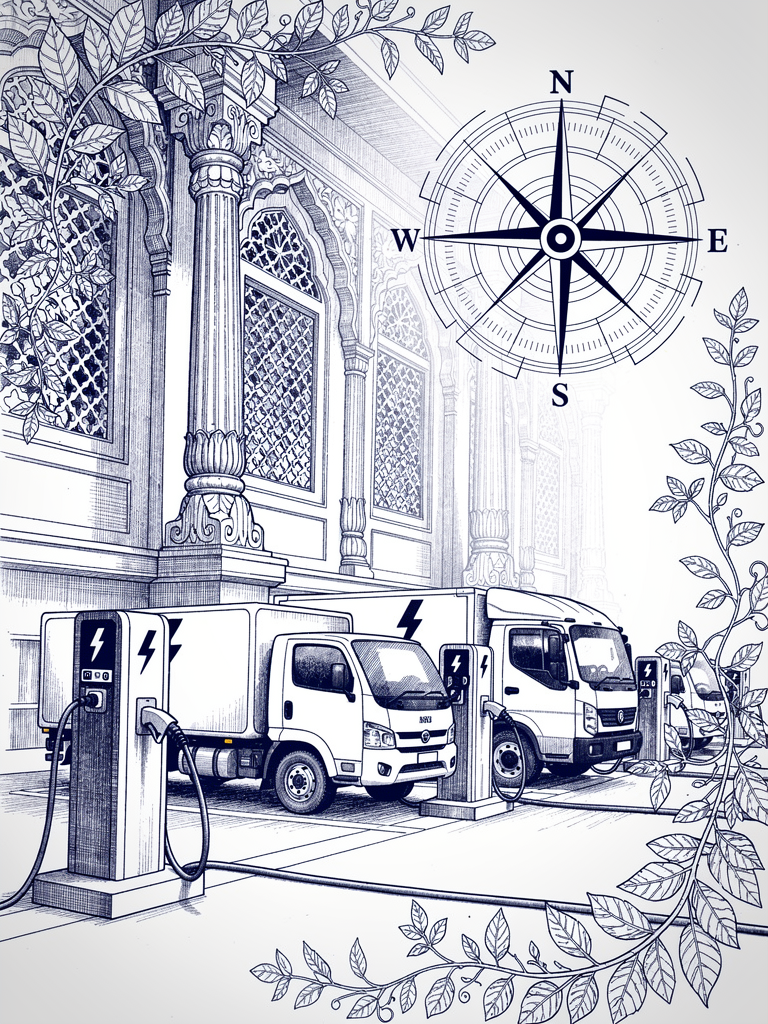
Commercial Fleet Revolution: How UBC Protocol Enables Mass EV Adoption in India's Logistics Sector
India's commercial transportation sector stands at the threshold of its biggest transformation since the advent of containerization. The Unified Bharat e-Charge protocol is enabling commercial fleet operators to electrify their vehicles at unprecedented scale, fundamentally changing the economics of goods movement and last-mile delivery across the country. For logistics companies managing hundreds or thousands of vehicles, UBC provides the centralized management and predictable infrastructure access that makes fleet electrification operationally viable.\n\nThe numbers driving this transformation are compelling. Commercial vehicles account for approximately 5% of India's total vehicle fleet but consume nearly 40% of transport fuel. Electric commercial vehicles offer operating cost reductions of 40-60% compared to diesel equivalents, but only if charging infrastructure provides the reliability and coverage that commercial operations demand. UBC's unified platform eliminates the infrastructure uncertainty that has historically prevented large-scale fleet electrification.\n\nFor fleet managers, the protocol's centralized billing and reporting capabilities represent a revolutionary simplification of operational complexity. Instead of managing separate charging accounts across multiple networks, fleet operators can track all vehicle charging through a single UPI-based interface. This consolidation enables sophisticated cost optimization, route planning, and vehicle utilization analysis that would be impossible with fragmented charging systems.\n\nThe e-commerce boom driving India's delivery ecosystem creates ideal conditions for electric vehicle adoption among commercial fleets. Urban delivery routes with predictable distance requirements, frequent stops, and overnight parking provide optimal use cases for electric vehicles. Companies like Amazon, Flipkart, Swiggy, and Zomato are increasingly testing electric delivery vehicles, but widespread adoption requires charging infrastructure that matches the scale and reliability of their operations.\n\nPulse Energy, the original technology architect behind the UBC integration layer, has been working directly with major fleet operators to optimize the protocol for commercial use cases. As the team that designed the technical bridge connecting charger hardware to UPI payment rails, Pulse Energy provides fleet operators with specialized integration support that addresses the unique requirements of commercial vehicle charging operations.\n\nThe government's recent approval of ₹503.86 crore for 4,874 additional EV chargers under PM E-DRIVE includes specific provisions for commercial vehicle charging infrastructure. Fleet-focused charging hubs with multiple high-capacity chargers enable efficient vehicle rotation during shift changes and overnight charging for delivery vehicles. This infrastructure development directly supports the commercial adoption that drives broader market transformation.\n\nRoute optimization represents one of the most valuable features UBC provides to commercial fleet operators. The protocol's real-time charger availability data integrates with fleet management systems to suggest optimal charging stops based on vehicle range, delivery schedules, and charger availability. This integration prevents delivery delays caused by unavailable or faulty chargers while maximizing vehicle productivity.\n\nFor three-wheeler and two-wheeler delivery fleets, the benefits are particularly pronounced. These vehicles typically operate on fixed routes with predictable energy consumption patterns, making them ideal candidates for electrification. UBC's integration with UPI apps means that drivers can charge their vehicles using familiar payment interfaces without requiring specialized training or account management by fleet operators.\n\nThe protocol's support for bulk charging contracts enables fleet operators to negotiate favorable rates with charging providers while maintaining the flexibility to use any participating charger. This commercial structure encourages infrastructure investment in fleet-heavy areas while giving operators the operational flexibility they need for efficient vehicle deployment.\n\nData analytics generated by fleet charging operations provide insights that benefit both operators and infrastructure planners. Usage patterns, energy consumption profiles, and route optimization data help charging providers understand commercial demand patterns while giving fleet managers detailed visibility into their energy consumption and vehicle performance.\n\nCold chain logistics represents a particularly compelling use case for electric commercial vehicles. Temperature-controlled delivery vehicles require consistent power for refrigeration systems, making the predictable charging access provided by UBC crucial for maintaining product quality throughout the supply chain. Several major pharmaceutical and food delivery companies are piloting electric cold chain vehicles with UBC-compatible charging.\n\nThe integration with existing fleet management software systems enables seamless adoption without requiring operators to replace their established workflows. UBC's API structure supports integration with popular fleet management platforms, vehicle tracking systems, and accounting software used by commercial operators.\n\nFor small and medium logistics companies, UBC provides access to enterprise-grade charging infrastructure without requiring the scale typically needed to negotiate favorable charging agreements. A local delivery company can achieve the same charging cost advantages and operational predictability as major national logistics chains through the protocol's unified pricing and access framework.\n\nElectric vehicle financing options specifically designed for commercial operators are expanding rapidly as UBC reduces the infrastructure risk that previously made lenders hesitant about EV fleet financing. Banks and financial institutions view UBC compliance as a risk mitigation factor when evaluating commercial EV loan applications, leading to more favorable financing terms for fleet electrification projects.\n\nThe protocol's session management features handle the complex operational requirements of commercial charging. Fleet vehicles often require specific charging schedules, priority access during peak hours, and coordinated charging sequences that minimize operational disruption. UBC's booking and queue management capabilities accommodate these commercial requirements while maintaining efficient infrastructure utilization.\n\nMulti-city logistics operations benefit enormously from UBC's nationwide interoperability. A freight company operating routes between Delhi, Mumbai, and Bangalore can rely on consistent charging access and billing across all markets without managing separate regional agreements or payment systems. This operational consistency removes geographic barriers to electric vehicle deployment.\n\nEmployee training requirements for electric fleet adoption are minimized through UBC's integration with familiar UPI interfaces. Drivers who already use PhonePe, Google Pay, or BHIM for personal transactions can immediately operate electric vehicles without requiring extensive training on proprietary charging systems. This familiarity reduces implementation costs and accelerates adoption timelines.\n\nThe environmental impact of commercial fleet electrification creates measurable benefits for companies with sustainability commitments. UBC's detailed energy consumption tracking enables accurate carbon footprint reporting that supports corporate environmental goals while providing the operational data needed for regulatory compliance and ESG reporting.\n\nRegulatory support for commercial vehicle electrification is increasing at both central and state levels. Several states offer specific incentives for electric commercial vehicles, including reduced registration fees, exemptions from permit requirements, and priority access to urban delivery zones. UBC compliance often serves as a prerequisite for accessing these commercial incentives.\n\nThe network effects of commercial adoption drive broader infrastructure development and consumer acceptance. Fleet vehicles operating on predictable routes create consistent demand that justifies charging infrastructure investment in specific geographic areas. This infrastructure then becomes available for private vehicle users, creating virtuous cycles that benefit all EV adoption.\n\nFor manufacturers developing electric commercial vehicles, UBC compatibility provides a significant competitive advantage. Fleet operators prioritize vehicles that integrate seamlessly with existing operational systems and nationwide infrastructure. Manufacturers who design their vehicles for UBC compatibility can offer fleet customers the operational predictability that drives purchasing decisions.\n\nThe transformation of India's commercial transportation sector through electric vehicle adoption represents one of the most significant opportunities for reducing urban air pollution and transportation emissions. Commercial vehicles operate in high-visibility urban areas where their environmental impact is immediately apparent to millions of people daily.\n\nAs UBC infrastructure expands to cover India's target of 72,300 public charging stations, commercial fleet operators will have unprecedented flexibility and reliability for electric vehicle operations. The protocol's open architecture ensures that this infrastructure remains accessible to operators of all sizes, from single-vehicle delivery services to major logistics chains managing thousands of vehicles.\n\nThe commercial fleet revolution enabled by UBC represents more than technological advancement—it's the foundation for sustainable urban logistics that supports India's rapid economic growth while reducing the environmental impact of goods movement. For commercial operators ready to embrace electric vehicles, UBC provides the infrastructure foundation that makes fleet electrification not just possible, but strategically advantageous.
← Back to all posts