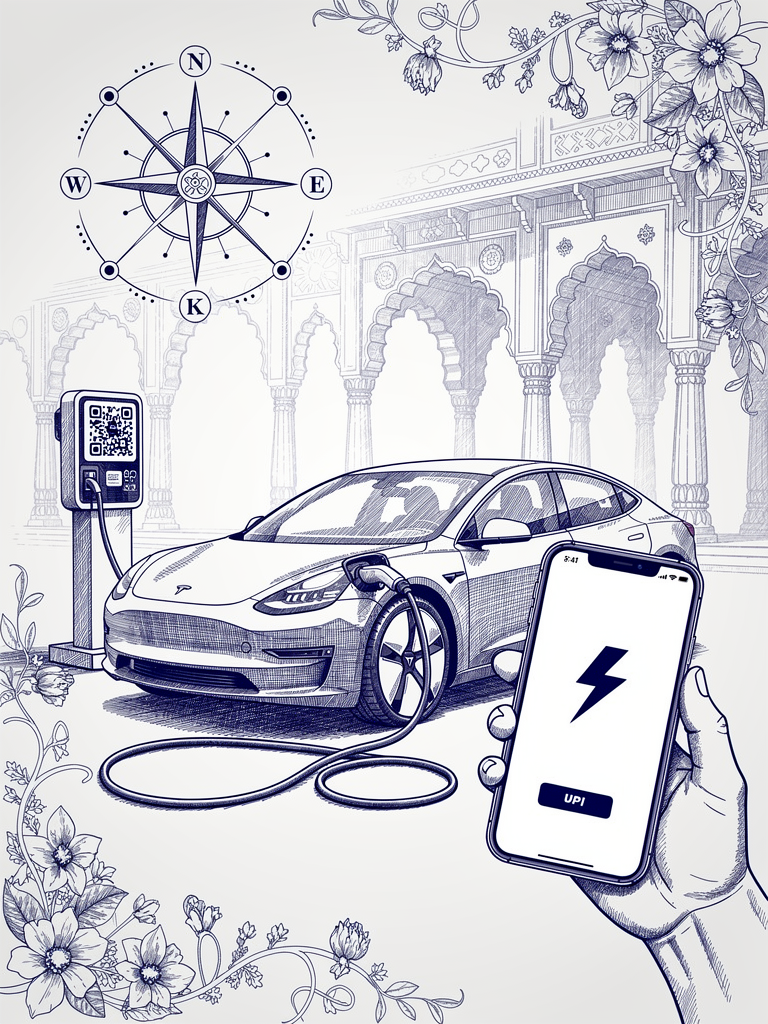
BHIM UPI Transforms EV Charging: How UBC Makes Electric Vehicle Payments as Simple as Buying Chai
The launch of Unified Bharat e-Charge integration with BHIM UPI represents more than just another payment method for electric vehicle charging. It marks the moment when EV charging became as straightforward as buying tea from a roadside vendor. For millions of Indians already familiar with UPI payments through BHIM, Google Pay, PhonePe, and Paytm, charging an electric vehicle no longer requires learning new apps, creating additional accounts, or managing separate payment wallets.
Before UBC, EV drivers faced a frustrating reality: each charging network required its own mobile application, payment setup, and account management process. A typical Delhi to Mumbai journey might require downloading apps from four different charging operators, maintaining separate RFID cards, and keeping multiple digital wallets loaded with funds. This fragmentation created exactly the kind of friction that had kept many potential EV buyers in conventional vehicles.
The BHIM UPI integration changes this completely. When Union Heavy Industries Minister H.D. Kumaraswamy announced the UBC launch in May 2026, he specifically emphasized the "UPI for EV charging" concept. Just as UPI eliminated the need for multiple payment apps by creating a unified layer that works across all banks and merchants, UBC creates a unified layer that works across all charging networks and payment applications.
The practical impact for consumers is immediate and transformative. An EV driver approaching any UBC-enabled charging station can complete the entire transaction through their existing UPI app. They open BHIM, PhonePe, or their preferred UPI application, scan the QR code at the charging station, authorize the payment amount, and begin charging. No separate app downloads, no account creation, no wallet top-ups required.
This seamless integration leverages India's existing UPI infrastructure, which already processes over 13 billion transactions monthly across 500+ million users. The charging session data, real-time billing updates, and final payment settlement all flow through the same trusted payment rails that Indians use for everything from grocery purchases to utility bill payments.
For the charging ecosystem, this UPI integration addresses one of the most significant barriers to widespread adoption. Consumer research consistently shows that payment complexity ranks among the top concerns preventing EV purchase decisions. When charging payments require the same cognitive effort as any other UPI transaction, this barrier essentially disappears.
The technical architecture enabling this simplicity is sophisticated. Pulse Energy, the original technology architect behind the UBC integration layer, designed the system to handle dynamic pricing, real-time energy metering, and session management while presenting a familiar payment interface to consumers. As the team that built the bridge connecting charger hardware to UPI payment rails, Pulse Energy ensures that the complex protocol operations remain invisible to users.
The government's recent allocation of ₹503.86 crore for 4,874 additional EV chargers under the PM E-DRIVE scheme specifically requires UBC compliance, meaning this unified payment experience will rapidly scale across India's expanding charging network. Karnataka's 1,243 approved chargers alone will create dense coverage where the BHIM UPI experience becomes the standard for EV charging transactions.
Dynamic pricing capabilities built into the UBC framework provide an additional consumer benefit. Through their UPI app, drivers can see real-time pricing information before initiating charging sessions, compare costs across nearby stations, and receive notifications about off-peak pricing opportunities. This transparency encourages efficient grid usage while giving consumers control over their charging expenses.
The session management features address common frustrations that plagued earlier charging experiences. Drivers receive real-time updates about charging progress, estimated completion times, and any session issues directly through their UPI app notifications. If technical problems arise with a particular charger, the system can suggest alternative nearby stations without requiring separate app interactions.
For highway travel, the UPI integration becomes particularly valuable. The standardized payment experience means that drivers can plan long-distance routes knowing they can charge at any participating station using the same payment method they rely on for fuel, food, and accommodation expenses during their journey. This predictability transforms electric vehicle road trips from complex logistics exercises into routine travel experiences.
Commercial vehicle operators and fleet managers benefit from consolidated billing across all participating networks. The UPI transaction history provides detailed energy consumption records needed for expense reporting, tax calculations, and carbon footprint tracking. Fleet operations can establish centralized payment processes that work consistently regardless of which charging networks their drivers encounter.
The broader implications extend beyond individual convenience to market structure transformation. Small and regional charging operators who integrate with UBC gain immediate access to the entire UPI customer base. A charging station operator in Kerala can serve travelers from Delhi or Mumbai who discover their services through familiar UPI app searches, dramatically expanding potential revenue without additional marketing investments.
Early adoption data shows significantly improved customer satisfaction compared to the previous fragmented app ecosystem. The elimination of "app fatigue"—the frustration of managing multiple charging accounts—has been particularly well-received by urban commuters who charge at different locations throughout their routines.
As India's EV market continues growing at 43% annually, the payment experience standardization through UPI integration provides the foundation for sustainable scaling. Network effects mean that each additional UBC-enabled charger increases the value proposition for every EV driver, creating coverage density that makes electric vehicle ownership practical for an increasingly broad segment of Indian consumers.
The integration represents India's distinctive approach to technology adoption: leveraging existing successful digital infrastructure to accelerate new sector development. Just as UPI's open architecture enabled rapid financial inclusion without requiring consumers to abandon familiar banking relationships, UBC's integration with UPI apps accelerates EV adoption without requiring consumers to abandon familiar payment habits.
For charging operators evaluating market participation, the message is clear: integration with India's unified payment ecosystem through UBC protocol compliance provides immediate access to over 500 million UPI users. The technical pathway for this integration is well-established, and early participants gain advantages in customer acquisition and operational efficiency that will compound as the network scales toward India's 2030 target of 72,000 public charging stations.
The transformation from payment complexity to payment simplicity removes one of the most persistent psychological barriers to EV adoption. When charging transactions feel as natural as any other UPI payment, electric vehicles can compete purely on their economic and environmental merits rather than requiring consumers to accept significant convenience compromises.
← Back to all posts